Sydney-based Q-CTRL has executed the largest Quantum Fourier Transform on real quantum hardware to date, doubling the prior record by running a 100-qubit QFT on an IBM Heron r3 processor. The result, published on the Q-CTRL blog on August 10, 2026 and detailed in an accompanying arXiv manuscript, isolates the correct output frequency from a Hilbert space of more than 10^30 possibilities and represents a step-change in the scale at which key algorithmic subroutines can be run without full fault tolerance.
The Convolutional QFT Trick
The team, led by Q-CTRL scientists Paul Coote and Yuval Baum, developed a compilation strategy they call the Convolutional QFT. Using a single ancilla qubit, the circuit logic collapses into a compact kernel gadget that steps sequentially across the qubit register. That structure keeps the number of entangling gates in each qubit's causal history — its "light cone" — minimal, directly cutting the noise that accumulates along the circuit and allowing the transform to compile into just n² − n + 2 CX gates on Heron's connectivity, essentially matching the count on an idealized all-to-all architecture. The compilation strategy was paired with active dynamical-decoupling error suppression on idle qubits and a truncation of the smallest QFT rotations.
Fidelity Numbers At Each Tier
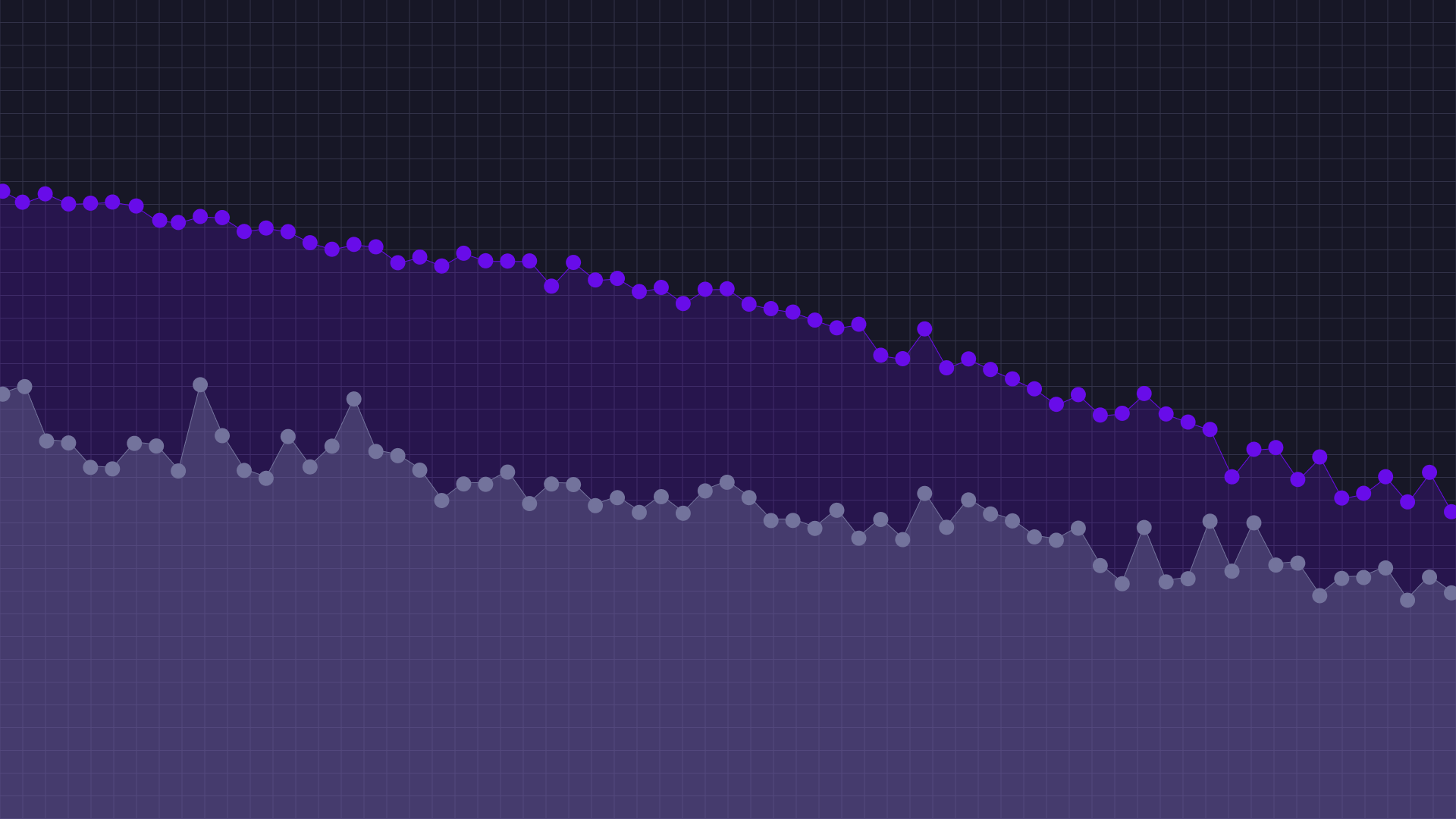
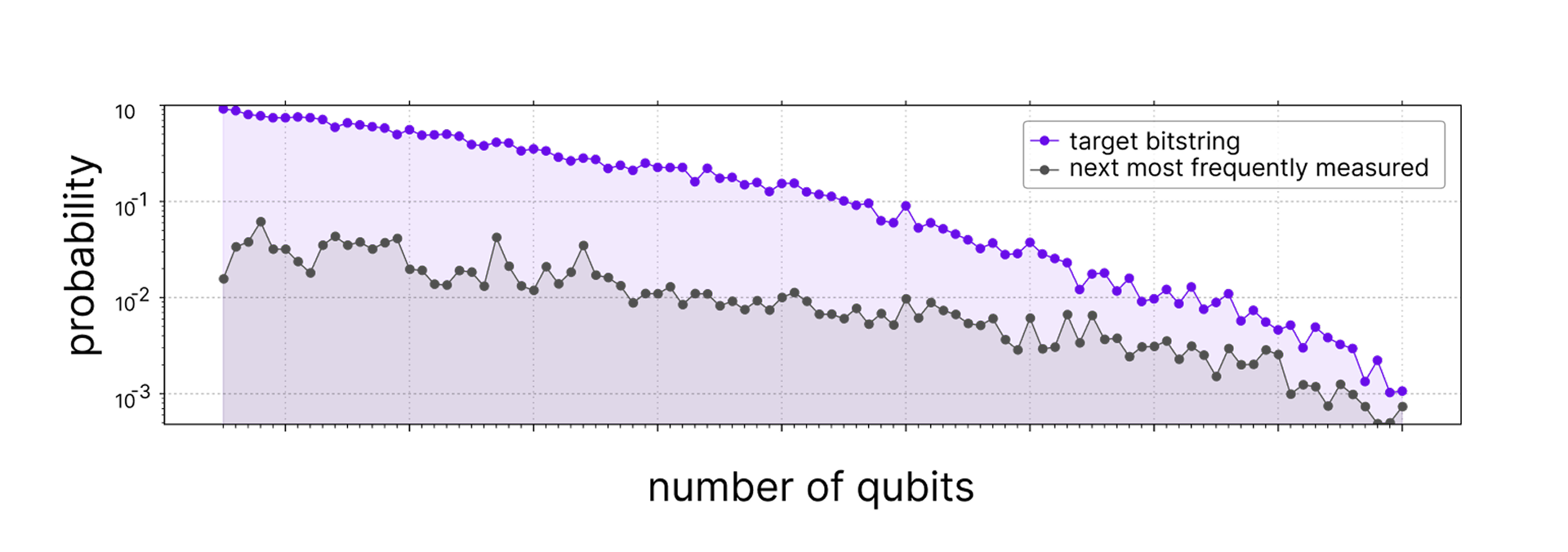
On IBM's 156-qubit Heron r3 processor the results held up across three tiers: at 50 qubits the target bitstring emerged 8.4× more frequently than any other single outcome in raw data, with unitary process fidelity of 11.4%. At 80 qubits the correct result was 7.5× more frequent than the highest non-target, with process fidelity of 1.8%. At the full 100-qubit register, the correct target integer frequency was the unique mode result across every test circuit — the single most frequently measured bitstring — standing clearly above the noise floor. The team used statistical readout-error mitigation to separate the unitary QFT fidelity from measurement error.
Why 100 Qubits Matters
The Quantum Fourier Transform underpins a raft of headline algorithms — Shor's factoring algorithm and quantum phase estimation among them — so a 100-qubit QFT is a proxy benchmark for how large a working chunk of a real quantum program can be executed today. Doubling the previous experimental record from 50 to 100 qubits is not just a bragging-rights improvement: it moves the QFT out of textbook demonstration territory and into a range where compiled subroutines can inform materials, chemistry and cryptographic estimation problems on pre-fault-tolerant hardware. Q-CTRL's approach is hardware-agnostic in principle and is likely to be ported to other superconducting and neutral-atom systems in coming months.
What Comes Next
The result is a proof point for the tight coupling between algorithmic co-design and hardware performance-management software that Q-CTRL has staked its business on. Combined with IBM's separate quantum roadmap — which pairs Heron with the Nighthawk architecture just deployed at Yonsei University — the Convolutional QFT technique gives customers a template for pushing chemistry, optimization and cryptography workloads onto today's noisy processors instead of waiting for fault tolerance.
Reporting based on coverage from Q-CTRL, Quantum Zeitgeist, The Qubit Report and arXiv preprint 2608.05435.