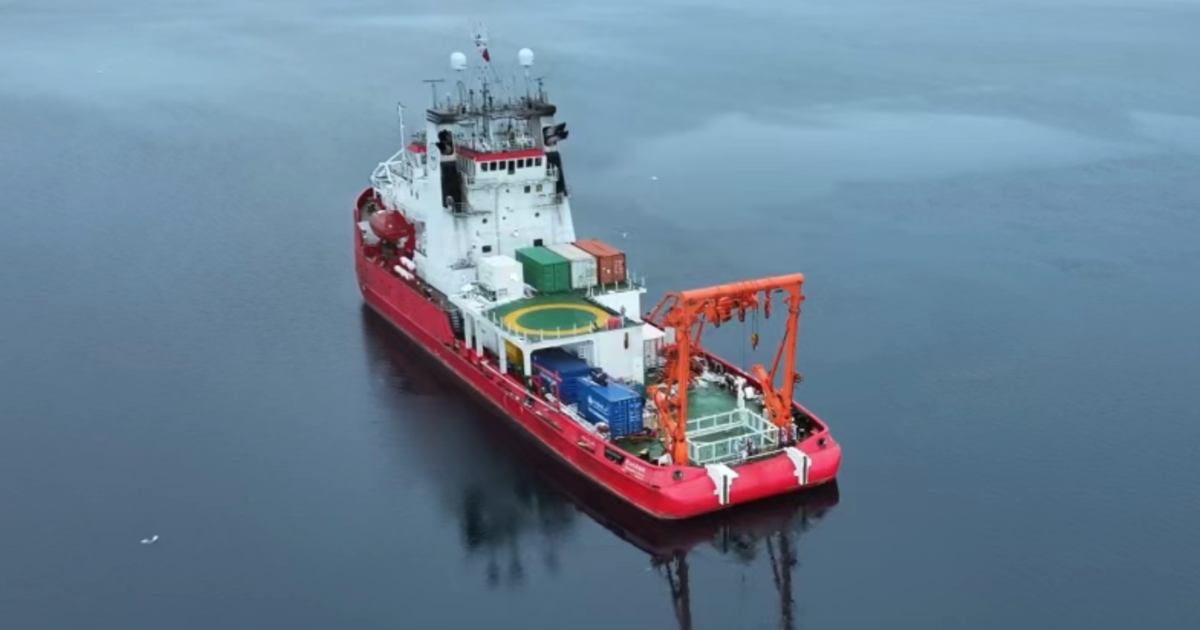
A prototype of DEEP Robotics' wheel-legged Lynx S10 has become the first quadruped robot to set foot on the surface of the Arctic Ocean, completing motion-control and underwater tests during a 76-day expedition aboard the research vessel Sun Yat-sen University Polar. The voyage covered 11,852 nautical miles and reached a northernmost latitude of 81.6°N before returning to port in early June 2026.
Polar-Bear Paws For Ice And Snow
The Lynx S10 that joined the expedition weighs less than 20 kg with battery, a footprint DEEP Robotics' engineers settled on so the robot would not punch through thin Arctic sea ice. DEEP Robotics collaborated with research teams from Sun Yat-sen University, Westlake University and Hangzhou Dianzi University to fit the robot with wide, anti-slip biomimetic paws modeled on the grip structure of polar bear paws. Combined with retractable crampons, the paws let the robot stand firmly on snow and ice and traverse complex, broken terrain without losing footing.
Underwater Validation In Icy Waters
The Arctic deployment doubled as an underwater field test. The Lynx S10 has an integrated, fully sealed body design rated to IP67, and DEEP Robotics' engineers enlarged its limb surface area to add paddling thrust. Once in the water, the robot propelled itself smoothly through the icy seas around the ice floes — the first time a Chinese quadruped robot has demonstrated controlled swimming in a polar environment.

A Sensor Stack Built For Extremes
The expedition robot carries four ultra-wide-angle high-dynamic-range cameras and front and rear lidars, giving it 360-degree perception of both low obstacles near the snowline and the broader environment above the deck. The Lynx S10 sits alongside the company's growing portfolio of legged robots that already includes the X30, the Lite3 and the broader Lynx line, which DEEP Robotics began rolling out globally in 2025 after a tea-leaf transport deployment in Zhejiang Province.
From Research Pilot To Industrial Frontier
DEEP Robotics has been positioning the Lynx series as an industrial inspection and field-research platform, and the Arctic outing follows the company's recent Shanghai STAR Market IPO filing as it scales manufacturing. The polar test sits within a broader race among Chinese quadruped makers, where Beijing-based labs and rivals such as bio-inspired research groups are pushing locomotion benchmarks further every quarter. For research universities, the appeal is a single robot rugged enough to step off the vessel, walk across ice, paddle into the water and come back — tasks that previously required separate platforms.
Reporting based on coverage from Access Newswire / KDH News and DEEP Robotics.