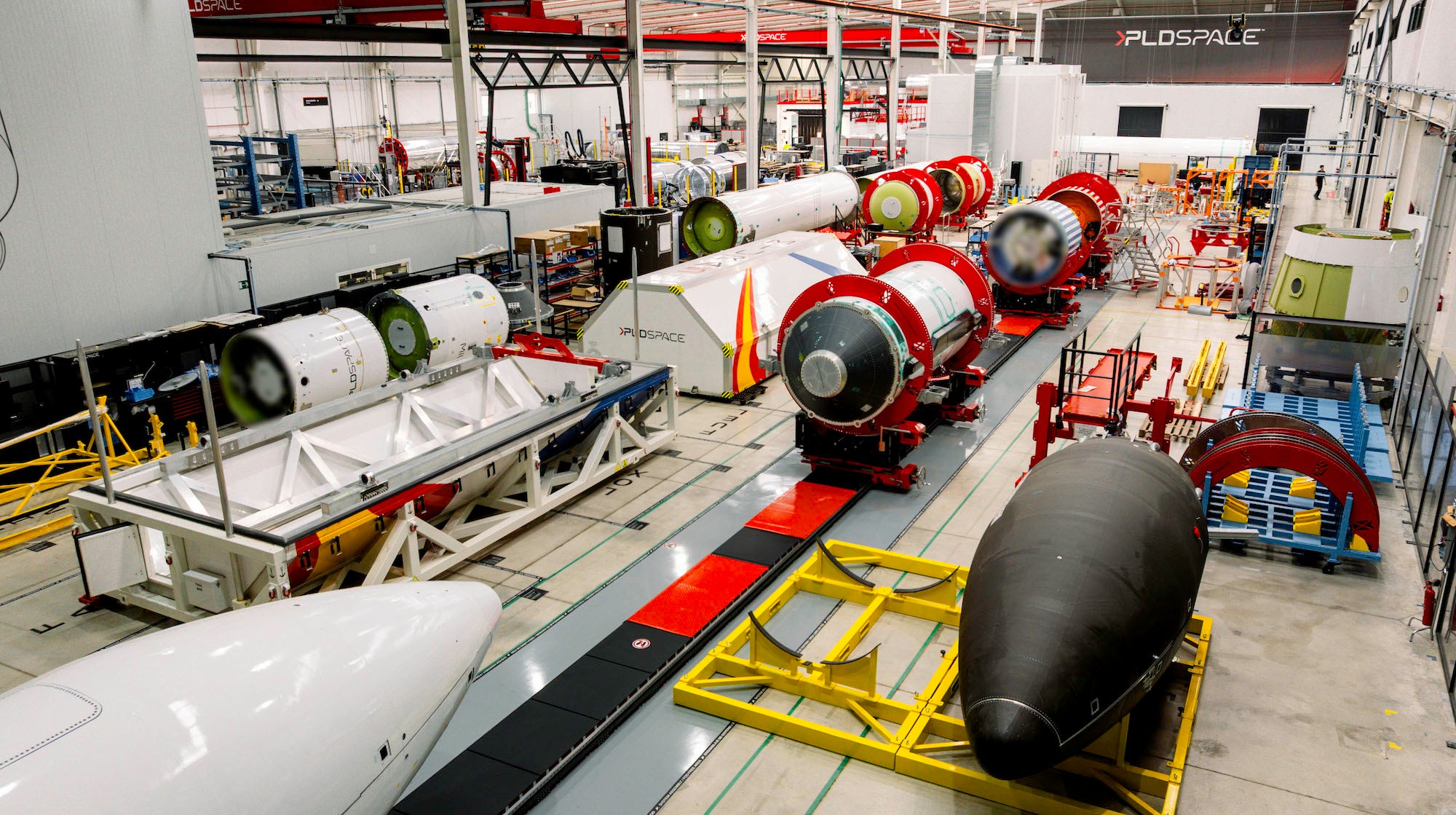
The European Space Agency has signed the first contracts of its European Launcher Challenge, unlocking €543.6 million for three commercial launcher developers and setting up a fourth award to MaiaSpace in the coming weeks. The announcement on 27 August 2026 turns a policy ambition into cash on delivery for the trio expected to give Europe its next generation of small-satellite rockets.
Who won and how much
Germany's Isar Aerospace secured the largest slice, worth €197.8 million, mainly funded by Germany with contributions from Austria and Norway. Its two-stage Spectrum vehicle stands 28 metres tall, carries ten in-house engines, and is being prepared for a second orbital attempt from Andøya Spaceport after the March 2025 debut fell short. Rocket Factory Augsburg (RFA) will draw down €186.9 million to complete RFA ONE, a 30-metre three-stage rocket that is preparing for its inaugural flight from Scotland's SaxaVord Spaceport, with the UK co-funding the German-led contract.
Spain's PLD Space rounds out the podium
Spanish challenger PLD Space receives €158.9 million, funded by Spain with support from Germany. The award backs the company's Miura 5 orbital launcher — a 35-metre two-stage vehicle capable of lifting more than 1,000 kg to sun-synchronous orbit — and finances upgrades toward a heavier, propulsively landed Miura Next family.

Performance-based payouts
ESA is releasing funds only as milestones are met, and each of the three winners must reach orbit before the end of 2027 to unlock the next tranche. "With these contracts, ESA is turning ambition into action," said Lucía Linares, ESA's head of strategy and launches for Space Transportation. "Now it is up to the challengers to prove they can deliver reliable launch services for Europe and compete: getting to space is not easy and never guaranteed."
The Launcher Challenge is the centrepiece of Europe's push to broaden institutional access to space beyond Arianespace, following the same competitive-procurement playbook that reshaped US launch. A separate contract with MaiaSpace, the SpaceX-inspired subsidiary of ArianeGroup, is expected to close in the coming weeks.
Reporting based on coverage from ESA and Via Satellite.