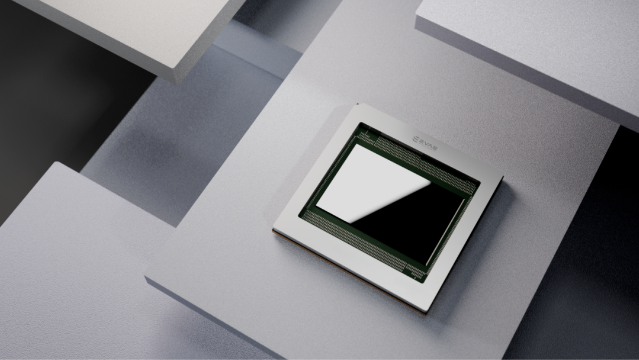
China's RISC-V AI-chip challenger EVAS Intelligence (奕行智能) has closed nearly RMB 2 billion (~US$282 million) in fresh financing at a post-money valuation of around RMB 15 billion (~US$2.1 billion), pushing it firmly into unicorn territory and cementing its position as the country's largest RISC-V-based AI-compute play.
Twenty-plus investors in one round
Guangzhou-headquartered EVAS said more than 20 institutions took part in the round, led by Huatai Innovation and Eastern Bell Capital and joined by SMIC Capital, Andon Health, Ren'ai Capital, Tongfu Microelectronics, Sieyuan Industry Fund, Heli Capital, Xinxin Financial Leasing, Hengxu Capital, Shangqi Capital, Jianguang Zhanlu and Rongyi Capital. The raise follows an RMB 1.5 billion Series B earlier in 2026 and a strategic cheque from China Mobile, taking total capital committed to EVAS to more than RMB 3.5 billion.

Epoch chips and a RISC-V SuperNode aim at the training market
Founded in 2022, EVAS builds AI accelerators around the open RISC-V architecture with its own EVAMIND acceleration IP. Its flagship Epoch series cloud AI chip is already in mass production, and the company has taped out a follow-on cloud part scheduled to sample in 2027. At WAIC 2026 the company debuted the industry's first RISC-V AI SuperNode, wiring 64 to 128 Epoch cards per rack over its ELink interconnect at 3.2 Tbps single-chip bandwidth, with scale-out claimed to 100,000-card clusters. That positions EVAS directly against domestic incumbents like Huawei's Ascend/Atlas superpod stack and the CUDA-based systems that Chinese buyers can no longer reliably source under US export rules.
Why RISC-V, and why now
China's AI infrastructure buildout in 2026 has become a race to answer NVIDIA with domestic silicon. RISC-V gives Chinese design houses an ISA they can build on without US license risk, and Beijing has poured state money into companies willing to close that gap. EVAS's push is squarely inside that policy line: its full-stack EVACA software layer, KernelFab operator engine and VISA virtual instruction set are pitched to close the CUDA ecosystem gap that has held earlier RISC-V AI chips back. The company said proceeds will fund mass production of Epoch, tape-outs of its next-generation cloud part and expansion of the RISC-V AI Token Factory partnership it announced with Zhongneng Intelligent Computing and Guofu Data.
What it changes
The scale of this round — one of the largest single financings ever recorded for a Chinese semiconductor company at a $2 billion+ valuation — makes EVAS one of the top few funded AI-chip challengers globally alongside Xili Optoelectronics and other September deals. It also lands as Beijing's AI Industry Investment Fund and multiple provincial funds are visibly picking winners in the domestic AI accelerator category.
Reporting based on coverage from Tech Startups, PANews, ChainCatcher and Odaily.