The US Food and Drug Administration on Thursday released its first comprehensive draft guidance for the premarket review of robotically-assisted surgical devices (RASDs), giving Intuitive Surgical, Medtronic, Johnson & Johnson and Stryker the first end-to-end regulatory template for the category.
Three Sub-Assemblies, One Framework
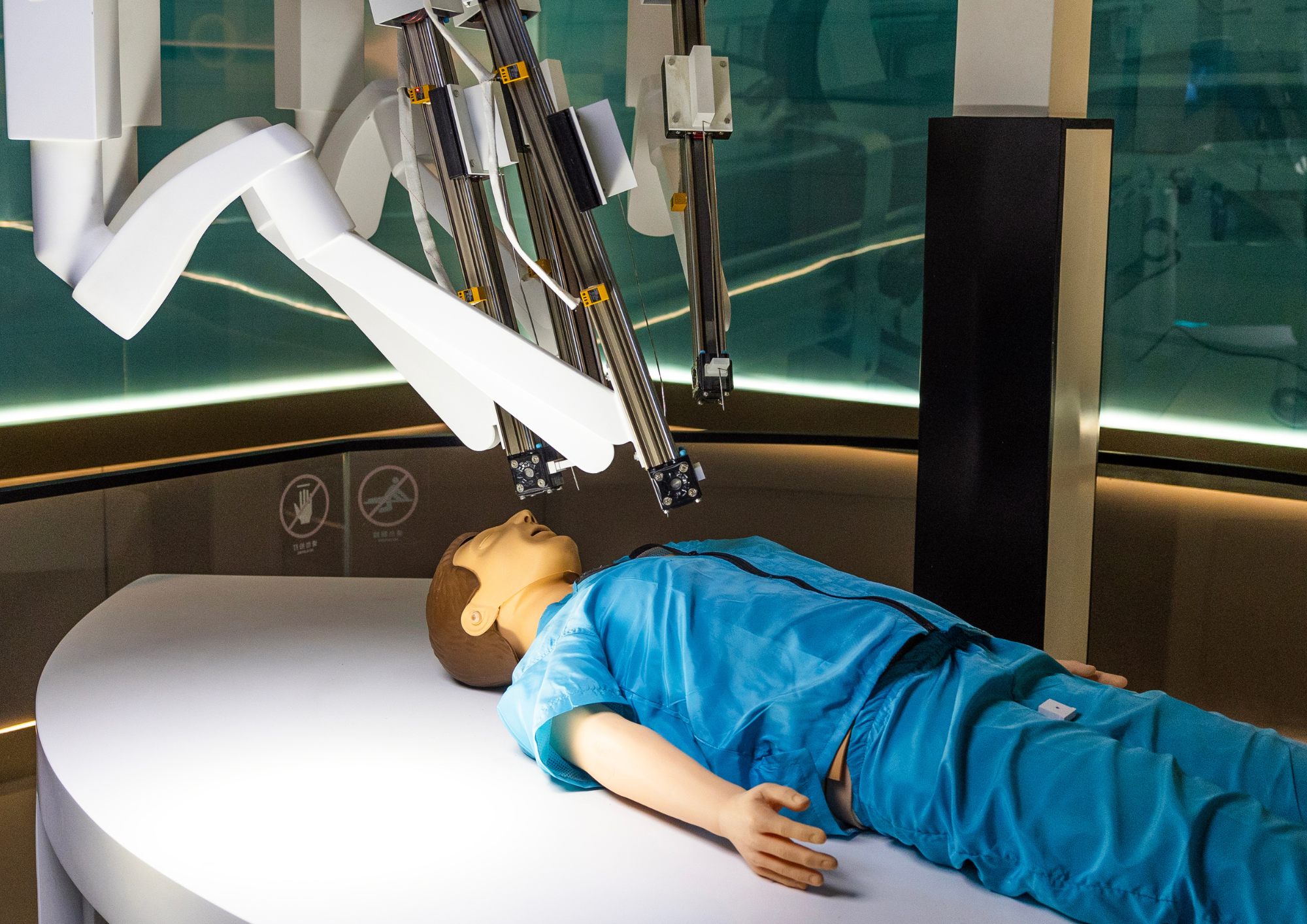
The 40-plus-page draft defines an RASD as a teleoperated system that helps a surgeon precisely position instruments for open, minimally invasive or endoluminal procedures, and breaks each system into three sub-assemblies – an operator console, a bedside/patient-side unit and OR-staff support hardware. Submissions will be expected to characterise motion scaling, tremor reduction, input processing, fault detection, emergency access and full-workspace performance under multiple speeds and load conditions.
What the guidance does not cover matters too. Pre-operative planning software, stereotaxic navigation systems, catheter-based interventional platforms, remote teleoperated systems and fully autonomous surgical robots are all outside scope – leaving that regulatory ground to future documents. Public comments are due 24 November 2026 under docket FDA-2026-N-9505.
What It Means For Each Big Vendor
For Intuitive Surgical's da Vinci franchise, which has been reviewed as a legacy device, the guidance codifies expectations it has largely been meeting for years. For Medtronic's Hugo, freshly cleared for general and urologic surgery, the framework aligns future indications with a clearer premarket path. J&J's OTTAVA, granted a de novo authorisation in July, now has the first repeatable playbook to expand indications; Stryker's Mako will find its orthopaedic-focused controls easier to defend against future entrants.

How It Fits The 2026 Med-Robotics Wave
The FDA move follows a rush of surgical-robot activity, including Medtronic's latest instrument clearances, J&J's OTTAVA de novo and a rising interest in autonomous surgical AI. It also lands the same week as OpenAI's Transluce agent-security report and Anthropic's $11.6B Akamai deal, underlining just how deeply US regulators are stepping into AI- and robotics-enabled healthcare this quarter.
Reporting based on coverage from MD+DI, the American Hospital Association and the Federal Register (FDA-2026-N-9505).