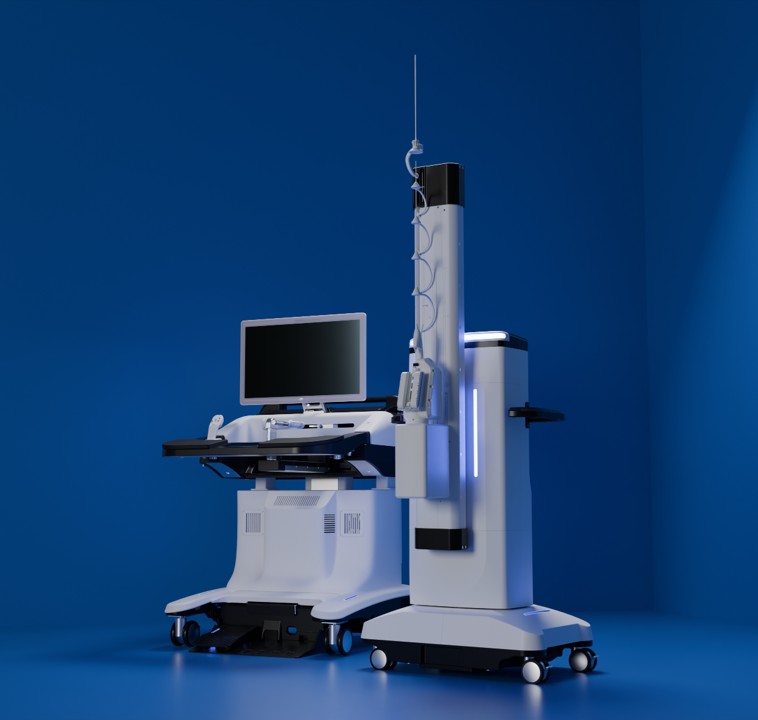
Korean surgical robotics startup Roen Surgical has won 510(k) clearance from the U.S. Food and Drug Administration for Zamenix, its AI-based flexible ureteroscopic kidney-stone surgery robot, opening the door to what it describes as the world's first FDA-cleared robotic retrograde intrarenal surgery (RIRS) system.
An AI-first take on stone removal
Zamenix threads a 2.8 mm flexible endoscope through the urinary tract to locate and treat kidney stones without incisions, letting surgeons remotely operate the ureteroscope rather than manipulating it by hand for extended procedures. Roen Surgical says the system layers three AI modules on top of that mechatronic base: respiratory compensation that keeps the endoscope steady against a patient's breathing, a stone-size guide that assesses whether a stone can pass on its own, and an autonomous navigation function that automates repeated laser positioning during lithotripsy.
What the FDA reviewed
Roen said the FDA review covered sterilization and shelf life, biocompatibility, software and cybersecurity, electrical and mechanical safety, design verification, usability and preclinical testing. The Class II clearance follows a multicenter clinical trial in 232 patients and a May 2026 designation from Korea's National Evidence-based Healthcare Collaborating Agency (NECA) for use as an innovative health technology. Zamenix was also named Korea's 17th innovative medical device in 2021.
A Korean surgical challenger goes global
Zamenix is already installed at 20 hospitals in Korea and one institution abroad. With the FDA nod, Roen Surgical is now targeting Europe, Japan, the Middle East and Southeast Asia. RIRS-specific robotic platforms are still rare compared with laparoscopic systems, which puts the KAIST spinout into a niche it hopes to define before larger surgical-robot vendors move in. It follows Roen's recent MOU with U.S. telesurgery firm Sovato and slots alongside other 2026 approvals such as J&J's OTTAVA and Microsure's MUSA-3 CE mark in the widening surgical robotics field.
Reporting based on coverage from Korea Biomedical Review and Asia Business Daily.