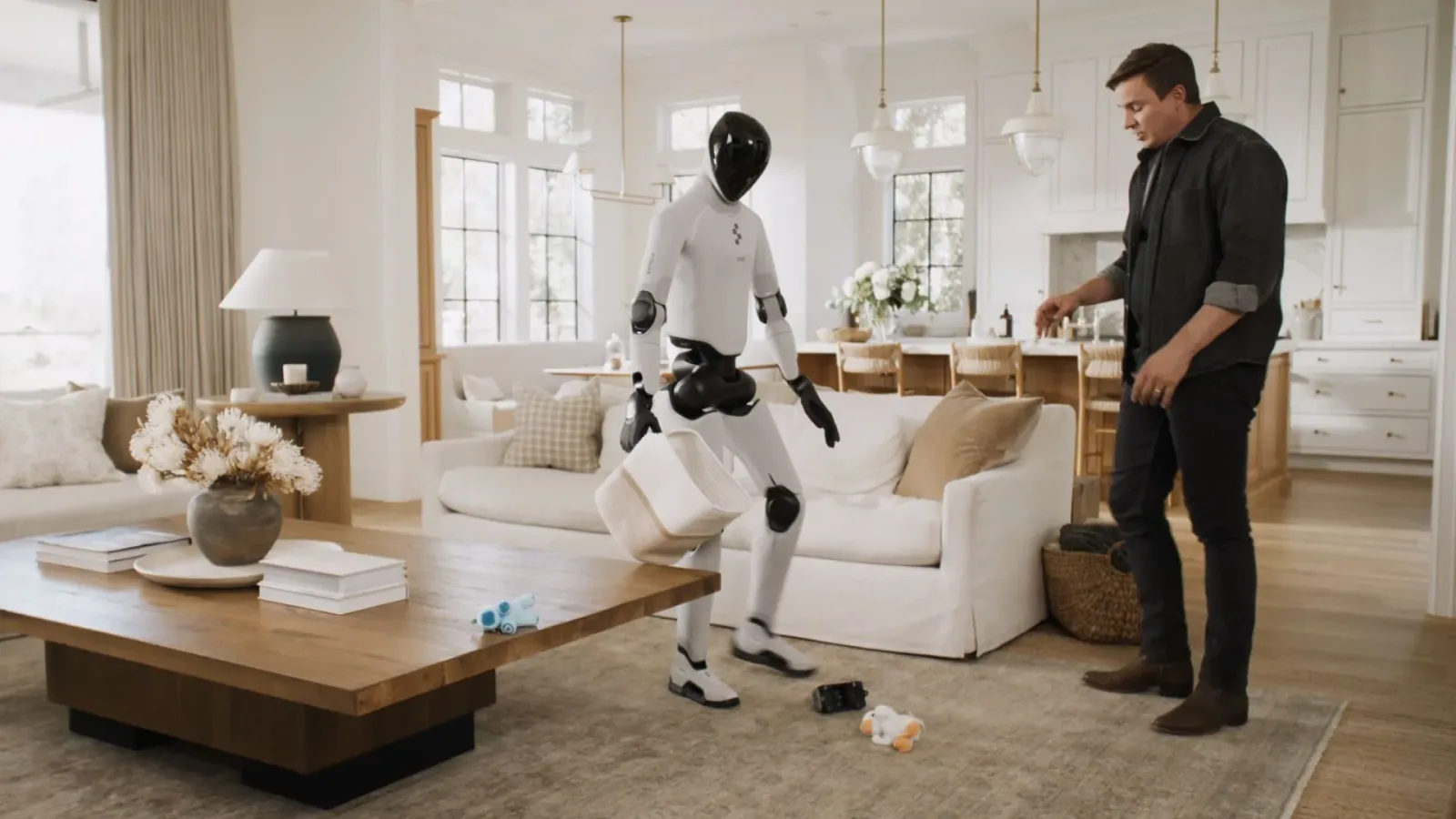
The clip runs 41 seconds. A Figure 03 humanoid picks an apple off a table, sets it back down, then watches as a person slides the table to a new spot. Without pausing for reprogramming, the robot reaches out and picks the apple up again.
Figure AI chief executive Brett Adcock posted the video on November 23, 2026, calling the run "zero shot and fully autonomous." The demonstration was a direct answer to Elon Musk, who had argued publicly that humanoid robot showcases are typically staged and pre-scripted, illustrating the point by saying a robot told to pick up an apple would fail the moment someone moved the table it was sitting on, according to Interesting Engineering.
The robot ran on Helix, Figure's vision-language-action model. In the company's usage, "zero-shot" means the system was not specifically trained on that scene, that table, or that apple beforehand. It had to generalize from broader training data to handle a layout it had not memorized in advance.
Why the apple mattered
Musk's criticism touched a specific insecurity running through the humanoid robot industry: that polished demo reels hide motion-capture playback or remote teleoperation rather than live perception and on-the-fly decision-making. Tesla's own Optimus showcases have faced similar skepticism after reports that some public demonstrations relied on human operators or scripted routines rather than autonomous control.
Figure's response was deliberately narrow. Instead of staging an elaborate multi-step chore, the company isolated the exact scenario Musk had named and filmed it in under a minute. The approach let the company make a falsifiable, specific claim rather than a vague one about general capability.
The apple clip did not arrive alone. Figure has also circulated footage of Figure 03 climbing a ladder autonomously, and the company says its Helix 2.5 model completed 56 percent of household chore trials — 237 out of 420 attempts — across 30 previously unseen homes, covering tasks like making beds, folding towels and tidying toys.
The competitive stakes
Humanoid robot makers are racing to prove real-world generalization because warehouse and factory customers want machines that can handle variation, not just repeat a single memorized path. Figure, Tesla, Apptronik and 1X Technologies have all leaned on video demonstrations this year to make competing claims about autonomy, often without independent verification of how much human assistance occurred offscreen.
That dynamic is exactly why Musk's skepticism resonated and why Figure felt compelled to respond publicly rather than let the claim stand. Both companies are also fundraising and selling against each other: Figure has been valued near $39 billion in recent private trading, while Tesla continues to push Optimus hardware, including a new AI5 chip, as a flagship initiative.
Neither company has published raw, unedited sensor logs or third-party audits of these demonstrations. Until independent labs or customers can verify autonomy claims under controlled conditions, dueling video clips are likely to remain the primary way humanoid robot makers contest each other's progress.