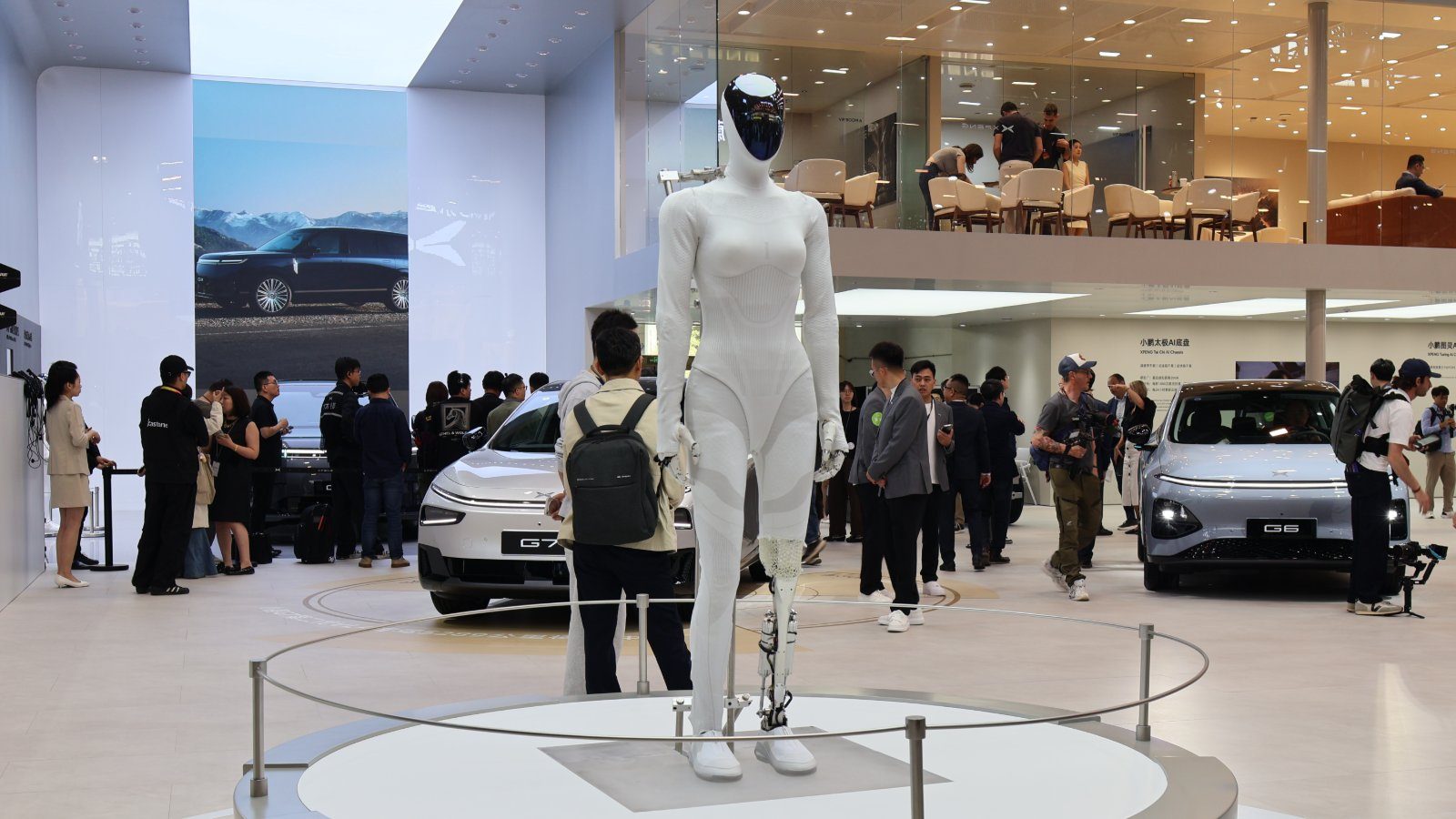
A 170-centimeter humanoid robot walked onto a stage in Guangzhou on Nov. 25 and interacted with the crowd without a handler steering it from the wings. XPeng used its eighth annual AI Day, themed "Origin," to put its Iron humanoid through a live demonstration, the clearest public signal yet that the Chinese electric-vehicle maker intends to sell robots, not just cars.
Iron carries 76 degrees of freedom across its body and 21 in each hand, according to CnEVPost, which covered the event announcement and specifications ahead of the show. Three in-house Turing AI chips give the robot up to 2,250 TOPS of onboard compute, enough to run XPeng's Physical AI foundation model directly on the robot rather than leaning on a cloud connection for every decision. The current production version, which rolled off XPeng's new line on Sept. 8, trimmed down from an earlier 82-degrees-of-freedom prototype the company showed a year earlier, trading some joint complexity for manufacturability.
CEO He Xiaopeng has framed the robot as a test of whether a single AI stack, built first for cars, can also carry a humanoid body. At the event, XPeng demonstrated how its driving systems, robotaxi service and the Iron robot all pull from shared underlying models, arguing that years of training data from road-going vehicles gives it an edge in teaching a robot to perceive and move through the physical world.
A Carmaker's Bet on Humanoids
XPeng is one of several Chinese EV makers now treating humanoid robots as a logical extension of their automotive manufacturing base rather than a side project. Management has set Jan. 1, 2027 as the internal target for serial production, with external customer deliveries expected to begin in the second quarter of 2027 — a tighter timeline than many dedicated robotics startups have managed.
The approach mirrors Tesla's Optimus program, where chips and manufacturing know-how developed for vehicles are redirected toward a humanoid line, and it puts XPeng in more direct competition with Chinese humanoid specialists such as UBTech and AgiBot, both of which have already begun shipping industrial units at volumes in the thousands. XPeng's advantage is a working factory and supply chain; its challenge is proving Iron can do useful work outside a stage demo.
What Happens Next
XPeng also used the event to show updates to its NGP driving system and Robotaxi technology, underscoring that Iron is one piece of a broader physical-AI push rather than an isolated bet. The company has not disclosed pricing for external Iron sales or named launch customers, details that will matter more than onstage choreography once deliveries begin.
The bigger test for Iron will come after the applause, when the robot has to perform repeatable tasks on a factory floor or in a warehouse rather than a scripted interaction in front of an audience. XPeng's Q2 2027 external delivery target gives the market roughly six months to see whether that transition happens on schedule.