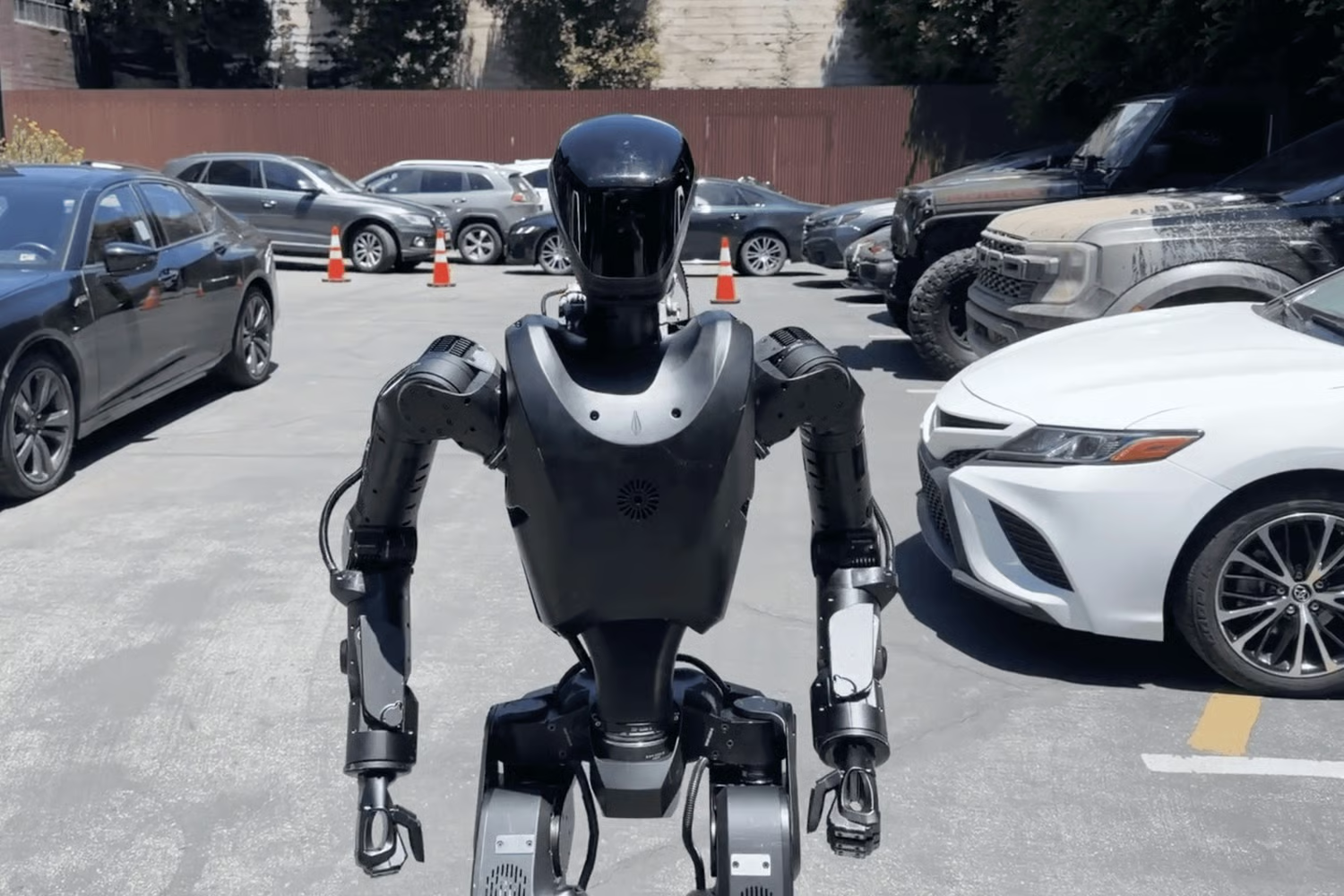
A San Francisco robotics startup backed by Eric Trump is reportedly in talks with Israel's military about supplying humanoid robots to patrol the tunnel network beneath Gaza, according to Financial Times reporting relayed by International Business Times UK. The company, Foundation Future Industries, says the discussions are "early and exploratory" and that no robots have been sold or deployed to Israel's military.
What exactly is being discussed?
Foundation co-founder Mike LeBlanc said the company is in direct talks with the chief of staff of the Israel Defense Forces about supplying as many as 1,000 Phantom MK1 robots, at roughly $150,000 each, to search a tunnel network believed to run about 300 miles beneath Gaza. Proposed tasks reportedly include detecting trip wires, neutralizing booby traps, and potentially engaging in combat.
No purchase agreement has been finalized. Foundation's official statement is explicit on that point: "No Foundation robots have been sold, delivered or deployed to the IDF."
What role does Eric Trump actually play at the company?
Trump holds an equity stake in Foundation and was named chief strategic adviser in March 2026, a role LeBlanc has described by calling Trump "very mechanically inclined." A spokesperson for Trump said he "never introduced the Foundation to any government agency and did not take part in government contract negotiations," and has no role in day-to-day management, strategy, or commercial decisions.
Foundation was founded in 2024 by Sankaet Pathak, Arjun Sethi and LeBlanc, and has already received more than $70 million in US military contracts, including a reported $24 million Pentagon deal to test the Phantom platform.
Has this robot actually been used in a conflict before?
In a limited way, yes. Foundation sent two Phantom MK1 units to Ukraine in February 2026 for what it describes as front-line reconnaissance, resupply, and logistics testing rather than combat — a trial the company points to as evidence the robots can operate in an active war zone.
CEO Sankaet Pathak has also said Foundation is exploring "kinetic" capabilities, company shorthand for weapons systems, with further announcements expected in coming months. That would mark a shift from the reconnaissance and logistics role Phantom has played so far toward something closer to an armed ground robot.
Why does this story matter beyond one company?
Humanoid robots have mostly been pitched for warehouses, factories, and hospitals so far in 2026. A serious proposal to send them into an active urban tunnel network — armed or not — would be one of the first real tests of whether humanoid platforms can hold up in combat conditions rather than controlled industrial settings.
It also places a politically connected US company at the center of a decision few militaries have had to make yet: whether a machine built to walk like a person is ready to be sent somewhere people are actively fighting, and what happens to the humanoid robotics industry's public image if it is.