San Francisco physical AI startup Gritt came out of stealth on July 21 with $32.4 million in pre-seed and Series A funding to bring robotics and AI to the world's most stubborn automation problem: outdoor construction. Its $26M Series A was led by Obvious Ventures with Union Square Ventures, Active Impact Investments and follow-on from First Round Capital, Climactic, Congruent Ventures and VSC Ventures.
An Attachment, Not A New Machine
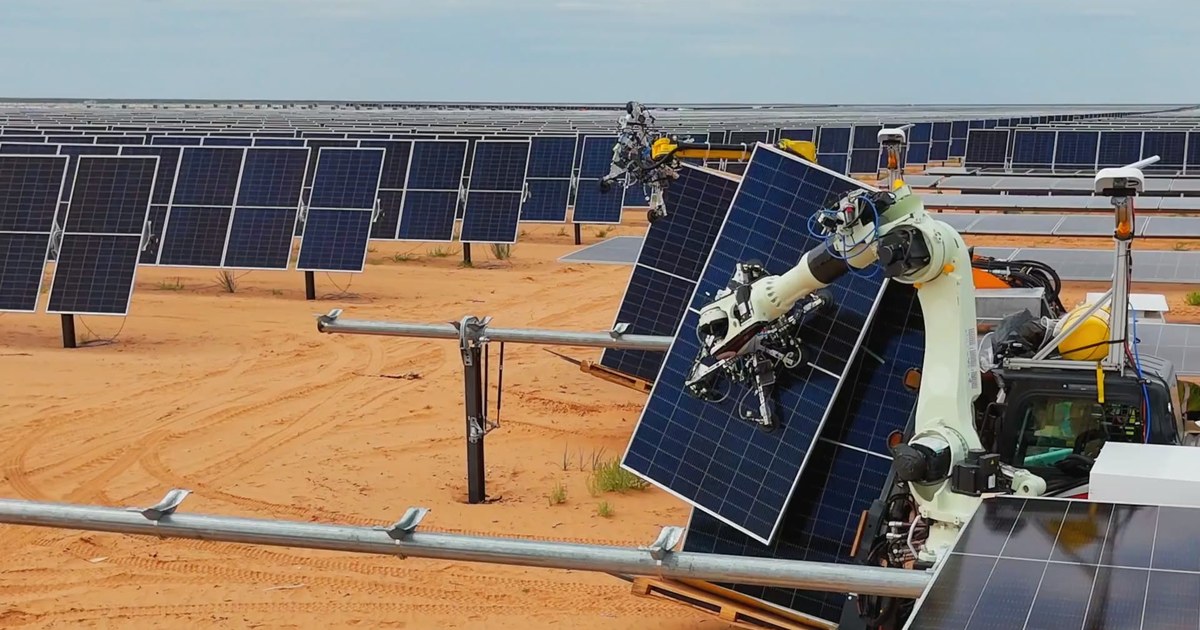
Rather than build another autonomous construction vehicle, Gritt's robotic arms and perception stack bolt onto skid steers, forklifts and other equipment crews already own and know how to maintain. The system handles pick-and-place, assembly and transport in the mud, snow and heat of a real jobsite — environments where indoor factory automation breaks down. Gritt says it has already autonomously installed tens of thousands of solar panels with zero breakages.
Physical AI Meets A $Trillions Buildout Backlog
Founders Puneet Puri (CEO) and Vishal Dugar (CTO) — both Carnegie Mellon robotics alumni — pitch Gritt as the intelligence layer for a construction workforce that will lose 41% of its U.S. headcount to retirement by 2031 even as demand for solar farms, data centers and grid infrastructure explodes. Gritt joins a growing cohort of construction-focused robotics plays chasing the same shortage, though its focus on foundation-model-style learning across sites echoes the same physical-AI thesis driving humanoid rounds like Walden Robotics' $300M seed and NEURA Robotics' $1.4B Series C.
Solar Now, Data Centers And Bridges Next
Obvious Ventures Managing Director Andrew Beebe framed the bet as a compounding data flywheel: every site Gritt deploys on captures terabytes of spatial data that make the next site cheaper and faster. The company is already working with several of the top 10 U.S. EPCs; solar is the first vertical, with data-center construction and large infrastructure — bridges, roads and rebar — explicitly on the roadmap. Gritt reports a 4x efficiency gain on deployed sites with no added labor.
Reporting based on coverage from Business Wire, TechCrunch, Unite.AI, Robotics and Automation News, and Gritt.