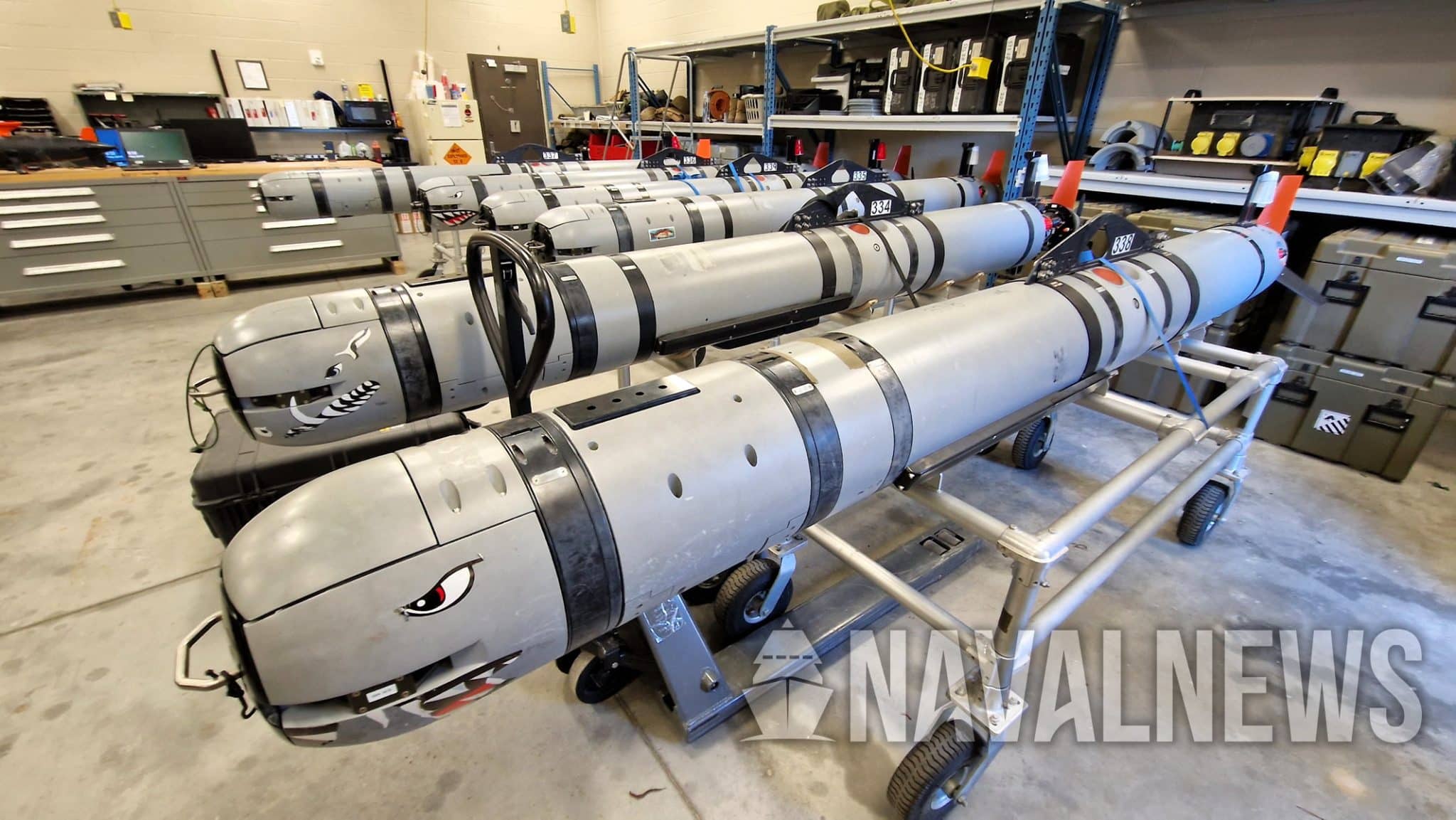
The U.S. Navy has ordered 82 additional Lionfish small unmanned undersea vehicles from HII, bringing the total under contract to 175 out of a possible 200 under a five-year production program worth more than $347 million. The order, announced November 16, 2026, follows HII's delivery of 50 units as of late October, leaving 125 vehicles still to build.
What exactly did the Navy just order, and why does it matter?
Lionfish is a small unmanned undersea vehicle built on HII's commercial REMUS 300 platform, adapted for mine countermeasures, intelligence and reconnaissance, anti-submarine warfare, and electronic warfare missions. The new order covers 82 additional vehicles, built at HII's Pocasset, Massachusetts facility.
What makes this order notable isn't just the volume. It's the acquisition path behind it. Lionfish was developed through rapid prototyping with the Navy and the Defense Innovation Unit under an Other Transaction Authority agreement, then converted directly into full-rate production without a separate competitive program restart. HII describes it as the first unmanned undersea vehicle to make that jump, a route the Pentagon has pushed for years to get unmanned systems from demo to fleet faster.
How does Lionfish compare to other undersea drones the Navy is buying?
The Navy runs several parallel unmanned undersea vehicle lines. Boeing's Orca extra-large UUV targets long-endurance, deep-water missions, while various REMUS-family vehicles serve multiple services for mine hunting at smaller scale. Lionfish occupies a small-to-medium tier designed to be cheap enough to buy in volume and distribute across ships, submarines and shore units rather than concentrated in a handful of expensive platforms.
HII also points to Lionfish as the only unmanned undersea vehicle currently in production for the Navy that is cyber-compliant, meaning it has cleared the Pentagon's cybersecurity accreditation requirements for networked unmanned systems. That status matters as the Navy tries to connect undersea drones into the same data-sharing networks as surface and air assets, rather than treating them as isolated sensors.
What's driving the Navy's appetite for small undersea drones right now?
Undersea mine countermeasures and seabed surveillance have become priorities as the Navy watches China's submarine and seabed-mapping activity expand in the Pacific. Small, swarmable UUVs let the fleet put sensors into contested or shallow water without risking a crewed vessel, and buying in batches of dozens rather than a handful keeps unit costs down while building a production base that can scale if demand grows.
"The updated award reflects the U.S. Navy's continued investment in Lionfish and its operationally proven capabilities," said Duane Fotheringham, president of the Unmanned Systems group within HII's Mission Technologies division, according to Naval News.
What happens next for the program?
HII still has 125 vehicles to deliver under the current 175-unit order, with room to grow to 200 if the Navy exercises its full option. Expect further Lionfish orders to track how quickly the Navy integrates the vehicles into fleet exercises and whether the cyber-compliant networking actually delivers the data-sharing the service wants across its undersea portfolio.