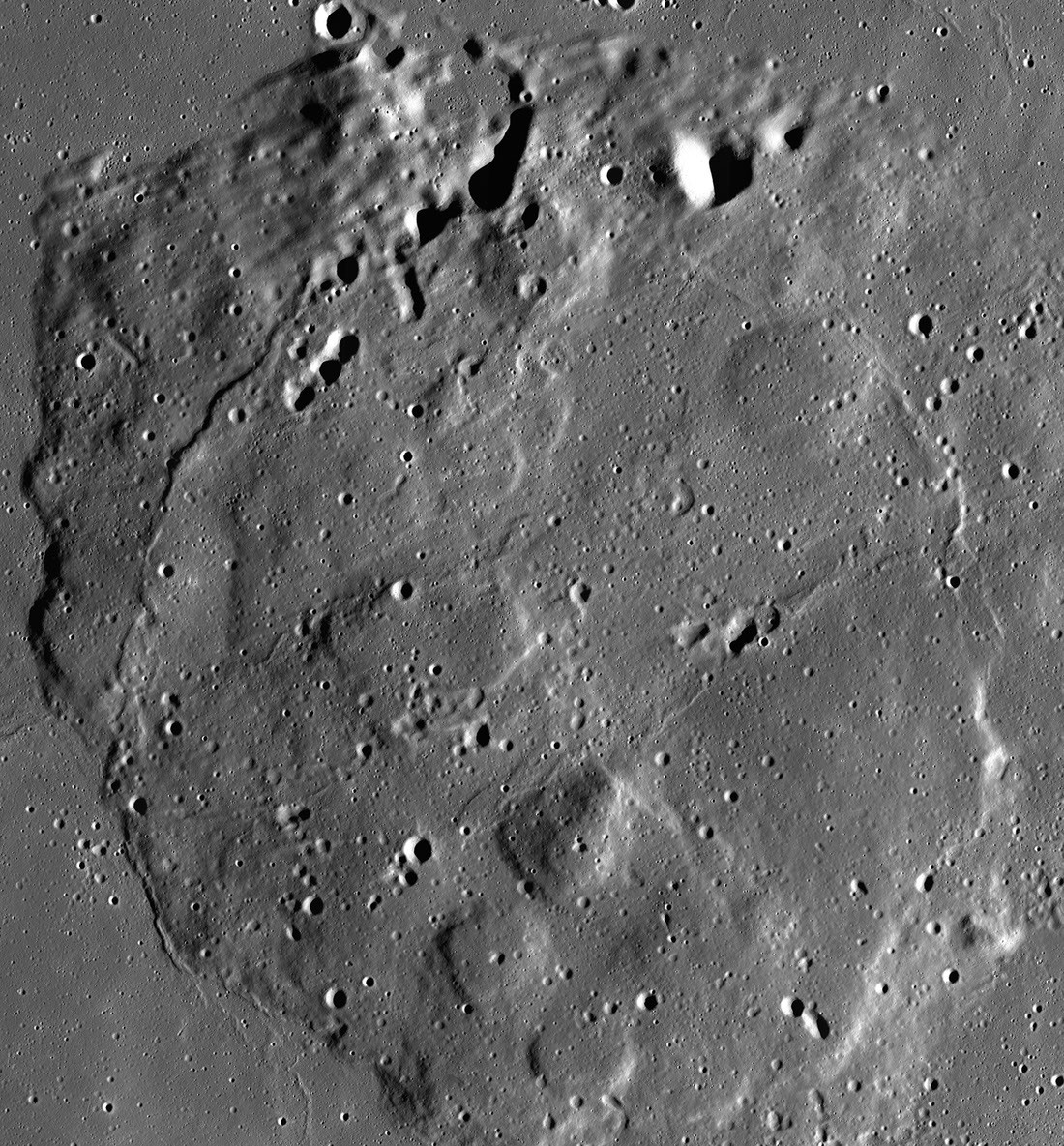
NASA and IBM open-sourced their first foundation model for the Moon on September 10, 2026, adding a lunar geospatial system to the joint Prithvi family of open science models and pushing artificial intelligence into what NASA calls "instrument-scale" work rather than chatbots.
Trained on 30 layers, 9 instruments, 4 missions
The NASA-IBM Lunar Foundation Model was trained on tens of thousands of images and maps spanning more than 30 spatially aligned layers from nine instruments across four missions — including NASA's Lunar Reconnaissance Orbiter (LRO), the GRAIL gravity mission, and JAXA's SELENE/Kaguya archive. IBM says the model outperforms widely used baselines by up to 23% at identifying ice deposits in permanently shadowed craters, mapping potential landing sites and analysing volcanic structures such as the Mons Rümker region.

Open weights, on Hugging Face
Both weights and the training dataset — including the paired SomBench evaluation set — ship on Hugging Face under an open license, following the same distribution pattern IBM used for its Prithvi geospatial, weather and heliophysics models. That matters commercially: lunar mining and lander startups can now fine-tune the model against their own sensors without buying a closed pipeline. It also mirrors the open-weights trend visible today in DeepSeek's V4.1-Flash and IFM's K2 Horizon fleet.
Why it matters for Artemis and commercial landers
Lunar water ice is the practical prize: it can supply drinking water, oxygen and rocket propellant feedstock for future Mars missions. A model that can rapidly cross-reference LRO neutron, GRAIL gravity and SELENE mineralogy data compresses site-selection work that historically took months of human analysis. NASA's Ames team plans to use the model to prioritise Artemis III south-polar landing candidates and to help commercial lander programs — including Intuitive Machines, Astrobotic and Firefly — sharpen prospecting plans.
Prithvi keeps expanding
The Moon is the fourth environment covered by IBM and NASA's joint Prithvi effort, following Earth observation (Prithvi-EO), weather (Prithvi-WxC) and solar physics (Prithvi-Sun). IBM's research lead on the project said a Mars-focused Prithvi variant is in development and will follow a similar open-release model.
Reporting based on coverage from NASA Science, IBM Newsroom, PR Newswire, Reuters and The Next Web.