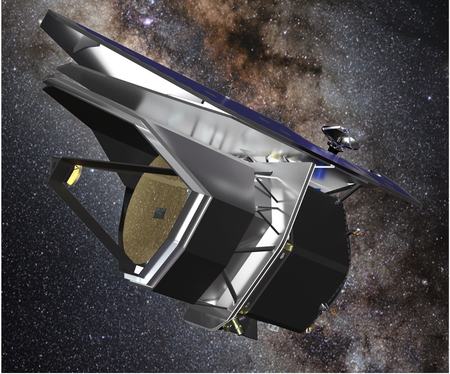
NASA on Wednesday selected the Probe far-Infrared Mission for Astrophysics (PRIMA) as the first flight in its brand-new Probe Explorers class, giving the Jet Propulsion Laboratory and Caltech's Infrared Processing & Analysis Center the go-ahead to build a $1.2 billion far-infrared space telescope for launch in 2033.
A 1.8-Metre Cryogenic Eye On The Cold Universe
PRIMA's design centres on a 1.8-metre cryogenically cooled primary mirror, tuned for wavelengths that JWST and the older Herschel Space Observatory can't reach in tandem. It will carry two instruments: PRIMAger, an imaging polarimeter, and FIRESS, a high-resolution spectrometer. Together the payload targets three big open questions: how stars and planets form inside dust-obscured discs, how supermassive black holes grow with their host galaxies, and where Earth's water came from.
"PRIMA represents a giant leap for far-infrared astronomy," said Caltech president Ray Jayawardhana. The mission is being co-developed with the space agencies of Canada, France, Germany, Japan, South Korea and the United Kingdom, with major hardware also contributed by NASA Goddard and NASA Marshall.

Why 'Probe Explorers' Is A New Category
Probe Explorers is a new PI-led class that sits between the small Explorers missions and NASA's flagships. The $1.2 billion cost cap excludes launch and post-launch operations, forcing tighter management than a flagship like Roman or JWST but allowing science that dedicated Explorers cannot fit. A separate launch provider will be chosen later, meaning PRIMA is not yet locked to any one rocket – potentially opening the door to SpaceX Falcon Heavy, ULA Vulcan or Blue Origin New Glenn depending on 2032 pricing.
Fits Alongside A Busy Late-Decade Space Docket
PRIMA joins a crowded slate of late-2020s astrophysics missions coming out of JPL, including Space Force USSF-385 Starshield deployments for national security and the Starship Flight 14 orbital demo due at the end of September. For JPL, PRIMA offers a rare confirmed 2030s flight programme after budget churn earlier this year.
Reporting based on coverage from Spaceflight Now and NASA's Probe Explorers announcement.