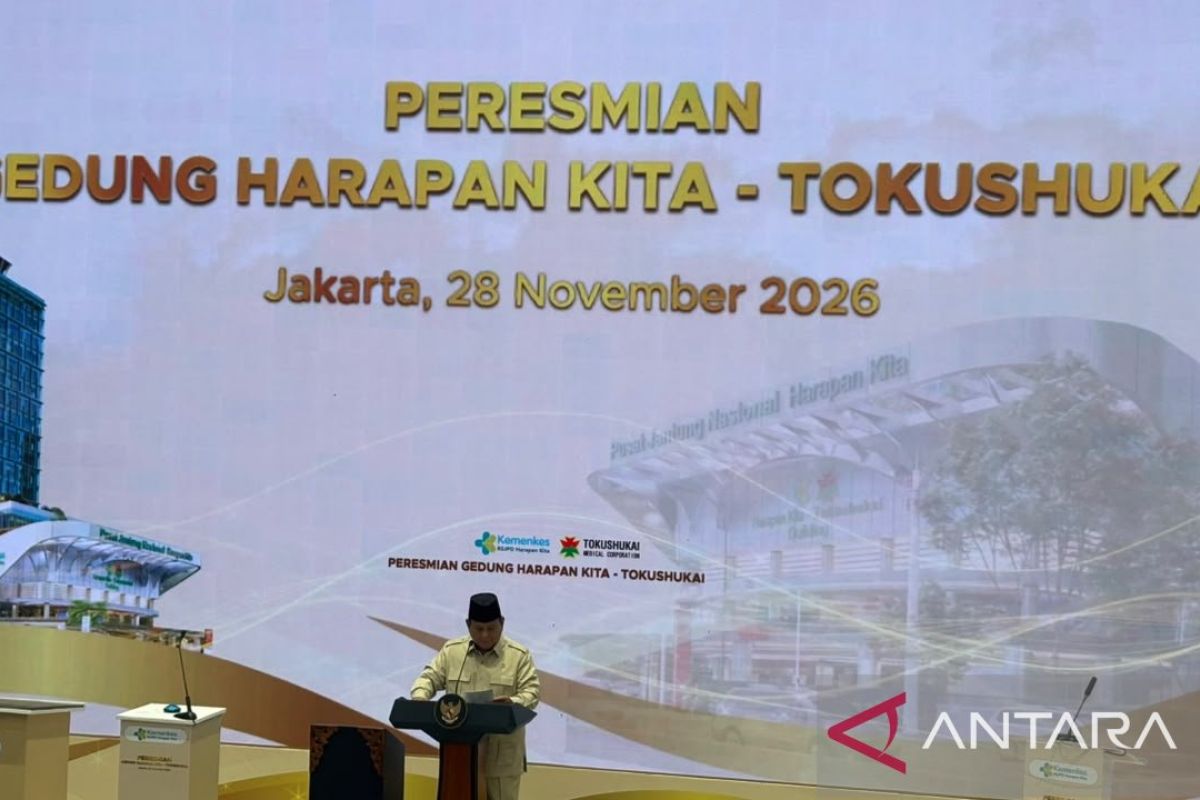
President Prabowo Subianto inaugurated a 23-story cardiac hospital in Jakarta on November 28, 2026, giving Indonesia's public health system its most advanced concentration of robotic surgical technology to date. The Harapan Kita-Tokushukai Building, a joint project between Indonesia's Ministry of Health and Japan's Tokushukai Medical Corporation, cost Rp2 trillion — roughly $125 million — to construct and equip. Officials describe it as the largest dedicated cardiovascular care center in Southeast Asia.
A building sized to stop a $10 billion outflow
The new facility sits inside Harapan Kita Heart and Vascular Hospital, already Indonesia's primary referral center for heart disease. Builders PT PP Tbk and PT Wijaya Karya Tbk expanded the design from an originally planned 20 floors to 23 following a topping-off ceremony in April 2026. The additional floors hold robotic surgical systems, a cardiac catheterization lab, an emergency department and intermediate care units, splitting the Rp2 trillion budget roughly evenly between construction and medical equipment.
The spending case rests on a specific number: Indonesians already spend an estimated $10 billion a year seeking medical treatment abroad, with Singapore and Malaysia the most common destinations and cardiac care among the largest categories. Indonesia's national health insurance scheme, JKN, covered 22.5 million cardiac cases in 2024 alone, at a cost of Rp19.25 trillion ($1.21 billion). Government planners are betting that a flagship domestic facility, rather than piecemeal upgrades spread across smaller hospitals, is the faster way to claw back some of that outbound spending.
"This building is highly modern. It spans 23 floors and is equipped with various cutting-edge medical technologies," Prabowo said at the opening, according to Antara News.
Built to train surgeons, not just treat patients
Beyond patient care, the center is designed to double as a national training site for cardiac surgeons, addressing a shortage of specialists qualified to operate robotic platforms outside Jakarta. That training mandate matters more than the building itself: robotic surgery systems installed without a deep enough bench of trained operators tend to sit underused, which is the main reason many hospital robotics programs in emerging markets fail to generate the case volume needed to justify their cost.
Harapan Kita's existing status as the country's top cardiac referral hospital gives the new building a built-in stream of patients that newly licensed, stand-alone robotic surgery units elsewhere often lack during their first years of operation. That referral pipeline, more than the 23 floors, is likely to determine how quickly the facility reaches a caseload that makes a dent in the $10 billion figure.
Indonesia's push mirrors a broader regional pattern: Thailand and Malaysia have spent the past decade building private hospital networks marketed specifically to foreign patients, including robotic-surgery suites, which is partly why Indonesians have had so many nearby alternatives to choose from in the first place. A domestic facility matching those private networks on technology, but routed through Indonesia's public insurance system, is a different model — one built to retain citizens rather than attract outsiders.
The Jakarta center is one piece of a wider effort by Prabowo's government to expand state-run health infrastructure, alongside renovations to community health centers and expanded air-ambulance coverage for outer regions. The real test plays out over the next several years, as officials track how many patients who would otherwise have flown to Singapore or Kuala Lumpur choose to stay in Jakarta instead.