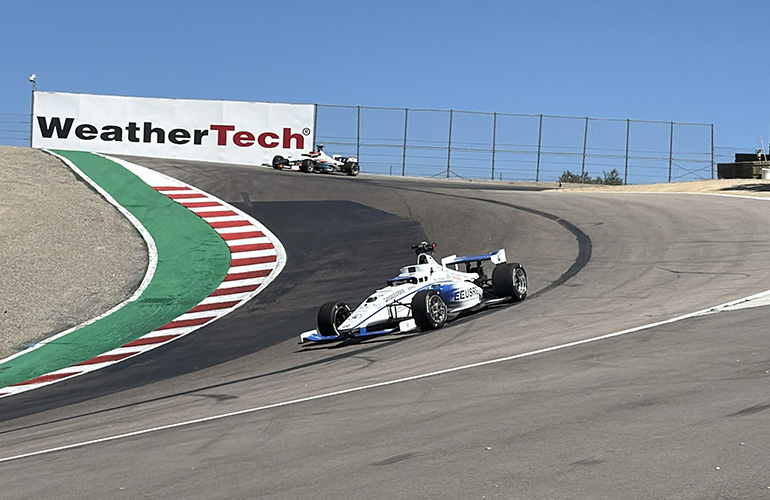
The Indy Autonomous Challenge on September 21 wrapped its first-ever competition on a road course at California's WeatherTech Raceway Laguna Seca, and for the first time in the series' history, self-driving racecars executed live overtakes on one another.
Nine Universities, One Chassis
Nine university teams from North America, Europe and Asia fielded identical AV-24 racecars — modified Dallara IL-15s with a shared sensor and compute stack that each team programs itself. Racing was staged as one-on-one heats: the challenger got two laps to pass the lead car, then teams swapped roles with the engine's power limit turned up.
Unimore Racing Takes The Win
Italy's Unimore Racing, out of the University of Modena and Reggio Emilia, beat Purdue AI Racing in the final. Every passing decision — line, brake point, throttle — was made by the AI driver once the green flag dropped. Teams had to first qualify via a virtual test environment, marking the first time the IAC has required a simulation qualifier for a physical race.
Why Road Courses Matter
Ovals only stress a narrow slice of autonomous-driving decision-making. Laguna Seca's cambered corners, blind Corkscrew and elevation changes force controllers to handle rapidly shifting grip and occluded lines of sight — the same problem set that Waabi's route-agnostic freight demonstrations and Tesla's Full Self-Driving push are trying to solve on public roads.
Reporting based on coverage from The Robot Report.