
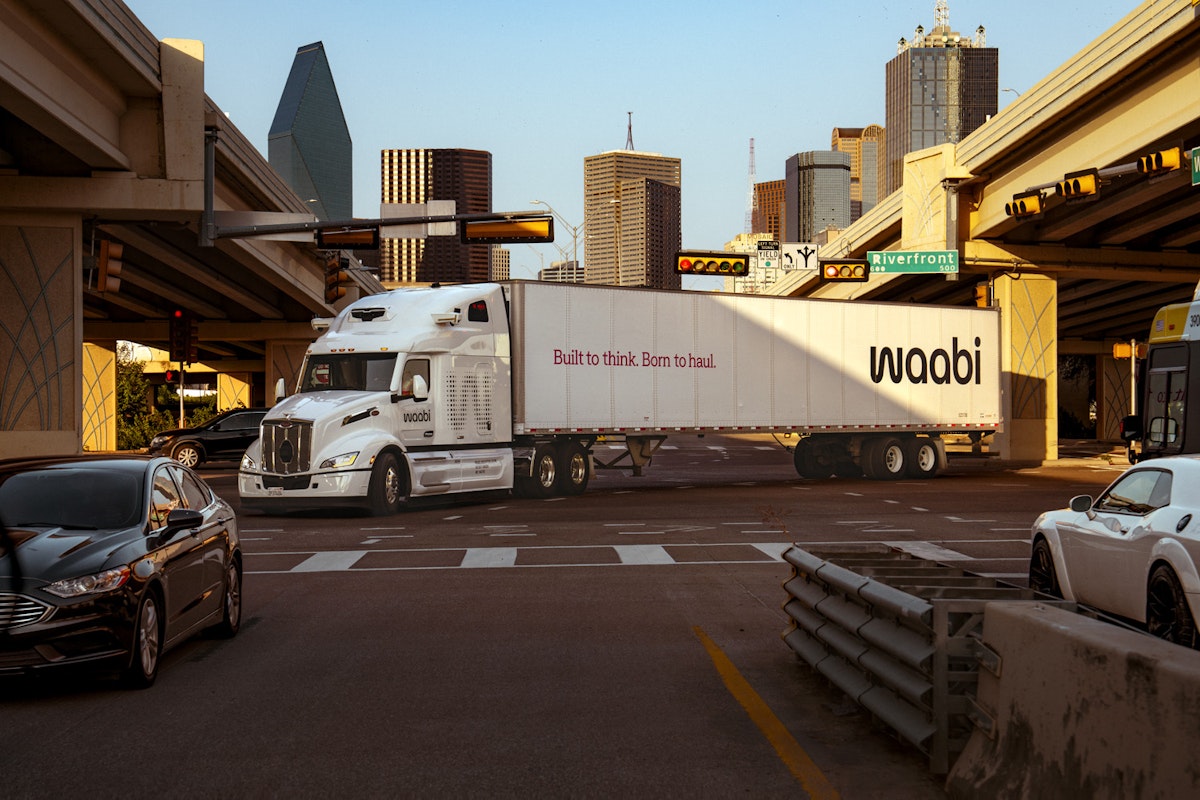
Toronto-based autonomous trucking startup Waabi said on September 22, 2026 that its AI driver has run a fully autonomous 300-mile highway route from Dallas to San Antonio without any prior route-specific simulation, mapping or fine-tuning — a milestone founder and CEO Raquel Urtasun frames as evidence its generalized approach can scale where competitors' route-by-route stacks cannot.
The Blind Drive
Waabi's trucks normally rehearse a corridor in the company's Waabi World neural simulator before any commercial-grade attempt. On the Dallas-San Antonio run, Urtasun said the truck "was able to drive perfectly, confidently, safely, with no interventions for the entirety" of the route without any previous exposure. The company positions the result as a generalization proof point that echoes how human drivers handle a new highway rather than as a scripted geo-fenced pilot.
Volvo Ships The Hardware In 2027
The demo tees up Volvo Autonomous Solutions, one of Waabi's Series B backers alongside Uber, Khosla Ventures, G2 Venture Partners and Porsche, to begin installing Waabi Driver on purpose-built VNL Autonomous trucks in the first quarter of 2027. Waabi raised up to $1 billion earlier in 2026 to fund that ramp.
Why It Matters For Robotrucking Economics
Rivals like Aurora and Waymo Via built high-definition maps and route-specific data pipelines that make every new lane an integration project. Waabi's argument is that a generalized world model plus a route-agnostic policy collapses that cost — the same driver software should work on any highway, in any climate, on any production truck. If holds up under regulator and insurance scrutiny, that changes the unit economics for freight networks that today can't wait for a per-corridor validation loop.
Context: Autonomy Race Heats Up
The demo lands as the Robotaxi and robotruck race broadens: Waymo just announced a 2027 Tokyo launch, Hyundai is spinning up a data flywheel to close its autonomy gap, and Mercedes-Benz is committing $8.6B to Wayve's AI driver. Waabi's differentiator is that its answer runs in freight economics, not premium passenger cars.
Reporting based on coverage from Forbes and Waabi.