Intrinsic Challenges Traditional Automation Approach
Stefan Nusser from Intrinsic argues that traditional automation systems are "too expensive and too inflexible" for modern manufacturing requirements. The Google-backed robotics company positions human-robot collaboration as the solution to current automation limitations.
Nusser emphasizes that conventional automation requires significant upfront investments and lengthy setup times, making it unsuitable for small-batch production and rapidly changing manufacturing demands. Intrinsic's approach focuses on intuitive programming interfaces that reduce robot deployment time from weeks to hours.
Digital Twin Technology Transforms Robot Programming
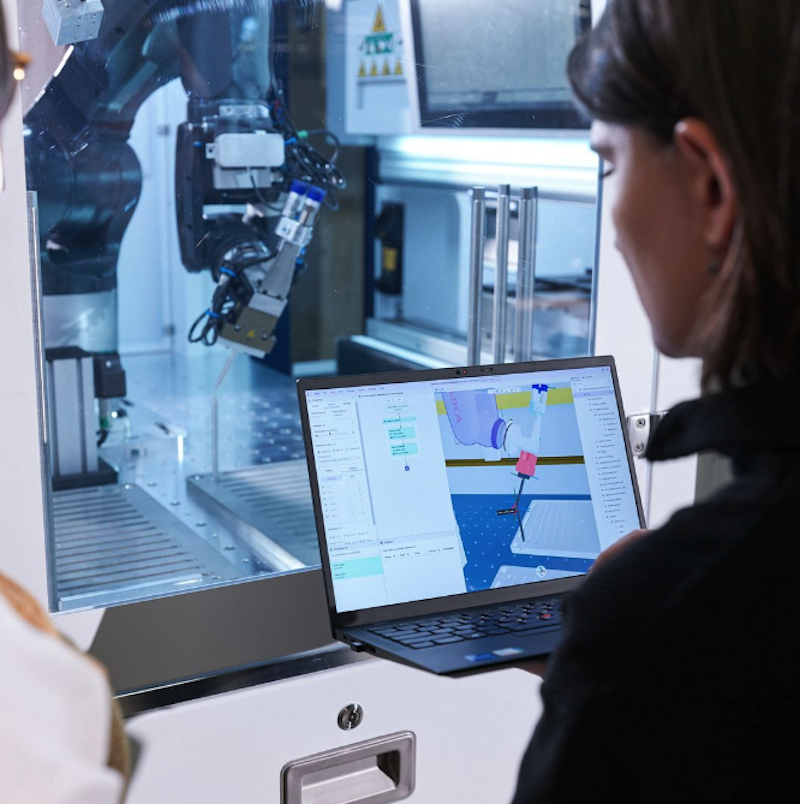
The company's platform integrates real-time simulation software with digital twin technology, allowing operators to program and monitor industrial robots through visual interfaces. This approach eliminates the need for specialized programming knowledge while maintaining precision control.
Human technicians retain full operational control while robots handle repetitive, high-precision tasks. The system enables real-time path planning adjustments and continuous monitoring without stopping production lines.
Industry 4.0 Shifts Toward Collaborative Manufacturing
Manufacturing facilities increasingly adopt collaborative robotics over traditional fixed automation systems. This transition addresses labor shortages while providing flexibility for custom production runs and product variations.
Intrinsic's model demonstrates how augmented human intelligence combined with robotic precision creates more adaptable manufacturing environments compared to fully automated systems.