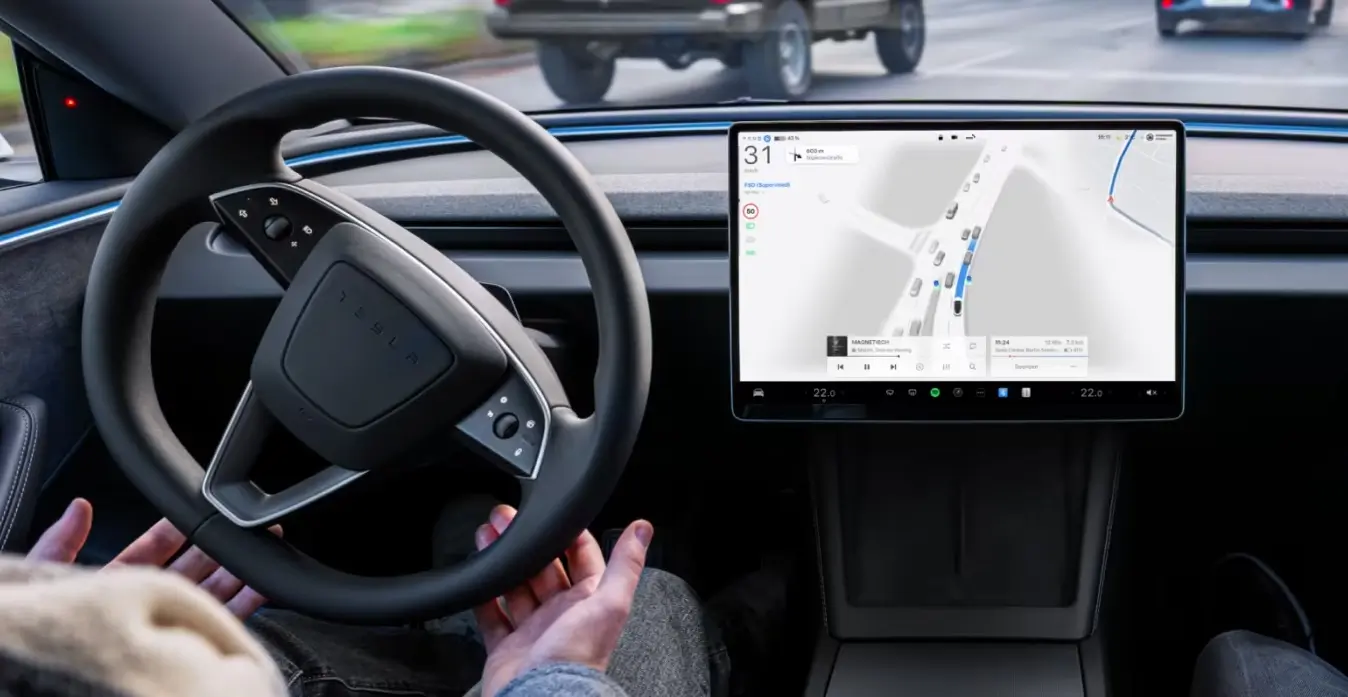
Italy's Ministry of Transport granted provisional type-approval for Tesla Assisted Driving on November 20, making it the 12th European Union country to clear the system and the first major EU market to do so. Transport Minister Matteo Salvini called the decision "another step forward toward innovation, technology and the mobility of the future, whilst always prioritising public safety."
Tesla Assisted Driving, the automaker's advanced driver-assistance software formerly branded FSD (Supervised), will roll out to Italian customers via an over-the-air update and be offered as a €99-a-month subscription. The approval follows a late-October conversation between Salvini and Elon Musk, and comes roughly a week after Finland became the 11th EU country to sign off on the system.
Why a mid-sized approval list suddenly matters
Full EU-wide authorization for a driver-assistance system requires backing from at least 15 member states representing 65% of the bloc's population — a threshold Tesla has been chasing country by country since the Netherlands became the first approver in April. Italy's weight is disproportionate: as the EU's third-most-populous nation and one of its largest car markets, its approval adds substantially more population share than the ten smaller states that preceded it, from Lithuania and Croatia to Denmark and Belgium.
The timing also matters competitively. Tesla's robotaxi fleet is already running unsupervised in Texas and Florida cities, and the company has been expanding its Cybercab footprint domestically. A green light from Europe's bigger markets would let Tesla start building the on-road driving data and regulatory track record it needs before pushing toward driverless operation on the continent, where rules have historically lagged the U.S. and parts of China.
What's left before EU-wide approval
Tesla still needs several more large markets — Germany, France, Spain, or Poland among them — to cross the 65%-population threshold for automatic bloc-wide recognition. Each approval to date has come through individual national transport ministries conducting their own technical assessments, a slower path than a single EU-level sign-off but one that lets Tesla bank incremental wins. The next test is whether Italy's move pressures larger holdout governments to accelerate their own reviews.