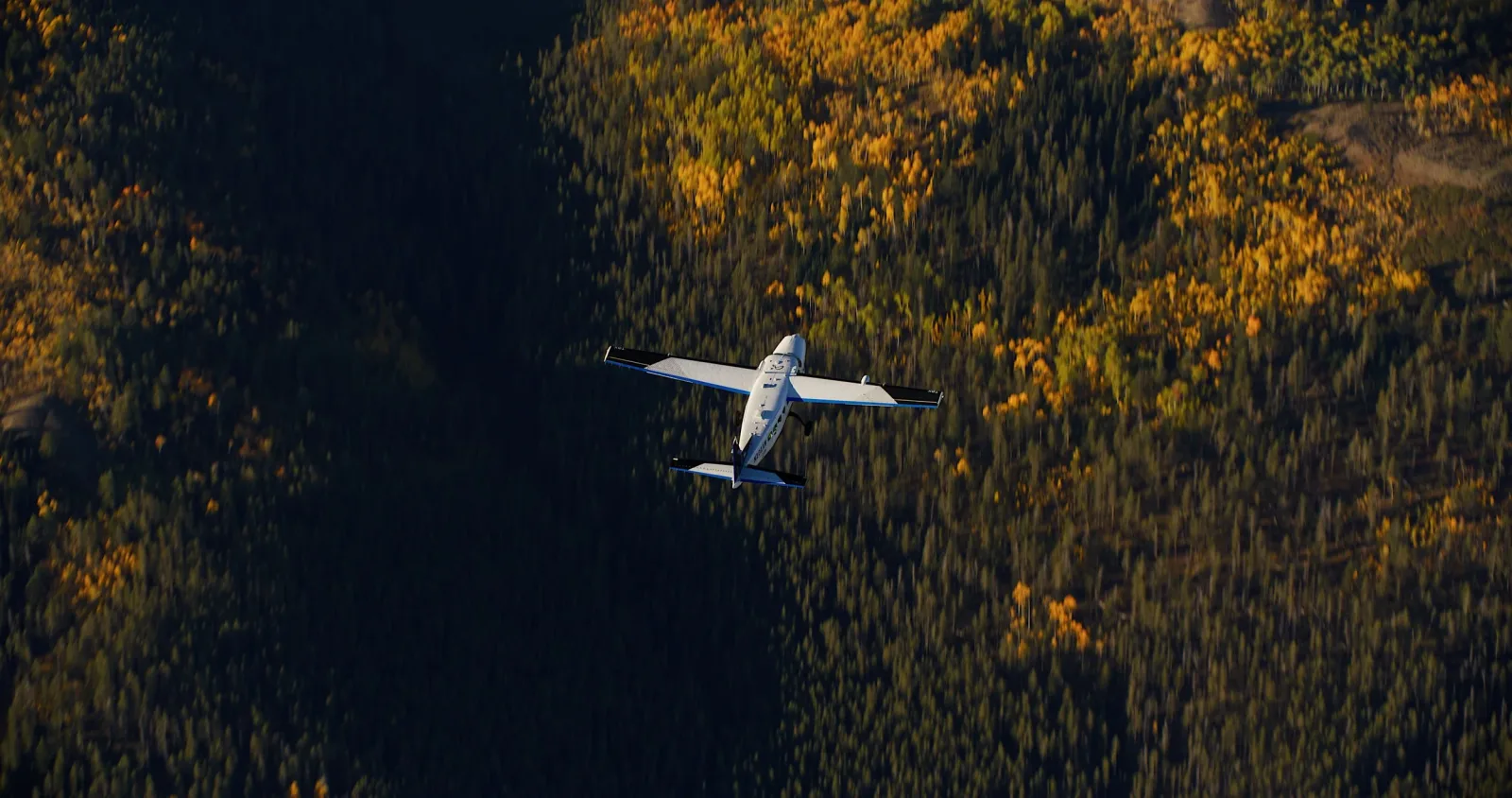
The U.S. Air Force has increased its financial commitment to Joby Aviation's autonomous flight software to nearly $37 million, and raised the ceiling on the company's operational testing contract to $50 million, Joby said on November 4. The funding flows through AFWERX, the Air Force's innovation arm, and extends work that began with Joby's 2024 acquisition of Xwing's autonomy division.
The money pays for further development of the autonomy stack and expanded testing in the Pacific, where Joby's system has already flown more than 400 fully autonomous flights. In one recent demonstration, a modified 1993 Cessna 208B Grand Caravan flew from Concord, California, to North Carolina's Outer Banks with zero control inputs from the onboard safety pilot, while operators supervised remotely from as far as 2,537 miles away. During Pacific exercises, the aircraft was managed from Andersen Air Force Base in Guam, nearly 4,000 miles from where the plane was flying near Hawaii.
Why the Pentagon Wants Autonomy on Old Airframes
The contract's logic is about logistics, not air taxis. AFWERX's Kate Brown, the Contested Logistics Tactical Airlift Lead, said the goal is to sustain cargo operations in contested environments while reducing risk to aircrews. Running cargo into forward or contested locations without a pilot aboard removes a point of vulnerability the Air Force has flagged repeatedly as it plans for a potential Pacific conflict where air bases and supply lines could come under attack.
That mission also explains why Joby is testing on a three-decade-old Caravan rather than its electric air taxi. The autonomy software is built to be platform-agnostic, according to founder and CEO JoeBen Bevirt, who said the goal is to bring advanced autonomy to a wide range of high-utility aircraft quickly. A Caravan is cheap, abundant and already certified, making it a faster path to proving out autonomous cargo flight than waiting for a purpose-built aircraft.
A Dual-Use Hedge as eVTOL Timelines Slip
Joby is best known for its electric vertical takeoff and landing air taxi, which has faced a slower certification path than early timelines suggested. The Air Force contracts give the company a second, nearer-term revenue stream and a defense customer less sensitive to consumer aviation regulatory delays.
The push also fits a broader pattern among eVTOL and advanced-air-mobility companies hedging against civil-market uncertainty by chasing defense dollars, following firms like Archer and Beta Technologies into military partnerships. Joby has gone further than most, agreeing to acquire defense contractor Resonant Sciences for roughly $500 million, with the deal expected to close in early 2027. That acquisition would fold additional autonomy and defense-systems expertise directly into Joby's operations rather than relying solely on contract work.
The $50 million ceiling leaves room for the Air Force to keep expanding the relationship without a new contract vehicle, a structure that typically signals a customer intends to scale up rather than wind down. For Joby, converting incremental AFWERX funding into a durable defense logistics business would diversify a company still waiting for its passenger-carrying aircraft to reach commercial service at scale.