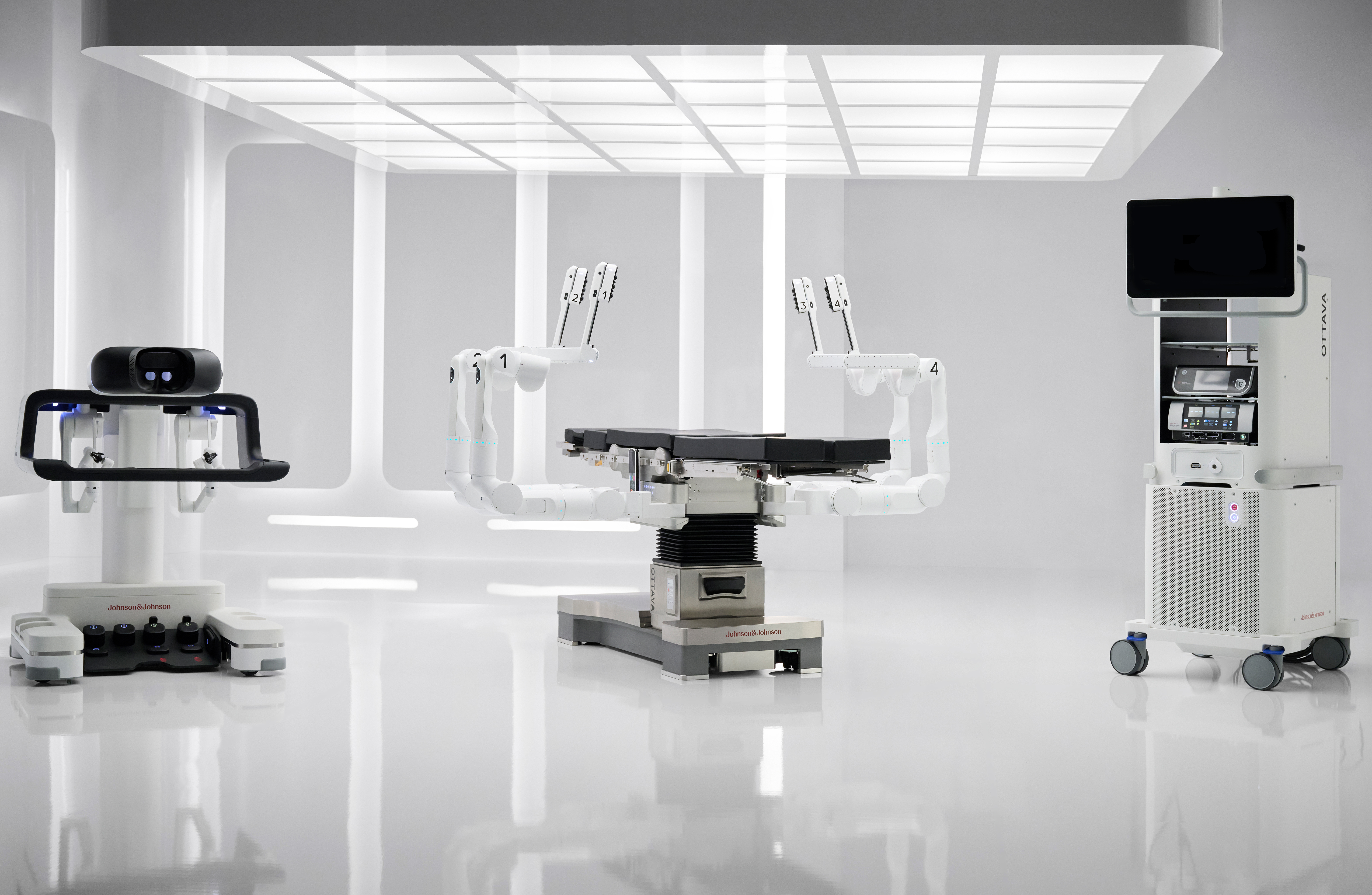
Johnson & Johnson today announced that the U.S. Food and Drug Administration has granted De Novo marketing authorization for its OTTAVA Robotic Surgical System, the world's first table-integrated soft-tissue robotic platform. The clearance officially opens the U.S. commercial market for J&J's decade-long, multi-billion-dollar bid to challenge Intuitive Surgical's da Vinci franchise.
Ten Procedures, Table-Integrated Architecture
OTTAVA is authorized for a broad general-surgery slate covering the upper abdomen: Roux-en-Y gastric bypass, gastrectomy, cholecystectomy, splenectomy, gastric sleeve, small bowel resection, appendectomy, lysis of adhesions, fundoplication and hiatal hernia repair. Its four robotic arms are embedded in the OR table itself, occupying 30–50% less footprint than boom- or cart-mounted rivals, and coordinated 'twin motion' lets the table and arms reposition together for multi-quadrant access without breaking sterile drape.
Polyphonic Ecosystem And Long Slog Behind The Clearance
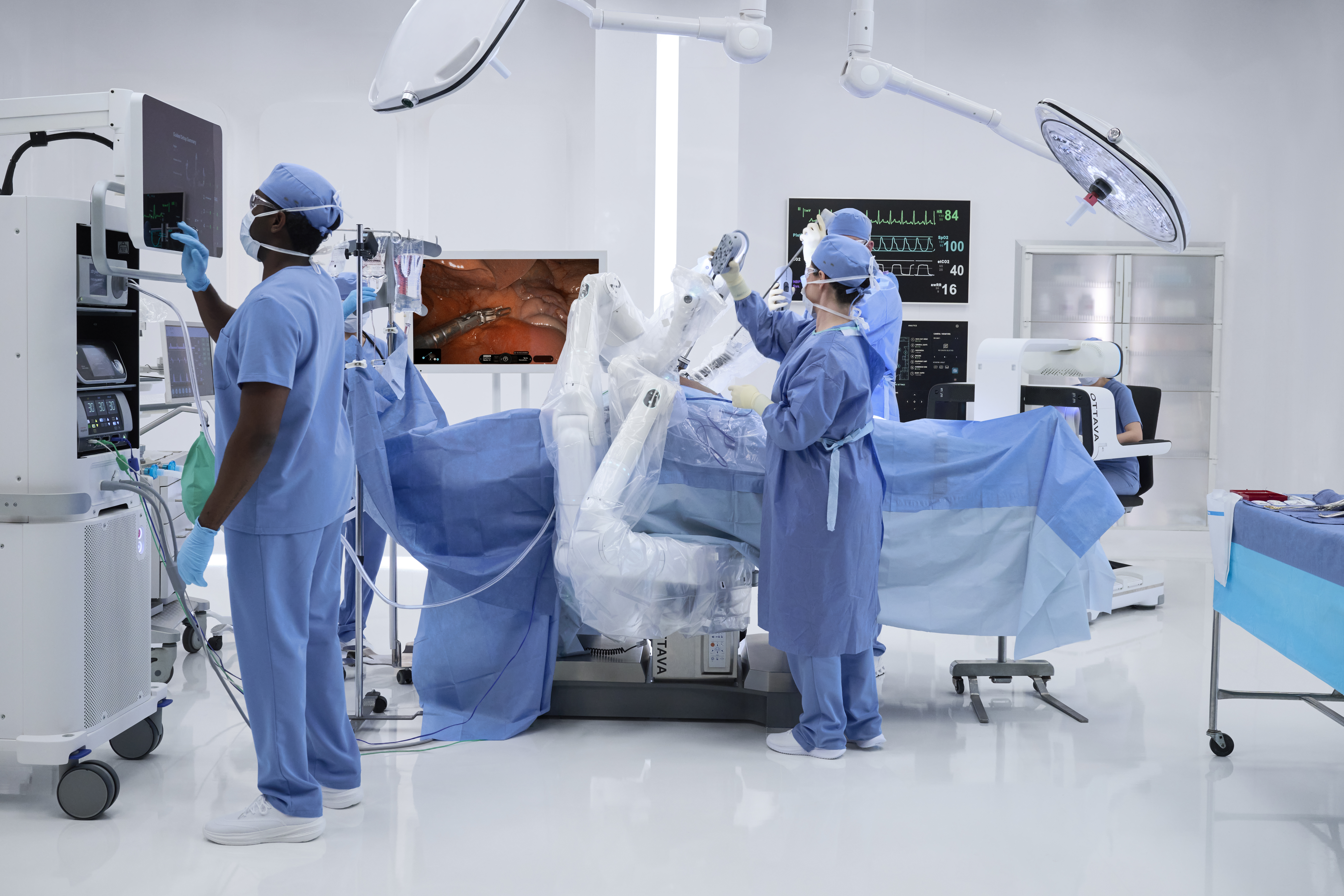
OTTAVA connects to J&J's Polyphonic digital ecosystem, layering media, education and outcome data on top of every case — a hedge against the future move to more autonomous, AI-augmented surgery. The nod caps nearly six years of development following J&J's 2019 acquisition of Auris Health and the 2020 buy of Verb Surgical from Verily. The company reported positive pivotal data in a 30-patient gastric-bypass study earlier this summer.
Rollout And Ambitions
J&J will launch OTTAVA commercially with select U.S. customers first, then expand into additional indications and international markets. A U.S. inguinal-hernia trial is already underway. The clearance instantly reshapes competition with Intuitive's da Vinci ecosystem and Medtronic's Hugo, and echoes a broader medtech wave toward data-driven robotic surgery visible in stories like Medtronic's real-time AI on Hugo.
Reporting based on coverage from Johnson & Johnson, Bloomberg, MedTech Dive, MassDevice and RTTNews.