
Satellite-servicing startup Katalyst Space Technologies has raised $12 million to push robotic servicing into geostationary orbit, closing a round led by Geodesic Capital with participation from Fortitude Ventures and other investors. The capital will fund Katalyst's first Nexus spacecraft, designed to rendezvous with and service satellites parked 36,000 kilometers above Earth.
From low Earth orbit to GEO
Katalyst has built its early reputation on life-extension missions in low Earth orbit, but Nexus represents a far harder target: geostationary orbit, where the most valuable commercial and national-security satellites operate and where servicing has long been considered a holy grail. Nexus-1, the first vehicle, is scheduled to launch in 2027 aboard an Ariane 6. Its opening act will be to approach a U.S. Space Force satellite and install a space-domain-awareness sensor, before conducting further rendezvous and proximity operations with national-security spacecraft and, eventually, commercial customers.
Building on the Link mission
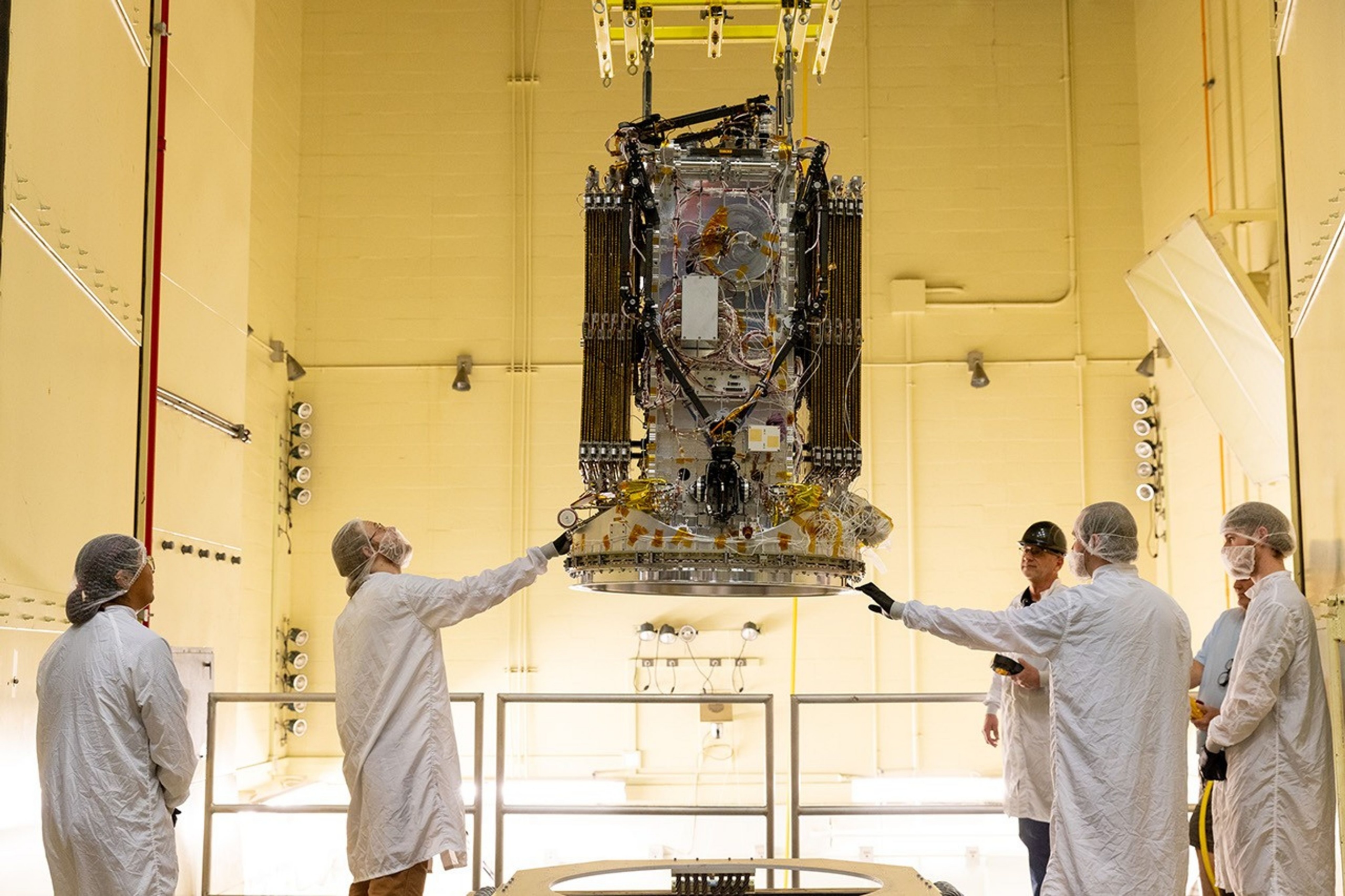
Nexus follows Katalyst's Link spacecraft, which is set to dock with NASA's aging Neil Gehrels Swift Observatory and raise its decaying orbit to prevent an early reentry. Link demonstrates the core capability that makes Nexus possible: autonomous capture of a satellite that was never designed to be serviced. Proving that maneuver on a science mission in low Earth orbit de-risks the much higher-stakes operations Katalyst now plans in GEO.
A crowded but capital-hungry market
In-orbit servicing, assembly and manufacturing has drawn renewed investor attention as operators look to extend the life of multi-hundred-million-dollar assets rather than replace them. Katalyst's round is modest next to the mega-deals reshaping the wider space economy, such as ICEYE's $450 million Series F or constellation replenishment programs like MDA Space's RADARSAT work, but it is precisely sized to carry a focused servicing company to a flight demonstration.
Why it matters
If Nexus succeeds, Katalyst would join a small group of companies able to physically interact with satellites already on orbit, a capability with both commercial value and clear defense applications. The Space Force sensor-installation objective underscores how closely servicing robotics and space domain awareness now overlap. For investors, the $12 million round is a bet that the robotic spacecraft, not the satellite, becomes the most valuable thing in orbit.
Reporting based on coverage from SpaceNews, Payload, Evertiq and FinSMEs.