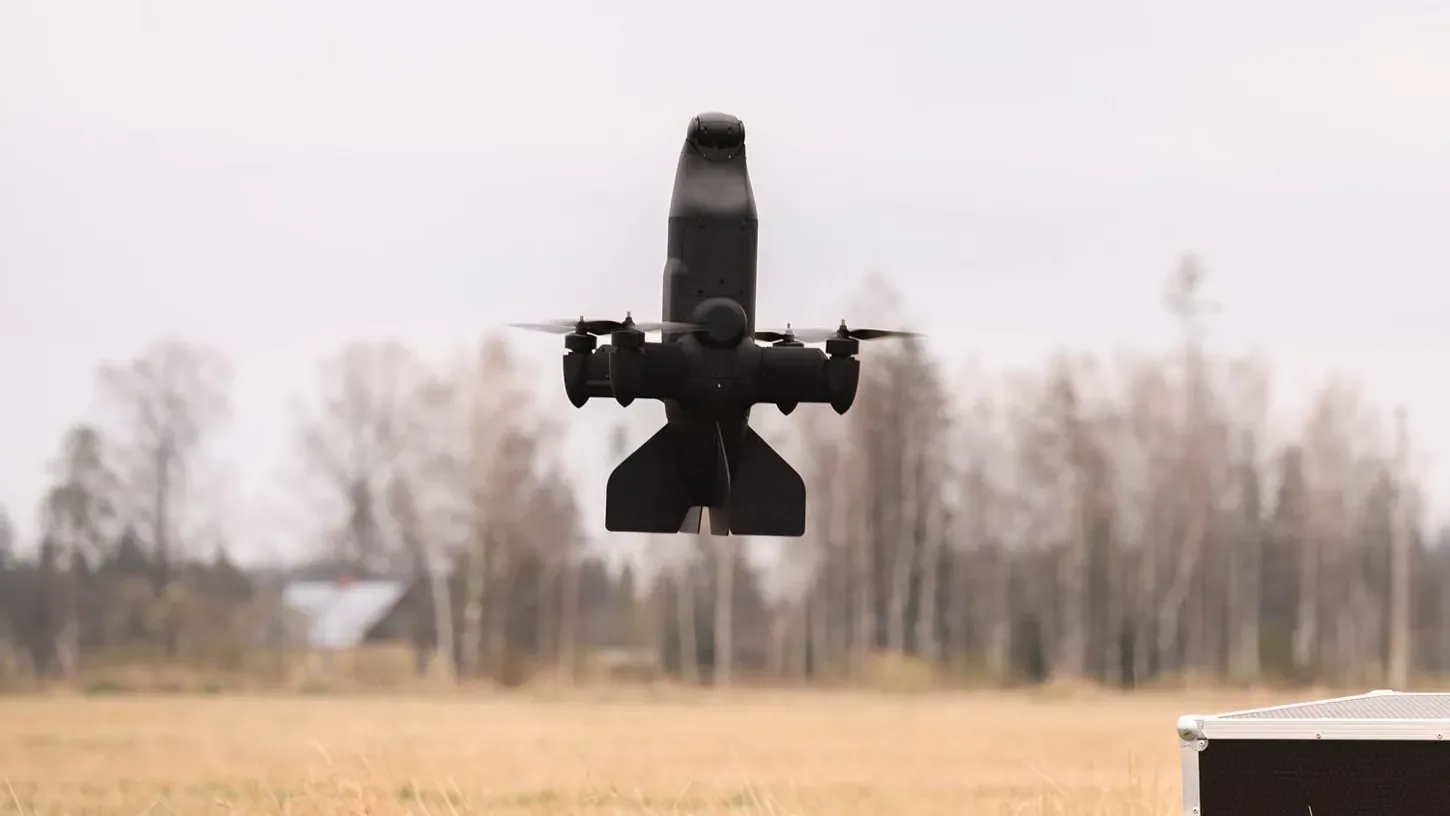
At 2:30 a.m. local time on November 27, an alert went out over Latvia's eastern Ludza municipality: an unidentified drone had crossed the border from the direction of Russia. Latvia responded by launching a BLAZE interceptor drone, built by Riga-based Origin Robotics, which completed its mission and returned to base without engaging a target. NATO fighter jets assigned to the Baltic Air Policing mission scrambled in response, while Estonia issued its own drone-threat alert across six counties roughly four hours later, according to DroneXL.
It was the fourth time in November that Latvia launched an interceptor in response to a suspected airspace violation. On November 1, a BLAZE interceptor self-destructed three minutes after its target crossed back into Russia. On November 3, Latvia launched two interceptors at a suspected Ukrainian-type drone. On November 10-11, three drones entered Latvian airspace, NATO jets pursued one, and interceptor crews declined to engage over concerns about civilian risk. The November 27 incident is the first this month in which the interceptor returned to base undamaged and unused against a target.
What BLAZE actually is
BLAZE is a vertical-takeoff interceptor built specifically to hunt and destroy other drones, carrying a high-explosive fragmentation warhead and giving its operator the ability to cancel an attack up until final approach. If the drone loses its communications link, breaches its geofence, or suffers a critical failure, it self-destructs automatically rather than falling uncontrolled or continuing toward a target. Latvia, Estonia and Belgium were the first NATO members to field the system, making the Baltic states an early operational testbed for autonomous counter-drone interceptors rather than the jamming or missile-based defenses most air forces still rely on.
Why repeated, low-casualty incidents still matter
No drone has yet been destroyed in any of November's four incidents, and NATO has not attributed the intrusions to a specific actor, though all have coincided with Russian drone activity near Saint Petersburg and the border region. That pattern, repeated incursions met with scrambled jets and interceptor launches that often return empty, is precisely the scenario BLAZE was designed to absorb cheaply: a reusable, pilotless interceptor costs far less per sortie than scrambling crewed fighters, and can be launched faster from forward sites near the border. For NATO's eastern flank, the November string of incidents functions as a live-fire validation of whether autonomous interceptors can shoulder routine airspace policing that would otherwise fall entirely on manned aircraft.