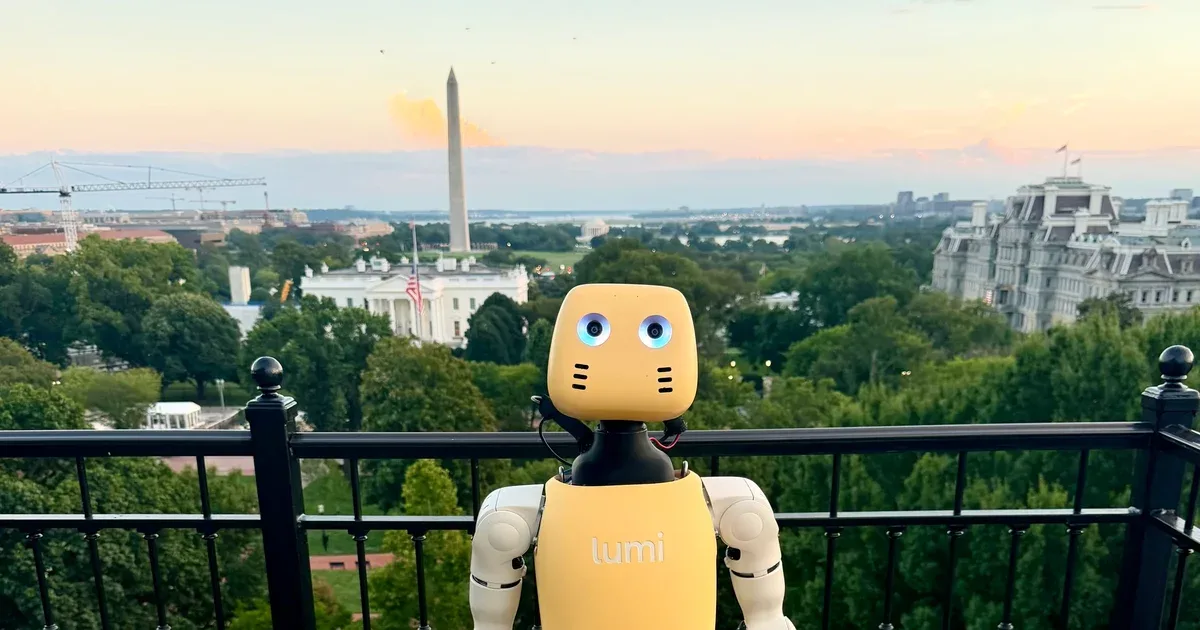
San Francisco startup Lightberry announced on October 30, 2026 that its Lumi humanoid robot has become the first, and so far only, humanoid product cleared by the U.S. Department of War for exemption from the FCC's Covered List. The approval lets Lightberry keep selling Lumi, a 4-foot-2-inch, $39,990 interactive robot, even though it runs on a mechanical base from China's Unitree. Reservations are open now, with Founder Edition units shipping this year, according to Lightberry.
The approval matters because of what it gets around. In July 2026, the FCC banned new foreign-made humanoid and quadruped robots from entering the U.S. market, citing the national security risk posed by their cameras, microphones and networked compute. The only way through the ban is a case-by-case review by the Department of War. Lightberry is the first company to pass one.
How did a robot built on Chinese hardware get approved?
Lightberry didn't argue the ban was wrong. It made two commitments that let regulators treat Lumi as American-controlled despite its origins. First, the company says it stripped out the parts of the robot that actually see, hear and think. The cameras, microphones, onboard computer and software are all Lightberry's own, running on an Nvidia Thor chip, not the stock components that normally ship with Unitree's hardware. Second, Lightberry committed to manufacturing Lumi's body, head and hands domestically, with more components to follow.
That distinction, full control over sensing and compute, is what separates an exemption from a ban. Lightberry CEO Ali Attar framed it as a trust problem specific to robots that work in people's homes and offices: "A humanoid robot works right next to people, with cameras and microphones, so you need to know exactly what's running inside it."
Why does this matter beyond one startup?
The July ban effectively froze the U.S. market for a wide swath of humanoid and quadruped robots built on Chinese mechanical platforms, which is most of them. Unitree alone supplies research-grade bipedal and quadruped bases to dozens of startups worldwide because building a reliable walking robot from scratch is slow and expensive. Lightberry's approval creates a template: swap the electronic guts, localize final assembly, and a company can keep using a capable, inexpensive overseas frame while staying on the right side of the rule.
That template has commercial value well beyond Lightberry. Expect other humanoid startups that rely on Unitree, AgiBot or similar Chinese suppliers to pursue the same kind of review rather than redesigning their hardware from zero. It also gives the Department of War a working precedent for future applications, which should speed up decisions on the next company in line.
Lumi itself is a relatively low-stakes test case. At 4 feet 2 inches and finished in yellow, it's pitched at non-technical business teams for tasks like greeting visitors, giving tours, storytelling and photography, not factory floor work or sensitive environments. Lightberry says its roughly 50-person team splits evenly between artists from studios like Pixar and Disney and engineers from companies like Google and GE, a mix the company says is intentional: "We believe robotics will shine brightest where art meets technology."
What happens next?
Lightberry, founded in 2025 and a Y Combinator alum, now has to prove it can actually build Lumi at volume and on schedule, something unproven startups routinely struggle with regardless of regulatory status. The bigger test is whether the Department of War process scales. If approvals stay this rare, the exemption remains a one-company story. If more humanoid makers follow Lightberry's blueprint and get cleared, the July ban ends up reshaping how robots are built in the U.S. rather than keeping foreign-linked machines out of it.