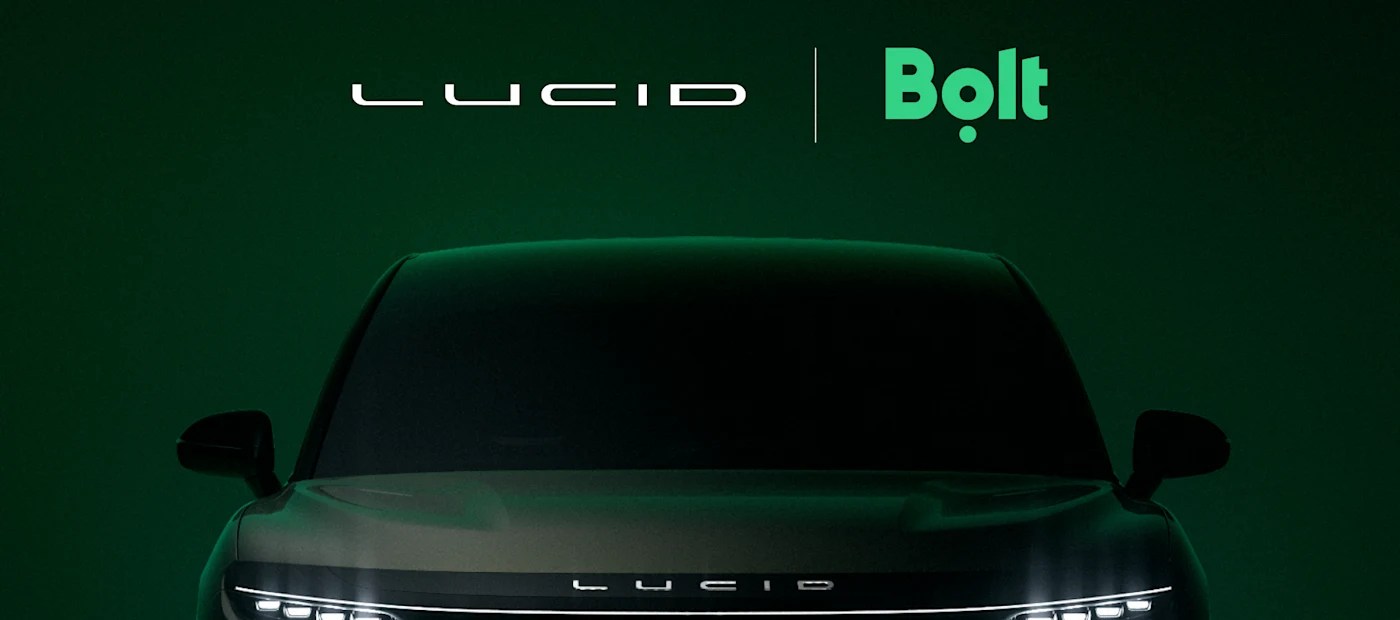
Lucid Motors and Estonian mobility platform Bolt unveiled a European robotaxi partnership on September 17, 2026, agreeing to deploy up to 25,000 autonomous electric vehicles across Europe. The alliance, revealed at Bolt's Tallinn headquarters, builds on Lucid's forthcoming Midsize EV platform and NVIDIA's Hyperion autonomous driving reference architecture, with production-line targeting SAE Level 4 driverless service.
What Lucid and Bolt agreed
The two companies signed a strategic collaboration for a co-developed "ADS-ready" vehicle based on Lucid's next-generation Midsize platform. Under the terms, Lucid will supply the electric drivetrain and vehicle body engineered from the outset for autonomy, while Bolt operates the fleet through its ride-hailing app across major European cities. The deal is framed as forward-looking rather than a binding order, but Bolt is targeting 100,000 autonomous vehicles on its network by 2035, of which the Lucid partnership would supply a quarter.
Why NVIDIA Hyperion sits at the core
Every vehicle in the program will run on NVIDIA Hyperion, the chipmaker's production-ready compute and sensor reference stack for autonomous cars. Hyperion pairs a certified sensor suite with NVIDIA DRIVE Thor compute, giving Lucid a shortcut to Level 4 hardware validation and giving robotaxi developers a common software substrate. It is the same platform underpinning Lucid's earlier Uber-Nuro robotaxi deal for 35,000 vehicles in the United States, effectively making the Lucid Midsize a dual-continent robotaxi carrier.

European context: regulation, roads, and rival stacks
"Shared autonomous mobility offers the perfect opportunity to extend our unique technology beyond consumer vehicles," Lucid CEO Silvio Napoli said. Bolt founder and CEO Markus Villig framed the deal as an integrated systems play: "Autonomous driving in Europe requires data, software, vehicles and operations to work as one system built for European roads and regulation." Bolt has separately been piloting a Level 4 robotaxi service in Luxembourg with Pony.ai and Stellantis-owned Free2move, as covered in our June write-up of that pilot, and now moves from a small stack-integration test to a fleet at industrial scale.
Production reality check
The scale of the ambition is stark against Lucid's current output — the company built fewer than 20,000 vehicles in all of 2025. Filling a 25,000-unit Bolt order alone would more than double annual production, and Napoli has said first Bolt robotaxis will not roll out in Europe until 2028. The partnership also intensifies competition with Waymo's recently expanded Las Vegas service and China's Hello Robotaxi joint venture, both of which are already ferrying passengers on public roads.
Reporting based on coverage from Electrek, InsideEVs and Traders Agency.