Mercedes-Benz and London-based Wayve announced on Monday a production agreement to integrate Wayve's Embodied AI Driver into future Mercedes-Benz vehicles — the first time a premium automaker has committed a Wayve system to production — and revealed that Mercedes is anchoring a fresh $1.5 billion Series D that values the startup at $8.6 billion.
An AI Driver In MB.OS
Under the deal, Wayve's software will run on Mercedes' internally developed MB.OS operating system and will be trained on NVIDIA infrastructure hosted on Microsoft Azure. Mercedes said the goal is to ship the AI Driver in an unnamed production model within two years and to progressively raise capabilities toward eyes-off, hands-off automation.
“This partnership marks the world’s first integration of the Wayve AI Driver in the premium segment,” said Mercedes-Benz CTO Jörg Burzer. Wayve CEO Alex Kendall added that “the pace and depth of our development work together reflect a deep technical alignment between our teams.”
Hedging Three Autonomy Stacks
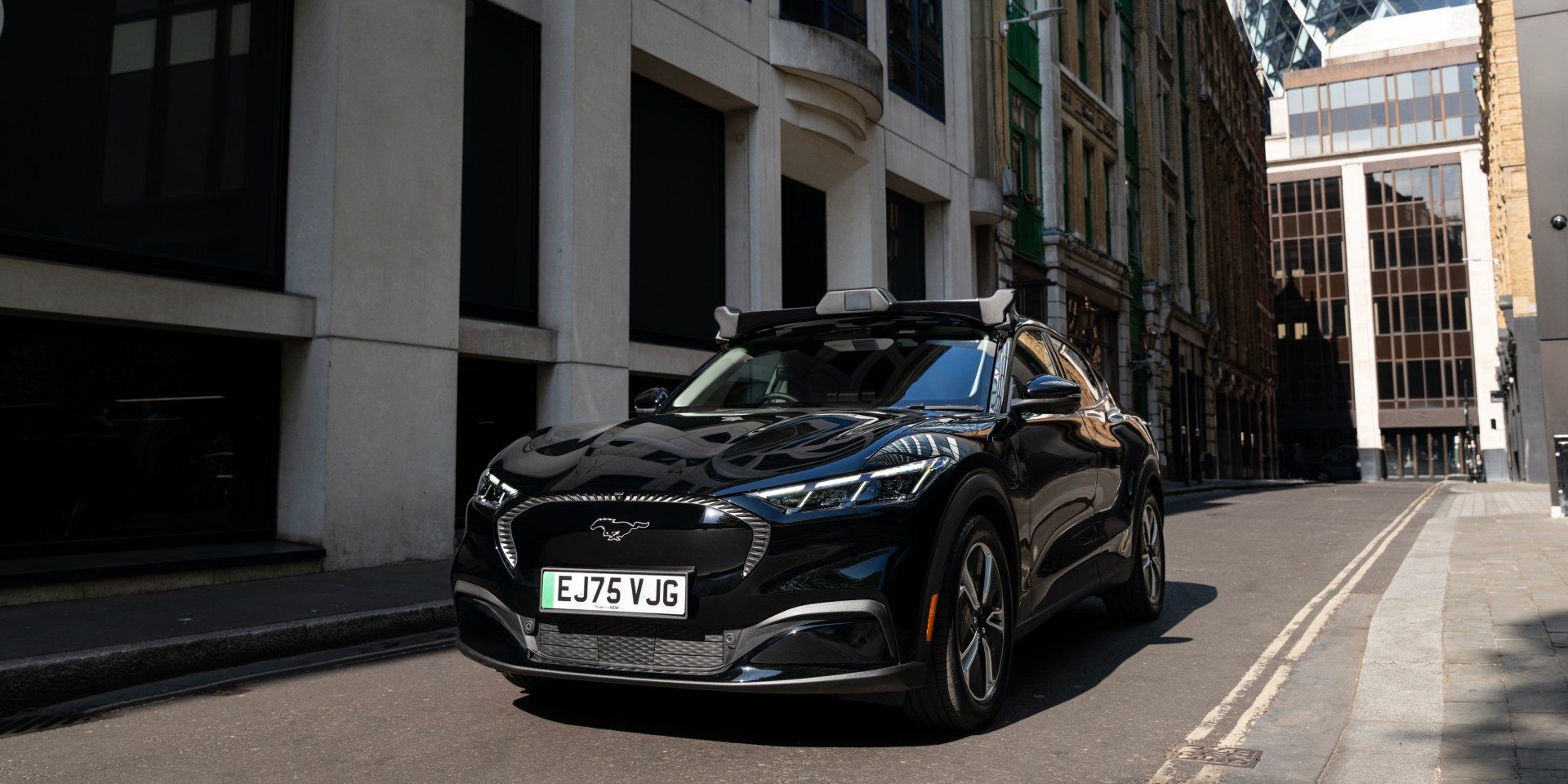
The Wayve announcement follows Mercedes' expansion of Drive Pilot (Level 3) and a recent tie-up with NVIDIA's Alpamayo stack (Level 2+). With Wayve now added, the automaker will simultaneously operate three separate autonomous driving systems — a hedge against uncertainty about which architecture will scale first to true hands-off driving.
Series D Valuation And Investor Base
The Series D adds Mercedes to a Wayve cap table that already includes SoftBank, NVIDIA, Microsoft and Uber. Wayve, founded in 2017 by researchers from the University of Cambridge, has now raised more than $2 billion. The $8.6 billion valuation makes it Europe's largest AI-focused mobility startup.
Wayve's end-to-end approach eschews HD maps and hand-coded rules in favor of a single neural network trained across geographies. That contrasts with Waymo's mapping-heavy stack — a division mirroring the split between rule-based and learning-based robotics platforms.
Compare with Waymo's Tokyo launch, Tesla's Robotaxi Austin ramp, and Dongfeng's Huawei-powered launch.
Reporting based on coverage from Wayve, Mercedes-Benz, Electrek and Motor1.