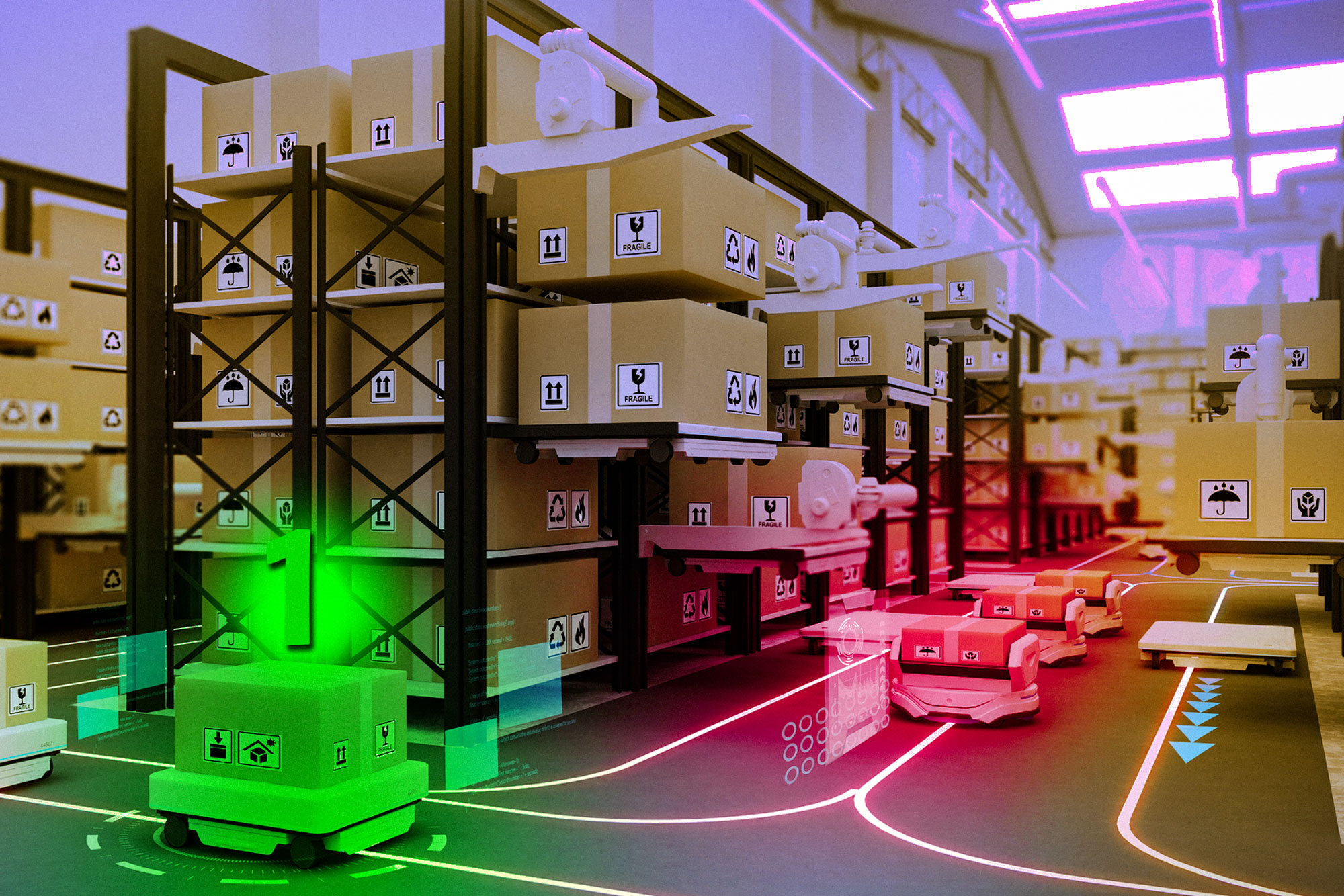
MIT researchers have developed an AI system that prevents traffic jams and collisions in automated warehouses where hundreds of robots operate simultaneously. The system optimizes robot movement patterns to maintain smooth traffic flow during peak operations.
How the AI Traffic Control Works
The MIT system uses machine learning algorithms to predict robot movement patterns and prevent bottlenecks before they occur. It analyzes real-time data from warehouse sensors to dynamically adjust robot routes and speeds.
Traditional warehouse automation systems experience up to 30% efficiency losses during high-traffic periods due to robot congestion. The MIT solution reduces these delays by coordinating robot movements like an air traffic control system.
Industry Impact and Deployment
Major logistics companies report that robot traffic management has become a critical bottleneck as warehouse automation scales beyond 50-100 robots per facility. Current systems often require human intervention when robots cluster around popular picking zones.
The MIT team tested their system in simulated warehouses with over 800 robots, achieving 25% faster order fulfillment compared to existing traffic management approaches. Commercial deployment is expected within 18 months through partnerships with warehouse automation providers.