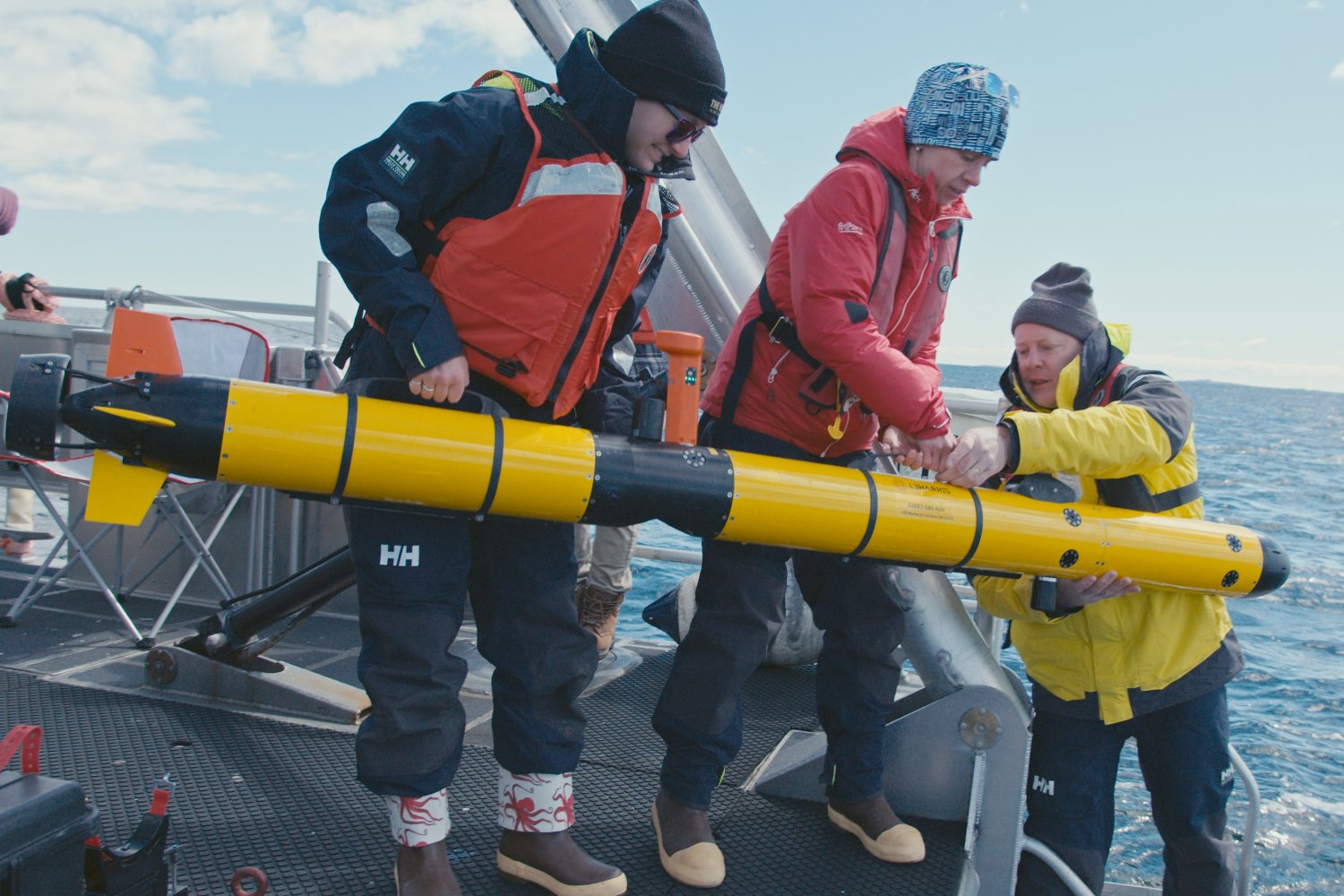
MIT researchers have developed a new human-machine teaming system that combines autonomous underwater vehicles (AUVs) with surface operators to explore ocean depths beyond human diving limits. The system allows researchers to deploy robotic partners while maintaining strategic oversight from ship decks.
Extended Mission Capabilities
The yellow AUV can operate at depths and durations impossible for human divers, collecting real-time environmental data and navigating extreme underwater conditions autonomously. Unlike traditional manned submersibles, the system reduces operational costs while increasing mission safety and data collection accuracy.
The robotic vehicles can map underwater terrain, monitor marine ecosystems, and collect samples from previously unreachable locations. Surface operators maintain communication and mission control while the AUV executes complex underwater maneuvers independently.
Ocean Science Applications
The technology addresses critical limitations in marine research where human divers face depth, temperature, and duration constraints. AUVs can remain submerged for extended periods, accessing deep-sea environments that represent over 80% of unexplored ocean territory.
MIT's approach demonstrates how autonomous systems expand scientific discovery capabilities, similar to robotic missions in space exploration. The human-machine partnership leverages human decision-making with robotic endurance and precision in harsh underwater environments.