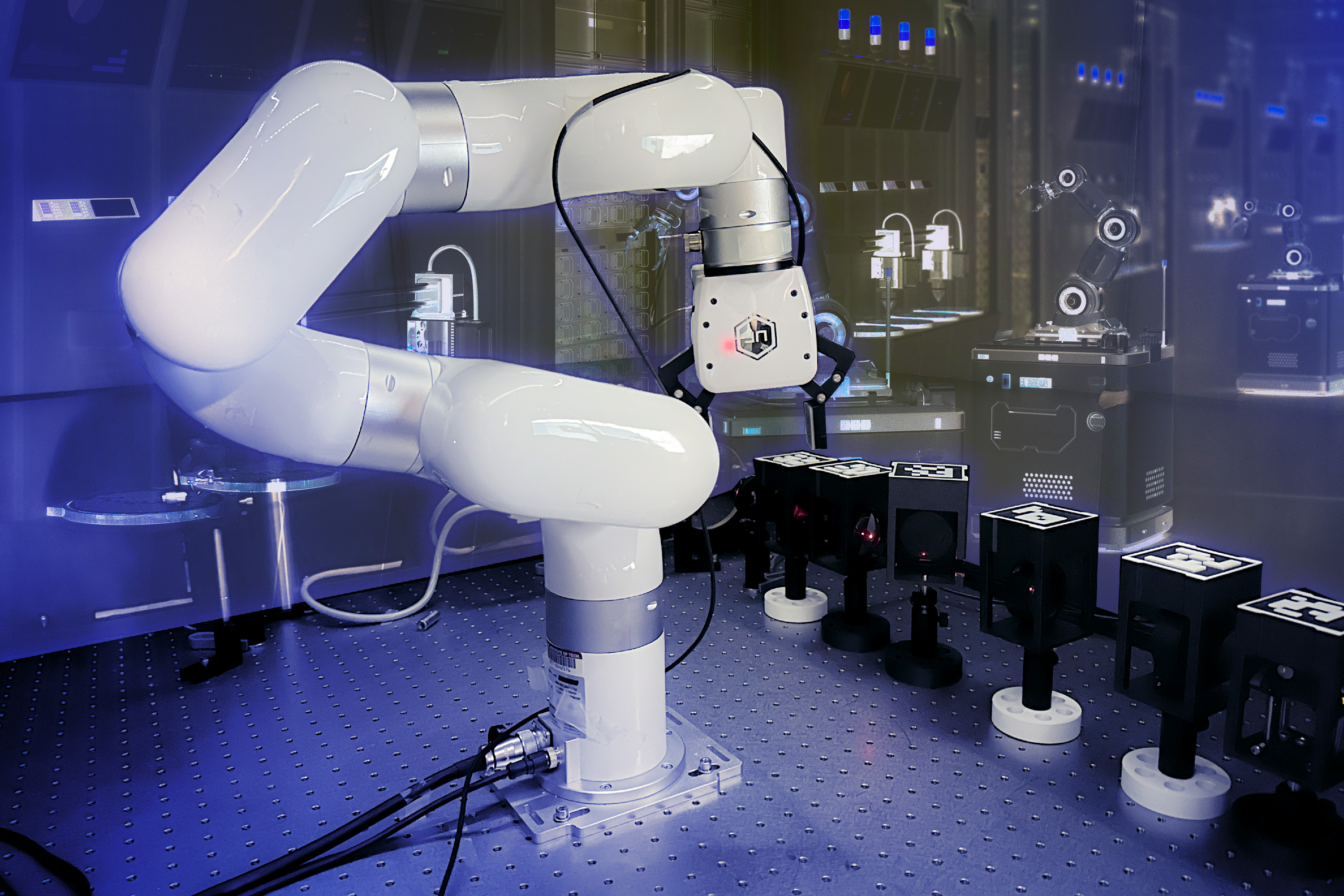
An MIT team led by physics professor Marin Soljacic has unveiled a robot-driven optics laboratory that can assemble, align and self-correct precision optical systems on demand — including a functional laser cavity built in 50 autonomous maneuvers over about 30 minutes.
A closed-loop lab-in-a-bench
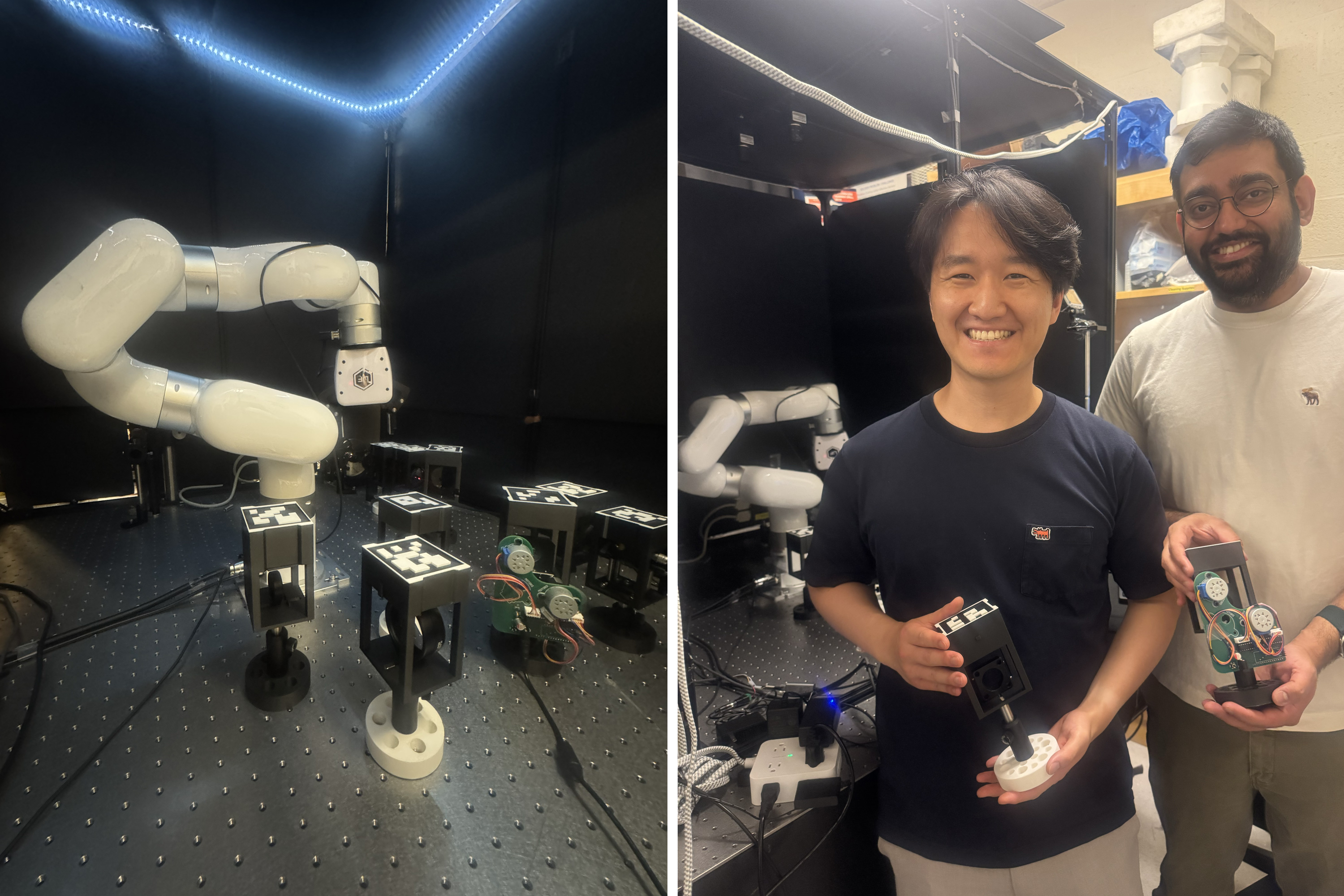
The system is built around a seven-joint arm mounted on a metallic optics tabletop. Each optical component — mirrors, lenses, beam splitters — sits in a QR-encoded custom housing so the arm can pick, place and re-seat parts with sub-millimeter accuracy. A Wi-Fi-linked motorized adjustment tool nudges knobs for fine-tuning, and an overhead camera keeps a bird's-eye map of the layout.
Self-recovery after disturbances
The bigger claim is the closed-loop stabilization: if the system is bumped, drifts thermally or loses coherence, the arm automatically re-optimizes component positions to restore alignment. That transforms optics benches from artisanal setups that graduate students spend days coaxing into equilibrium into experiments a facility can queue up on demand, similar to what cloud compute did for GPU workloads.
A step toward automated physics research
The team, which includes postdoc Sachin Vaidya and graduate student Seou Choi, has published the design as A Framework for Closed-Loop Robotic Assembly, Alignment and Self-Recovery of Precision Optical Systems on arXiv, with collaborators from Nokia Bell Labs and Arizona State University. It joins a broader wave of self-driving labs pushing physical experimentation into the same continuous-integration loop that AI training already enjoys, echoing the direction of Google's Intrinsic open-source robotics stack and NVIDIA's Isaac ROS 5.0 agentic workflows. Soljacic's group says the platform will next tackle multi-cavity photonic experiments and quantum-optics setups where alignment tolerances collapse below the wavelength scale.
Reporting based on coverage from MIT News.