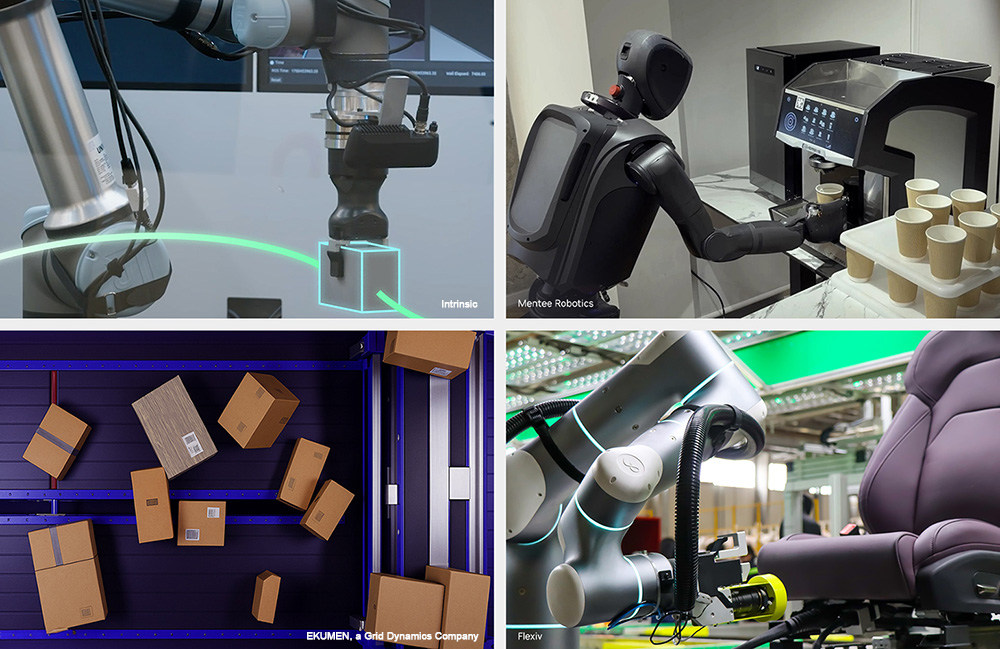
NVIDIA on September 22 released Isaac ROS 5.0, the latest version of its Robot Operating System-compatible development kit, adding AI-agent workflows and a fresh batch of manipulation, calibration and pose-estimation skills aimed at making it faster to build production robots.
Agentic Workflows Land In ROS
Isaac ROS 5.0 introduces Isaac Skills, which chain code, docs and data-handling into agent-ready modules for the setup and manipulation tasks that eat up developer time. Katie Washabaugh, NVIDIA's product marketing manager for robotics simulation, said the goal is "to make everything from development to deployment easier" — with setup targeted first because "it seemed like low hanging fruit," and manipulation next as a "bigger, juicier problem."
FoundationPose And Standard Data Interface
The release bundles NVIDIA's FoundationPose inference library, delivering 5.5x faster 6-DoF object pose estimation and tracking than the prior generation, plus a standalone pick-and-place workflow skill and a FoundationStereo fine-tuning skill for on-robot camera adaptation. NVIDIA also contributed a standard data interface to ROS 2 Lyrical that supports GPU acceleration across different hardware, arguing that "we can't imagine everything that can be built with our models and frameworks and libraries."
Partner Momentum
Early Isaac ROS 5.0 adopters named by NVIDIA include Google-owned Intrinsic, Mentee Robotics, EKUMEN, Chinese arm maker Flexiv and automotive supplier Magna. The launch dovetails with NVIDIA's push to spread Isaac Lab and the CUDA-Q Logical quantum stack across the developer ecosystem.
Reporting based on coverage from The Robot Report.