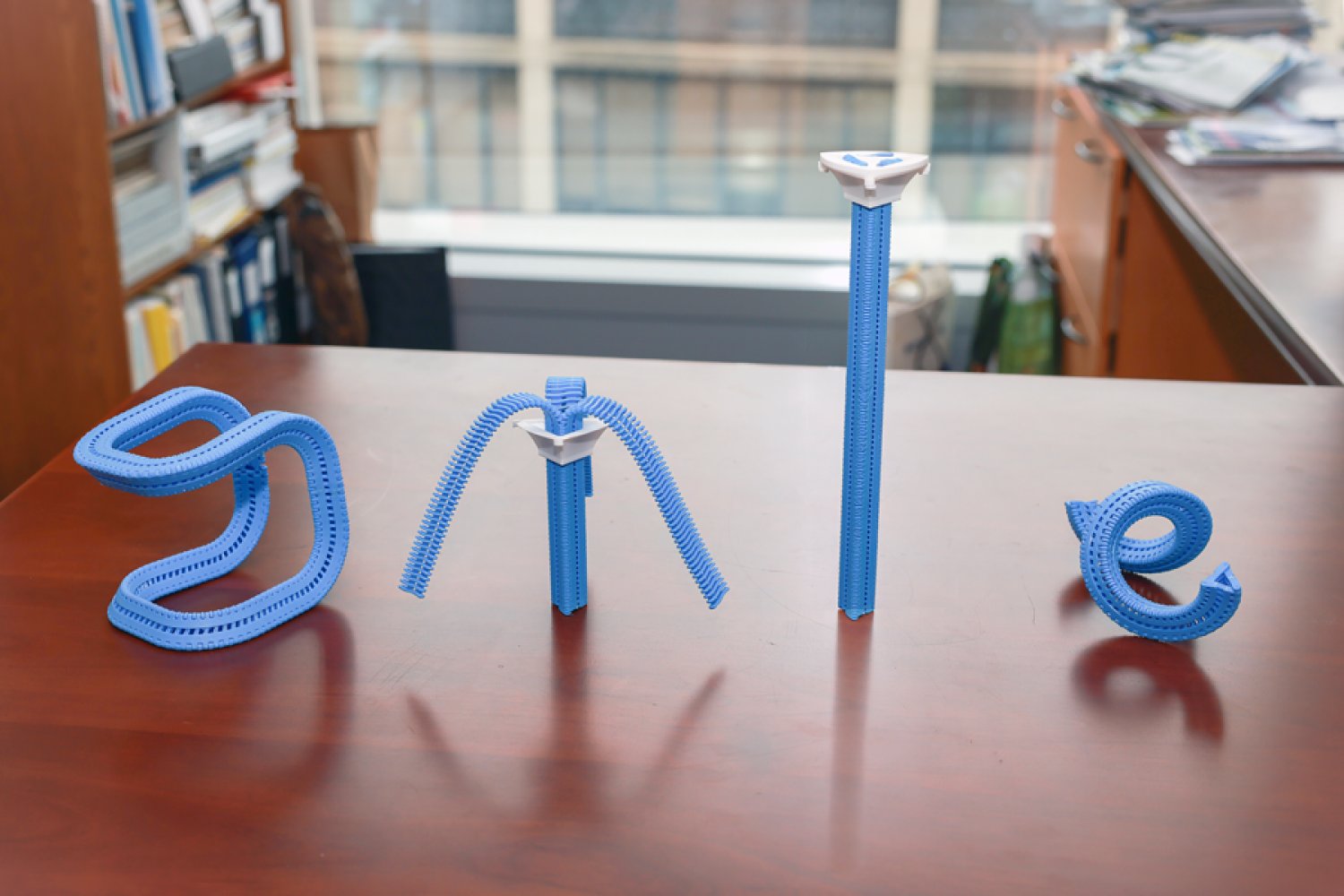
MIT researchers have successfully manufactured a three-sided Y-zipper design that was conceived 40 years ago but impossible to produce until now. The breakthrough enables 3D printing of fully flexible, snake-like soft robots in a single manufacturing process.
The Y-zipper mechanism allows printed materials to bend, twist, and compress without traditional mechanical joints. This eliminates complex assembly processes that typically require multiple components and connection points in conventional robotics.
Single-Print Manufacturing Revolution
Traditional soft robots require separate manufacturing of flexible materials, rigid components, and control systems before assembly. MIT's approach produces functional robots directly from 3D printers using smart materials that adapt their properties during printing.
The bio-inspired design mimics snake locomotion through material flexibility rather than mechanical articulation. This reduces manufacturing complexity by up to 75% compared to multi-component robotic systems.
Industrial Applications Emerging
Soft robots using this technology can navigate confined spaces in manufacturing, handle delicate electronics without damage, and adapt to irregular surfaces in real-time. Medical device manufacturers are testing applications for minimally invasive surgical tools that conform to patient anatomy.
Space exploration agencies are evaluating the design for robots that can squeeze through tight spacecraft compartments and self-repair minor structural damage through material flexibility.