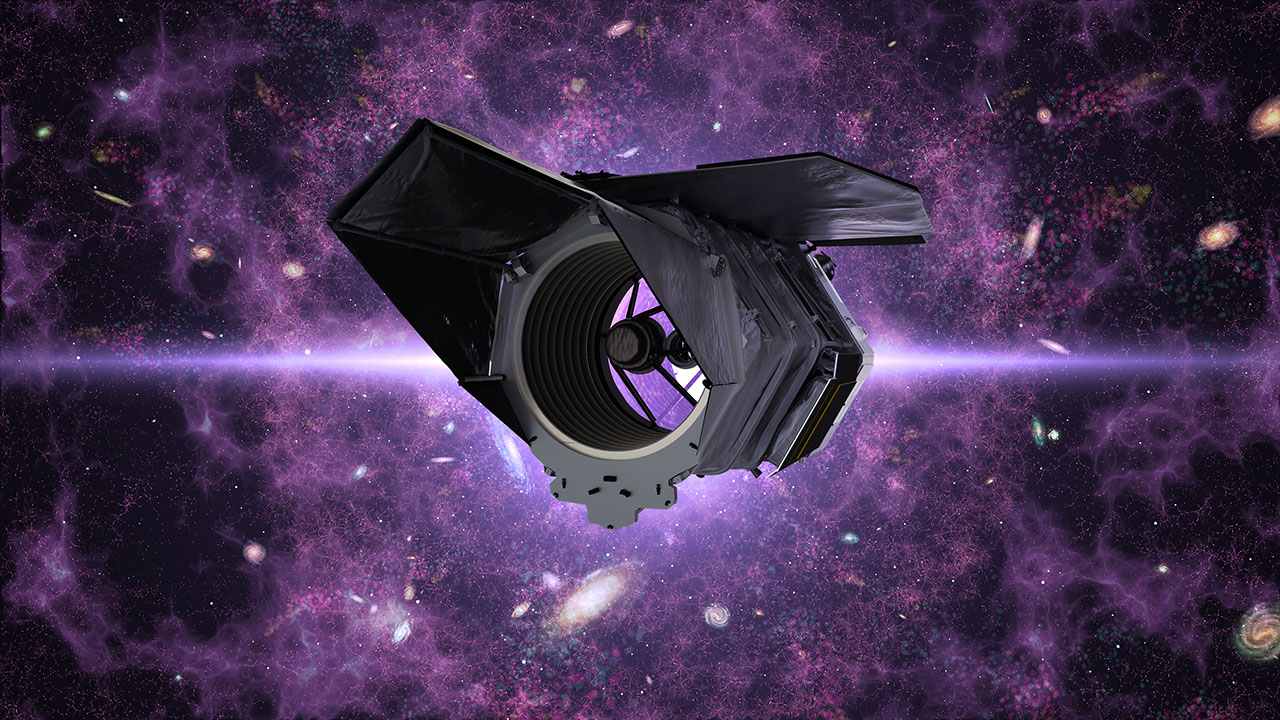
NASA's Nancy Grace Roman Space Telescope is scheduled to lift off on a SpaceX Falcon Heavy rocket at 7:26 a.m. EDT on August 30, 2026 from Launch Complex 39A at Kennedy Space Center — the space agency's most ambitious wide-field observatory since Hubble, and a keystone mission for the physics of dark energy and the census of exoplanets.
Hubble-sized mirror, 100x the view
Named for NASA's first chief astronomer Nancy Grace Roman — the "Mother of Hubble" — the observatory carries a 2.4-metre primary mirror the same size as Hubble's but a field of view at least 100 times larger. Two instruments do the work: the Wide Field Instrument (WFI) that will measure light from a projected billion galaxies over the mission's lifetime, and the Roman Coronagraph Instrument, a technology demonstration designed to block starlight and directly image exoplanets and planet-forming disks.
Dark energy, exoplanet census, cosmic infrared

Roman is designed to settle essential questions in dark energy, exoplanets and infrared astrophysics. Its microlensing survey is expected to produce a statistical census of planetary systems across the Milky Way, filling in a demographic gap that Kepler and TESS could not reach. NASA finished fueling the spacecraft at Kennedy on July 27, clearing one of the last major integration milestones before roll-out to the pad.
Falcon Heavy's next flagship science payload
The mission also headlines a heavy SpaceX manifest at Kennedy in the weeks ahead, with the Crew-13 launch to the International Space Station on a Falcon 9 no earlier than September 12. Roman marks the second time NASA has picked Falcon Heavy for a flagship science mission, following SpaceX's steady cadence this summer that has already delivered Starlink, AST SpaceMobile BlueBirds and government payloads. The launch will be timed to place Roman near the Sun–Earth L2 point, where the James Webb Space Telescope already operates.
Roman's plaque and 1.35 million names
Roman will carry a plaque and a chip etched with 1.35 million public names into deep space, part of NASA's "Send Your Name" campaign — a nod to the mission's role in what the agency describes as the next great mapping of the universe. Roman is a future-mission graduate at last: after years of budget scrutiny and program-restructuring, the observatory is finally ready to fly.
Reporting based on coverage from NASA Science, Space Policy Online and Spaceflight Now.