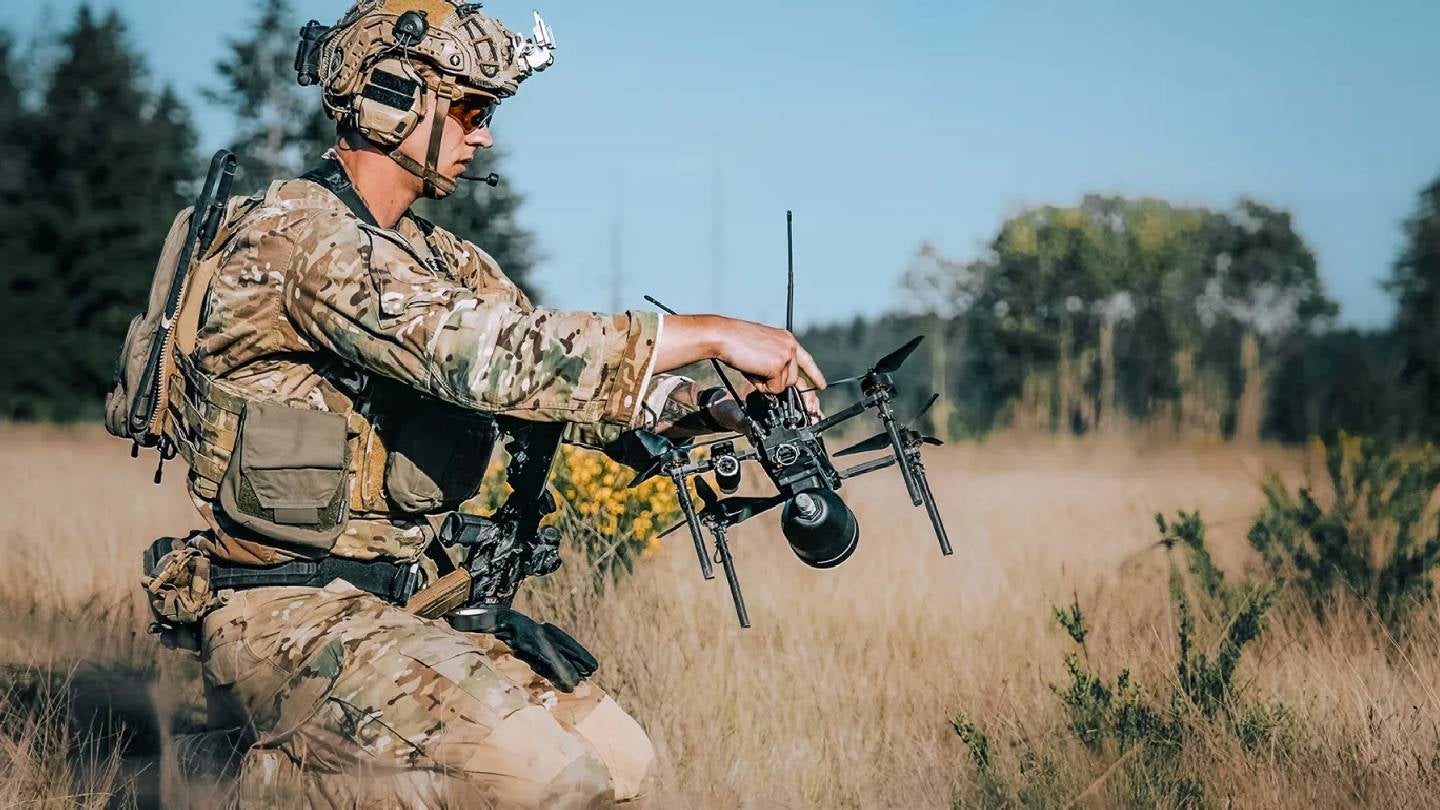
Neros Technologies, the El Segundo, California drone maker founded by former teenage drone racers, has secured a U.S. Department of Defense contract worth up to $500 million to supply first-person-view (FPV) attack drones to the U.S. Army, the Wall Street Journal reported Monday. The deal is one of the largest Pentagon commitments to low-cost, expendable drone technology from a nontraditional defense contractor and lands as Washington scrambles to catch up with the mass-drone playbook battle-tested in Ukraine.
An Indefinite-Delivery Ceiling, Not A Guarantee
The award is structured as an indefinite-delivery, indefinite-quantity (IDIQ) contract, giving the Army flexibility to place orders up to a $500 million ceiling over the life of the deal rather than committing the full amount up front. It builds on Neros' selection in late 2025 as one of three primary manufacturers for the Army's Purpose-Built Attritable Systems (PBAS) program.
Archer Scales For The Battlefield
Neros will supply its Archer and Archer Strike quadcopters in 5-inch and 10-inch variants, together with the Flatbow soldier-portable ground control station. Archer carries a 4.5-lb payload beyond 20 kilometres, uses in-house radios engineered to resist jamming, and is built entirely without Chinese components. The company is producing about 1,500 Archer drones per month at its Southern California facility and plans to scale to one million units per year by 2028.
Part Of A Wider Attritable-Drone Push
The Neros award follows the Pentagon's $500 million counter-drone deal with AeroVironment and $500 million IDIQ to Perennial Autonomy, illustrating both offensive and defensive halves of the Pentagon's drone stack. West Virginia Governor Patrick Morrisey separately announced Monday that Helsing, the German AI defense company valued at $18 billion, will invest $50 million to open its first U.S. drone factory in Martinsburg to build 2,000 HX-2 loitering munitions per month. Both moves underline how lessons from Ukraine have reshaped U.S. procurement toward cheap, mass-producible systems, aligning with the broader Drone Dominance program.
Why It Matters
Neros CEO Soren Monroe-Anderson, still in his early twenties, has argued the company can produce a million drones per year with sufficient Pentagon backing. Earlier this year, Neros acquired a 250,000-square-foot factory to prepare for that ambition. The $500 million ceiling gives the Army a mechanism to capitalize that scale-up without waiting for individual purchase orders — a shift industry observers have flagged since the parallel talks over equity stakes in Neros, Unusual Machines and Performance Drone Works surfaced in May.
Reporting based on coverage from the Wall Street Journal, DROIDS Newsletter, Army Technology, and the U.S. Department of War contracts release.