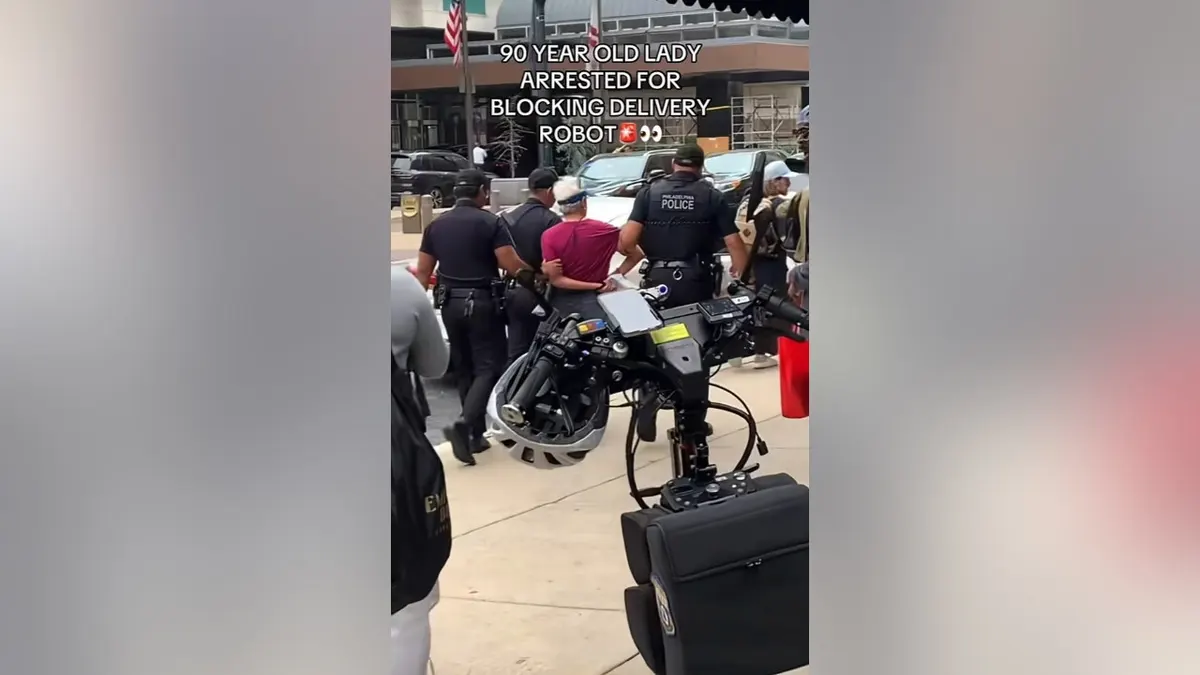
Philadelphia police cited Carolyn Marvin, a 78-year-old retired University of Pennsylvania professor, for disorderly conduct on October 14, 2026, after she deliberately stood in front of an Avride delivery robot operating for Uber Eats near Reading Terminal Market and refused officers' orders to move. She says she has been blocking the robots for months and plans to keep doing it.
Key takeaways
- Marvin was cited for disorderly conduct on October 14, 2026, after blocking an Avride/Uber Eats delivery robot in Center City Philadelphia.
- Avride's Philadelphia service, run with Uber Eats, launched in March 2026.
- Pennsylvania's vehicle code classifies personal delivery devices as pedestrians and requires them to yield right-of-way to people and cyclists.
- Operators must give municipalities 30 days' notice before starting service, and cities can prohibit robots where they find hazards.
- Her protest echoes a September 2026 incident in Chicago where a dozen Coco delivery robots clustered on one sidewalk, raising accessibility complaints from wheelchair users.
Marvin's objection isn't about safety alone — it's economic. "Every order completed by a robot represents work that potentially could have gone to a human courier," she said after her citation. She was released from police headquarters and intends to fight the charge in court.
A law written to protect the robots
What makes Pennsylvania's rule unusual is its framing: it treats delivery robots as if they were pedestrians, obligating them to yield to people rather than the other way around. That's a deliberate policy choice to keep sidewalks from becoming hostile to walkers and cyclists as robot fleets scale up, and it puts the legal burden for safe operation on the robot and its operator, not on the person in its path. In practice, though, enforcement cuts both ways — Marvin was the one cited, not the robot's operator, after she refused to move.
Philadelphia's 30-day notice requirement and municipal veto power reflect a pattern playing out across US cities as delivery robots multiply: regulation arriving reactively, city by city, after companies have already deployed rather than before. Chicago's 1st Ward banned sidewalk delivery robots outright in 2026 following complaints in Wicker Park and Logan Square, while other municipalities have opted for yield-rule frameworks similar to Pennsylvania's instead of outright bans.
What happens next
Marvin's case will test whether disorderly conduct citations hold up against a protester explicitly invoking free-speech grounds for obstructing a machine rather than a person. For Avride and Uber Eats, the bigger risk is reputational: a sympathetic, articulate retiree willing to be arrested repeatedly generates far more public attention than a corporate statement defending the deployment ever could. As sidewalk robot fleets expand into more cities, operators are likely to face a growing mix of formal regulation and informal, personal resistance — and courts may increasingly be asked to decide which one wins. Source: Fox News.