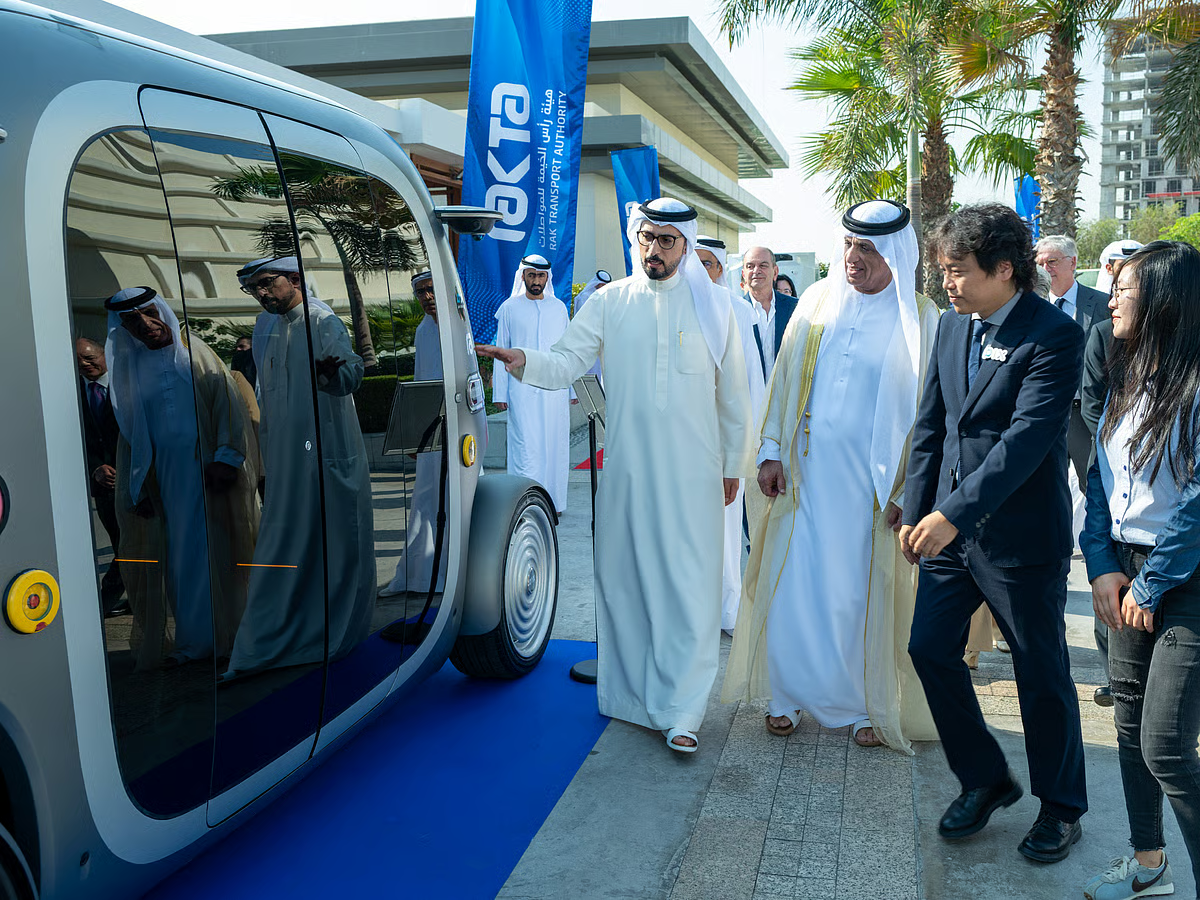
On Al Marjan Island, a driverless shuttle has spent months weaving between resort hotels while engineers logged every meter. On October 30, the Ras Al Khaimah Transport Authority turned that pilot into policy, launching an autonomous mobility framework and a dedicated Autonomous Vehicle Sandbox testing zone at a ceremony attended by the emirate's ruler, Sheikh Saud bin Saqr Al Qasimi.
RAKTA, working with RAK Properties, signed 10 partnership agreements with government entities, companies, universities and research institutions to support the initiative, according to The National. Vehicles tested so far under the authority's RoboTaxi trials have covered more than 21,000 kilometers.
From island pilot to sandbox framework
The sandbox gives autonomous vehicle developers a controlled environment with specialized infrastructure and routes meant to mimic real-world operating conditions, a step up from closed test tracks. RAKTA said the goal is to attract international autonomous vehicle companies and build out the regulatory and technical groundwork needed before wider public rollout, rather than simply running vehicles on public roads indefinitely without a formal framework.
The initiative formalizes work already underway through WeRide, the Nasdaq-listed autonomous driving company that has run robotaxi and robobus pilots in Ras Al Khaimah. Its Robobus has operated on Al Marjan Island connecting hotels and resorts, while its Robotaxi service has expanded into the Al Dhait South area, extending beyond the original island trial zone into the emirate's broader city footprint.
Why the Gulf is becoming an autonomous vehicle testbed
Ras Al Khaimah's move adds to a pattern across the UAE, where Dubai and Abu Dhabi have both pursued robotaxi partnerships with companies including WeRide and others as part of broader economic diversification strategies. Gulf regulators have generally moved faster than many Western counterparts in issuing permits for autonomous testing, partly because road networks are newer, traffic volumes in test zones are controllable, and government ownership stakes in transport authorities simplify approval.
Sheikh Saud bin Saqr Al Qasimi told attendees that "people are at the heart of our vision for the future of Ras Al Khaimah," tying the autonomous vehicle push to the emirate's tourism-driven growth strategy rather than framing it purely as a technology showcase. China's ambassador to the UAE, Zeng Jixin, and the Chinese consul general in Dubai also attended the launch, underscoring the role Chinese autonomous vehicle suppliers like WeRide play in the region's rollout.
For the broader autonomous vehicle industry, a government-backed sandbox lowers the cost of testing in a new market: companies get defined routes and regulatory clarity instead of negotiating approvals pilot by pilot. With 21,000 kilometers already logged on existing routes, RAKTA's next test will be whether the sandbox framework can attract additional operators beyond WeRide and extend testing into denser parts of Ras Al Khaimah beyond the resort-heavy islands where trials began.