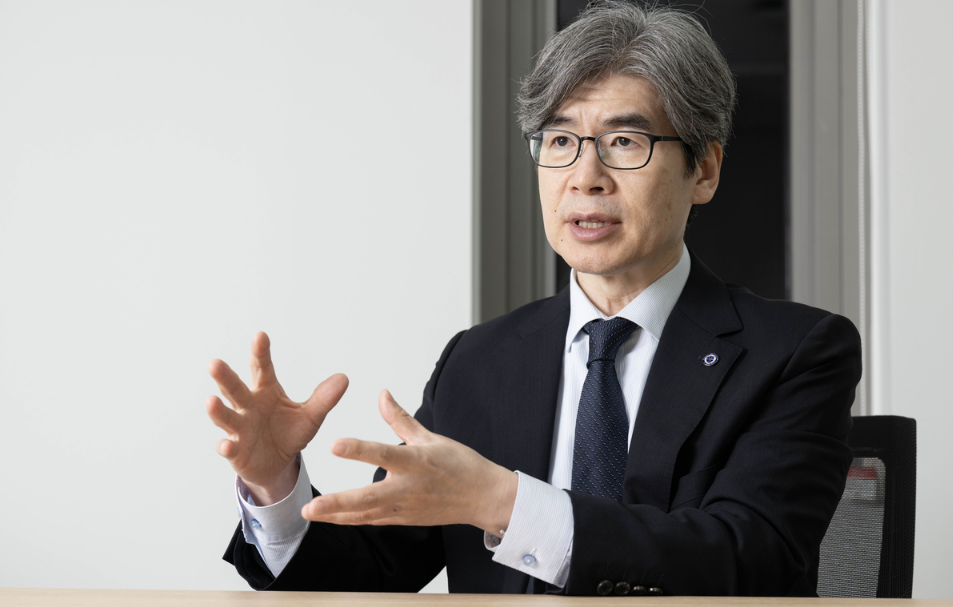
South Korea's Yonsei University will become only the second research site in the world — after IBM Miami — to host IBM's next-generation Nighthawk quantum processor when the machine is installed at its Songdo campus in November 2026, according to an interview granted by Yonsei Quantum Initiative director Jung Jae-ho to the Seoul Economic Daily on August 12.
An upgrade from Eagle to Nighthawk
Yonsei's existing IBM Quantum System One, based on the 127-qubit Eagle processor, will be swapped for the 120-qubit Nighthawk. Where Eagle averages 2.5 connections per qubit — forcing costly SWAP gates whenever the compiler routes information across non-adjacent qubits — Nighthawk arranges its qubits in a lattice pattern in which each one is directly connected to four neighbors. That change reduces routing overhead and, according to IBM's own benchmarks, lets Nighthawk perform roughly 40% more computation than Eagle at the same error level. It brings Yonsei materially closer to what IBM describes as the "technological inflection point" it expects around 2029, when large-scale, error-corrected quantum systems come online.

Q-Bridge: connecting industry to a working quantum computer
Alongside the hardware upgrade, Yonsei is launching Q-Bridge, a quantum-classical fusion platform designed to remove the "no quantum literacy" barrier that keeps most enterprises from experimenting. Q-Bridge bundles algorithms, data resources and hybrid computing capacity so that industrial users can hand in a domain problem and receive suitable algorithms and computing time in return. Yonsei plans to accumulate the resulting industry use cases in a companion resource called Q-Library, feeding lessons from one project into the next. Development is scheduled to complete in early November alongside Nighthawk's arrival.
Leigh syndrome, Fugaku and Cambridge
The flagship scientific target is biomedical. Yonsei is working with Japan's RIKEN institute to identify the biological mechanism of Leigh syndrome, a fatal mitochondrial disease with a median death age of 2.4 years, by connecting IBM's quantum systems to the Fugaku supercomputer. Jung told Seoul Economic Daily that running the calculation on Fugaku alone would take 48 years; letting a quantum computer narrow the candidate space and take on the first-round computation could bring that to a matter of days. Yonsei will also open a joint research thread with the University of Cambridge, pairing its quantum-based drug research center with Cambridge's Milner Therapeutics Institute.
The deployment reinforces the broader theme of the past week, in which Quantinuum parked its Helios system inside an Oracle AI data center, Quanta Computer signed an industrial partnership with Quantinuum and IBM continued to execute its USD 10 billion Starling roadmap. The next milestone on IBM's public schedule remains fault-tolerant systems in 2029; Yonsei's Nighthawk is the closest anyone outside IBM has come to it.
Reporting based on coverage from The Quantum Insider and Seoul Economic Daily.