
Aurora Innovation (NASDAQ: AUR) plans to be building 20 driverless trucks a week by the end of the year and is reshaping its commercial model around a driver-as-a-service pitch, CEO Chris Urmson told investors at Morgan Stanley's Laguna Conference. The comments, reported on September 20, 2026, put concrete numbers on a scaling story the autonomous-trucking sector has been debating for two years.
From Prototype Fleet To Production Cadence
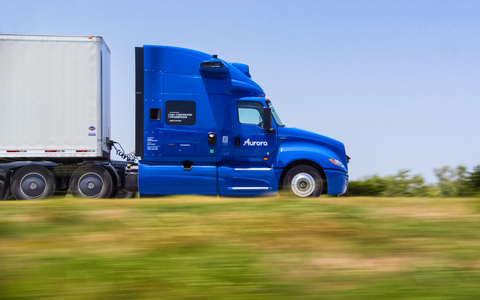
Aurora is running 20 to 25 driverless trucks in commercial service today between Dallas and its extended Sun Belt lanes. The new target — 20 additions per week — hinges on second-generation hardware that Urmson said cuts per-truck cost by more than 50%. Between an internal build capacity of roughly 1,500 tractors and a Roush contract that adds another 1,000 units on an annualised basis, the CEO framed 20 a week as "a supply problem we can actually solve."
Driver-As-A-Service Replaces Own-The-Fleet
Aurora is phasing out the transportation-as-a-service model that let customers pay per mile with Aurora owning the truck. Under the new driver-as-a-service (DaaS) framework, fleet operators like Volvo, Paccar, Hirschbach and Charger Logistics buy the truck and lease the Aurora Driver. "Most of our fleet will be under DaaS by the end of 2027," Urmson said, adding that the switch reduces Aurora's capex and accelerates the road to positive unit economics.
Numbers That Matter
The company has now logged more than 6 million total autonomy miles and 500,000 fully driverless miles. It ended Q2 with $1.2 billion in liquidity and operates with about 2,000 employees. Urmson positioned that runway as enough to bridge to profitability without another equity raise, though analysts at the same conference asked repeatedly about the burn from expanding to Phoenix and El Paso corridors on 2026's roadmap.
Competition Follows The Same Script
Waabi hit its own milestone this week by running a 300-mile Dallas–San Antonio route with no prior route data. Kodiak is scaling its Permian oilfield fleet. All three companies are now pricing hardware as a commodity and monetising the software driver on top — a template that echoes what happened to enterprise networking a decade ago.
See also on The Robotics Media: Waabi's 300-mile Dallas run, Volvo's 3 million tonnes of driverless mining haulage and Waymo's Tokyo 2027 launch plan.
Reporting based on coverage from MarketBeat, CNBC, FleetOwner and Aurora Innovation's Morgan Stanley Laguna Conference remarks.