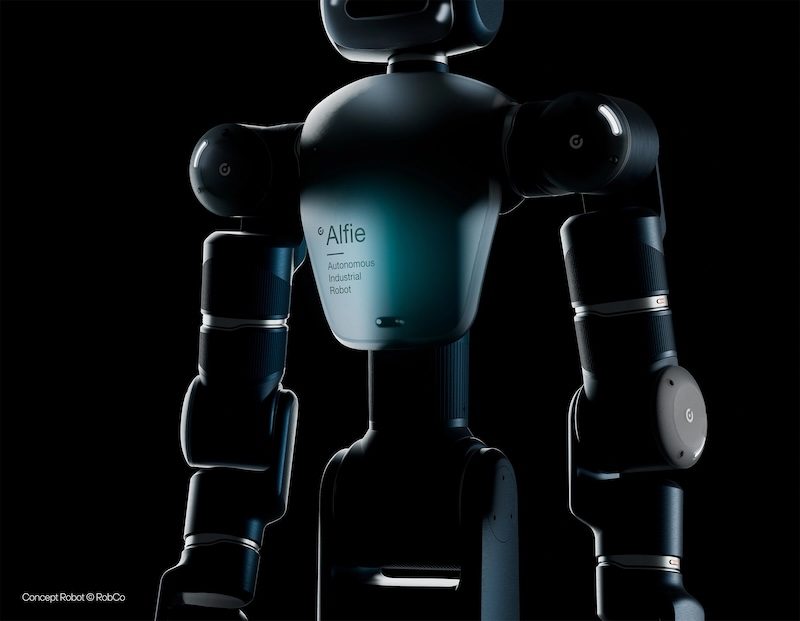
Nearly 95% of US industrial businesses plan to introduce new automation within the next three years, according to a survey of 400 US automation decision-makers commissioned by modular robotics maker RobCo and conducted by Sapio Research, reported by Robotics and Automation News. The study splits respondents into highly automated businesses, those with more than 60% of processes automated, and less-automated firms, under 40%, and finds a wide confidence gap between the two groups.
Munich-based RobCo builds modular robot arms and AMRs and has an obvious interest in showing automation adoption accelerating, but the survey's internal comparison between automation leaders and laggards is the more useful data point for buyers weighing their own rollout timelines.
Key takeaways
- Nearly 95% of US industrial businesses plan to introduce new automation within the next three years.
- 68% of highly automated businesses are confident today's technology can handle their remaining manual processes, versus 41% of less-automated businesses.
- 54% of highly automated respondents feel very positive about automation's future impact, compared with 38% of less-automated respondents.
- 48% cite investment costs as the biggest obstacle to further automation, and 27% cite a lack of internal know-how.
- 42% of highly automated businesses believe automation increases employment, versus 17% of less-automated businesses.
The gap between the two groups matters more than the headline adoption number. Companies that have already crossed the 60% automation threshold report far higher confidence that remaining manual tasks can now be automated, suggesting the hardest technical barriers are more perception than reality once a business has hands-on experience with modern robotics. RobCo CEO and co-founder Roman Hölzl framed it directly: "Companies already using robots are seeing how tasks that were too complex to automate just a few years ago are now possible."
Why the employment finding stands out
The employment question is the survey's most counterintuitive result. Firms further along in automation are more than twice as likely to say automation increases employment rather than cuts it, a finding that cuts against the standard public narrative around robots and job losses. That gap likely reflects survivorship and growth effects: businesses that successfully scale automation tend to be growing overall, adding roles around the robots even as they remove some manual tasks.
With investment cost cited by nearly half of respondents as the top barrier, the survey points to robotics-as-a-service and financing models, rather than new AI capability, as the more immediate lever for narrowing the adoption gap between automation leaders and the 40%-or-less cohort still on the sidelines.