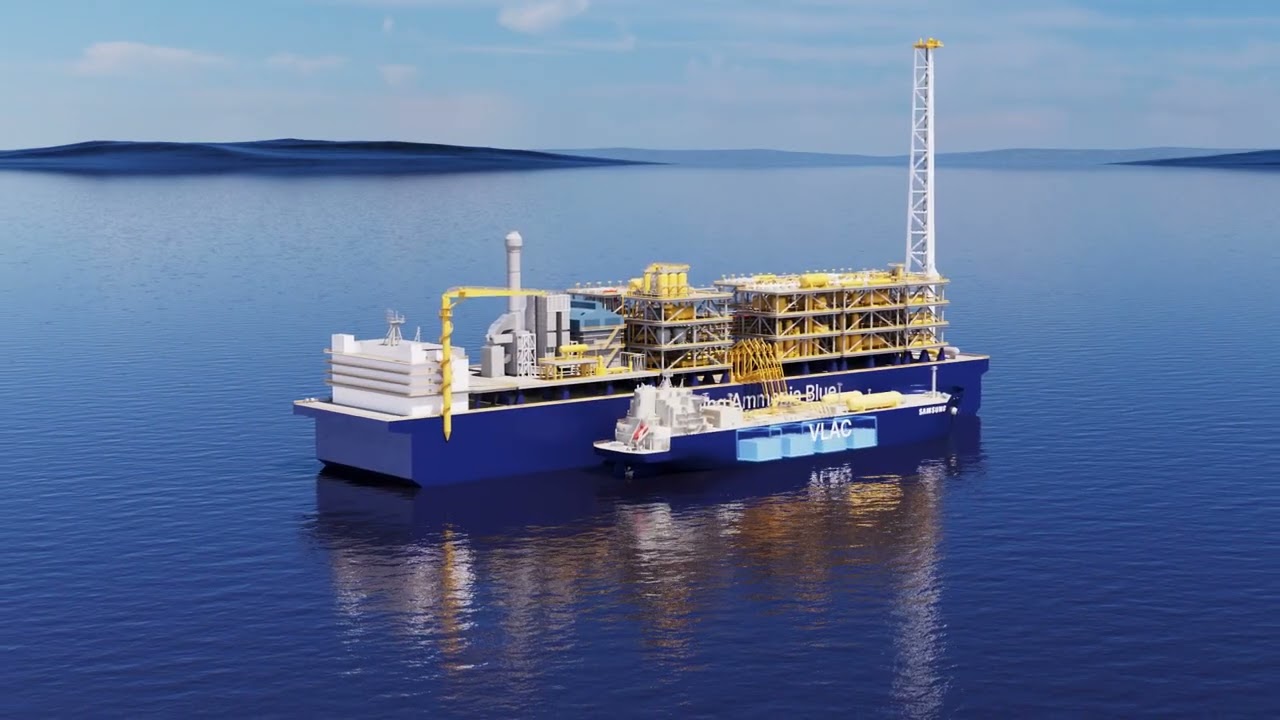
South Korea's Samsung Heavy Industries and Chicago-based nuclear engineering firm Sargent & Lundy signed a memorandum of understanding in Washington on July 21 to jointly develop a universal floating small modular reactor platform — one designed from the outset to accept virtually any reactor type a customer chooses, not just a single vendor's design. The deal moves Samsung's floating SMR program from a concept-design phase completed in 2025 into a full commercialization push aimed at the US market.
Why 'Reactor-Agnostic' Matters
The engineering insight is deceptively simple: split the platform into two separate compartments — one for the nuclear island (reactor vessel, primary coolant loop, steam generators, containment) and one for the power generation island (turbines, generators, electrical systems, grid connection). A standardized interface bridges the two so buyers can swap the reactor without rebuilding the platform. The American Bureau of Shipping issued Samsung Heavy an Approval in Principle in December 2025 for the concept, initially designed around two KAERI SMART100 reactors (110 MWe each), while noting the compartmental layout ultimately allows a variety of SMR types. In a market with 127 distinct SMR designs and no clear commercial winner, a design that lets a customer defer the reactor bet is itself a hedge.
What Each Side Brings
Samsung Heavy — one of the world's three largest shipbuilders, with offshore experience spanning drillships, FLNG vessels and FPSOs — brings offshore EPC and complex marine integration. Sargent & Lundy, founded in 1891 and continuously involved in nuclear power design since 1954, brings deep US Nuclear Regulatory Commission relationships and the design record for NuScale Power's VOYGR — the only SMR fully licensed by the NRC for commercial deployment in the United States. Kim Kyung-hee, Samsung Heavy EVP and head of the Future Business Division, said the tie-up would take the FSMR technology "to the next level." Shiven Sulka, Sargent & Lundy's Chief Nuclear Officer, called the collaboration "a significant step forward for America's future clean energy."

Regulatory Mountain And AI Demand
Two entirely separate regulatory systems govern a US floating nuclear plant: maritime classification (via ABS) and nuclear licensing (via the NRC). ABS's Approval in Principle is a feasibility assessment, not a construction certificate. Any reactor deployed on the platform would need its own full NRC review — a process that took NuScale VOYGR more than a decade. The Trump administration's May 2025 executive orders capped new NRC reviews at 18 months and targeted 400 GW of US nuclear capacity by 2050. The commercial pull for FSMR comes from AI power demand: Goldman Sachs projects US data-center power demand rising from 31 GW in 2025 to 66 GW by 2027, and 13 announced projects have already earmarked 9.8 GW of nuclear capacity specifically for AI data centers. Related coverage: SGE plans 14 BWRX-300 SMRs across three UK sites and ABS certifies Korean molten-salt SMR container ship.
Reporting based on coverage from World Nuclear News, Tech Times, Splash247 and Korea JoongAng Daily.