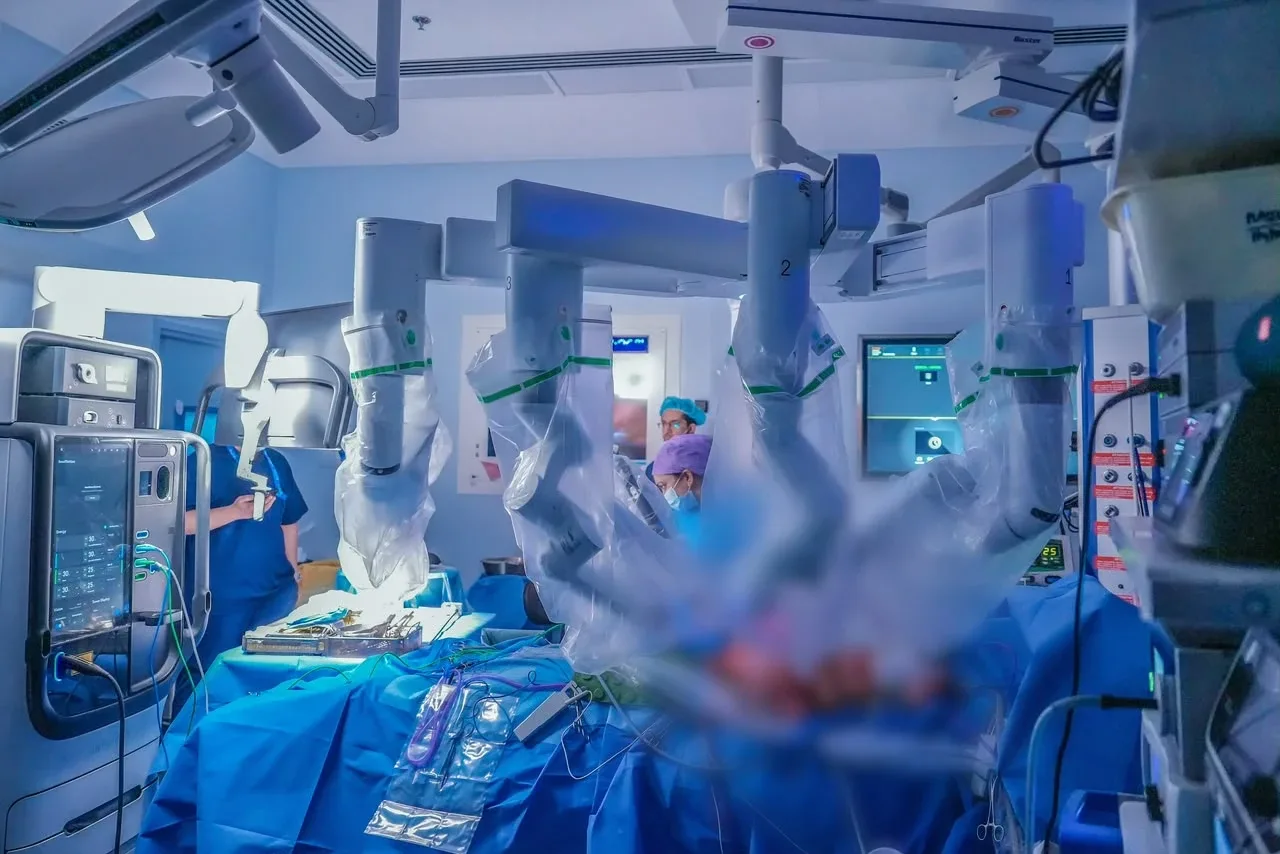
Surgeons at Security Forces Hospital in Riyadh performed Saudi Arabia's first robot-assisted breast reconstruction, announced November 2, 2026, rebuilding a 43-year-old patient's breast using tissue transferred from her own abdomen through a robotic microsurgery platform.
The patient had undergone a nipple- and skin-sparing mastectomy following a breast cancer diagnosis. For the reconstruction, the surgical team used robotic assistance to harvest skin and fatty tissue from the abdomen and reattach it to the chest through microsurgical vessel connections, a technique commonly performed as a DIEP flap when done conventionally. Operating through the robotic system allowed the team to work through smaller incisions than an open approach would require, according to Arab News.
Why the incision size matters
Harvesting abdominal tissue for breast reconstruction traditionally requires cutting through abdominal wall muscle to reach the blood vessels that keep the transplanted tissue alive, a step that raises the risk of hernias and abdominal bulging after surgery. Robotic instruments, with their wristed motion and magnified 3D visualization, let surgeons dissect around the muscle rather than through it, preserving the abdominal wall while still securing a usable blood supply for the flap. Hospital officials said the approach is intended to shorten recovery and reduce complication rates, though no specific recovery-time data from this case was released.
"The medical services division possesses distinguished national competencies and advanced technologies," said Fadhel Al-Buainain, a hospital official cited in the announcement. Abdalrhman Alquaary added that "understanding and developing these technologies locally is the foundation for future medical device manufacturing," tying the procedure to Saudi Arabia's broader push to build domestic medical-technology expertise rather than rely solely on imported systems and training.
Part of a wider regional buildout
The procedure adds to a string of robotic-surgery milestones across Saudi Arabia and neighboring Gulf states, including an earlier robotic nipple-sparing mastectomy with immediate reconstruction performed at King Faisal Specialist Hospital and Research Centre in Jeddah, and the UAE's own first robotic-assisted breast reconstruction. Those cases reflect a regional pattern: Gulf health systems are using high-profile robotic firsts to demonstrate progress under national healthcare strategies, with Saudi Arabia's Vision 2030 program explicitly citing advanced medical technology adoption as a goal.
Breast reconstruction has become one of the more active growth areas for surgical robotics globally, alongside urology and general surgery, as hospital systems look to differentiate their cancer-care programs. Robotic platforms from established surgical-robot makers have dominated breast and reconstructive procedures in markets where they are approved, though regional hospitals have increasingly evaluated competing systems as more manufacturers seek clearance for soft-tissue and microsurgical indications.
Security Forces Hospital did not disclose how many similar procedures it plans to perform going forward or whether the robotic approach will become its standard offering for reconstruction after mastectomy. The hospital said it will continue developing local expertise in robotic microsurgery as part of its broader technology strategy.