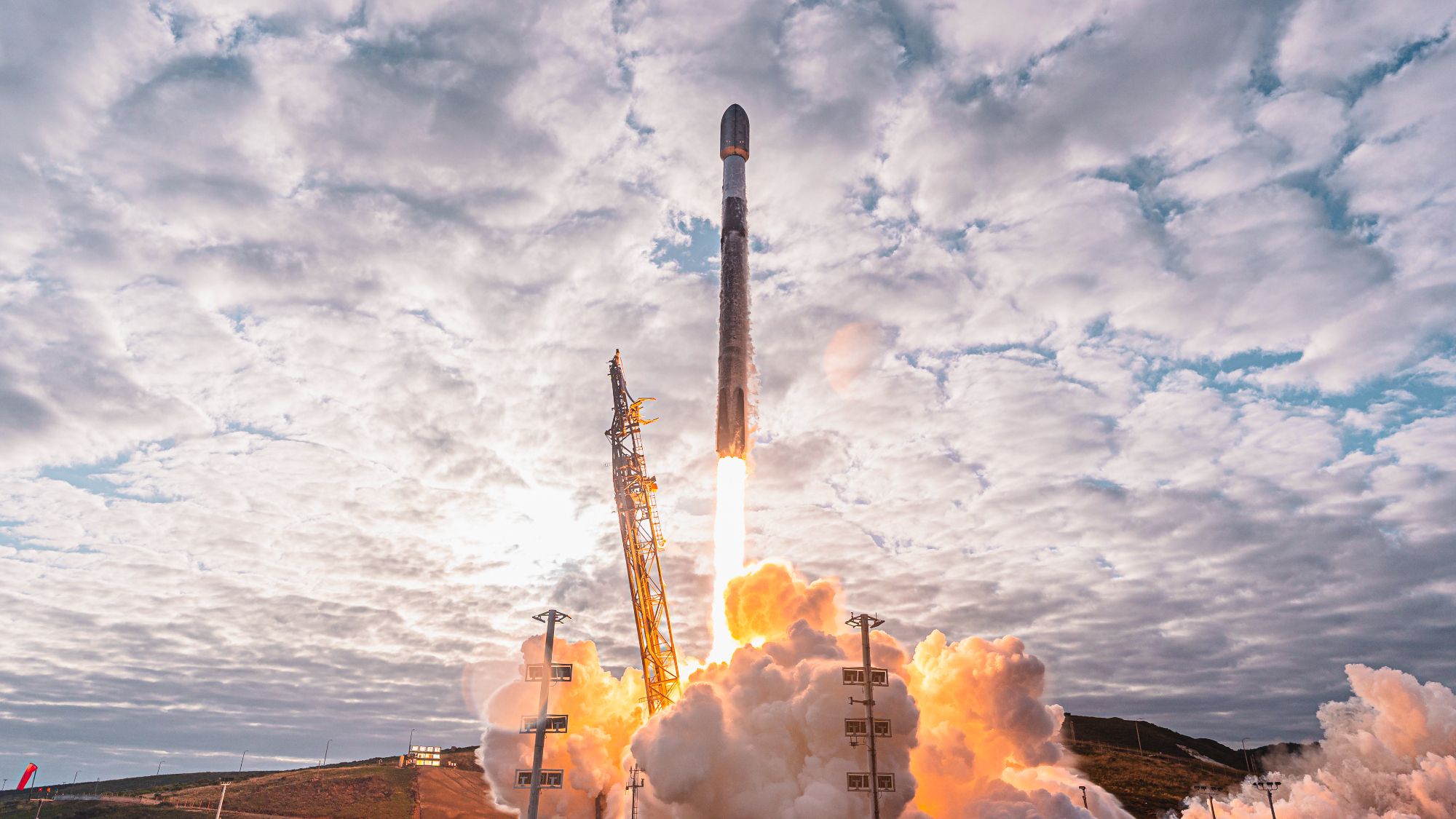
SpaceX pushed its 2026 West Coast launch tally to 50 on Saturday, sending 24 Starlink satellites into low Earth orbit on a Falcon 9 lifting off from Vandenberg Space Force Base at 9:35 a.m. PDT.
A California-Led Cadence
The Starlink 17-38 mission marks the first year Vandenberg has out-launched SpaceX's East Coast pads at the halfway mark, as Cape Canaveral and Kennedy Space Center throttle Falcon activity to make room for Starship testing. West Coast throughput has more than doubled versus 2024, driven almost entirely by Starlink shell expansions in the 43-degree and polar planes.
Booster B1093 Flies A 16th Time
The mission used first-stage booster B1093, which joined the Falcon 9 fleet in April 2025. Saturday's flight was its 16th, extending its status as one of SpaceX's high-cadence workhorse cores. The stage returned to the drone ship Of Course I Still Love You for another refurbishment cycle.

Constellation Reaches New Density
The 24 satellites, dispensed roughly 62 minutes after liftoff, add to a Starlink fleet that now exceeds 8,700 operational spacecraft. Vandenberg missions predominantly feed the constellation's mid-inclination and polar coverage, which underpin SpaceX's growing government and enterprise contracts – including the recent $1.6B Space Force NSSL award for 18 Falcon 9 flights.
The launch pace comes as SpaceX pivots East Coast bandwidth toward Starship, whose next-generation booster campaigns are ramping ahead of an anticipated 2027 crew flight. Even as Starship dominates headlines, Falcon 9 remains the workhorse behind SpaceX's revenue – and behind the company's next milestone: the Aug. 30 Falcon Heavy launch of the Roman Space Telescope.
Reporting based on coverage from Space.com and Spaceflight Now.