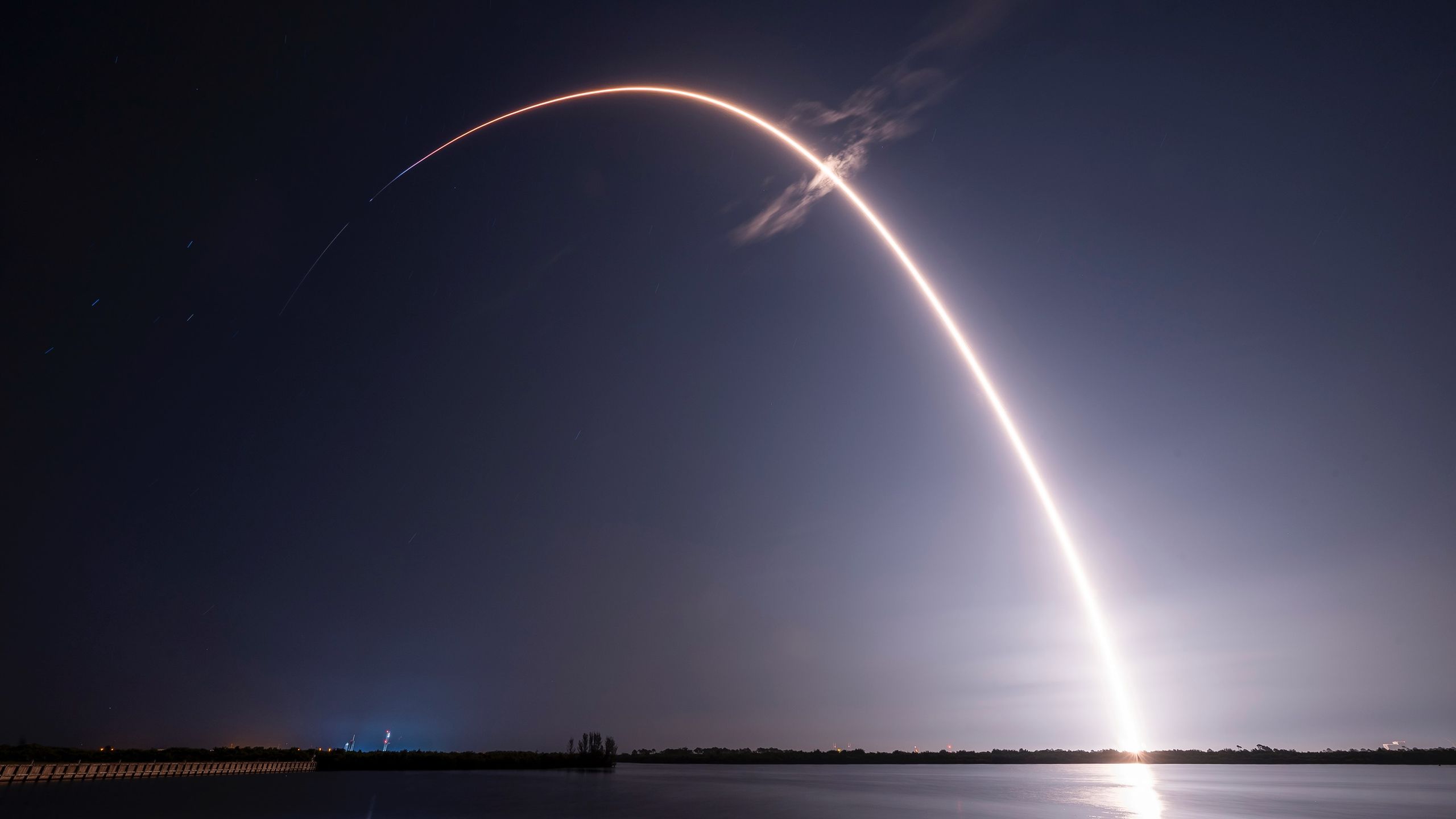
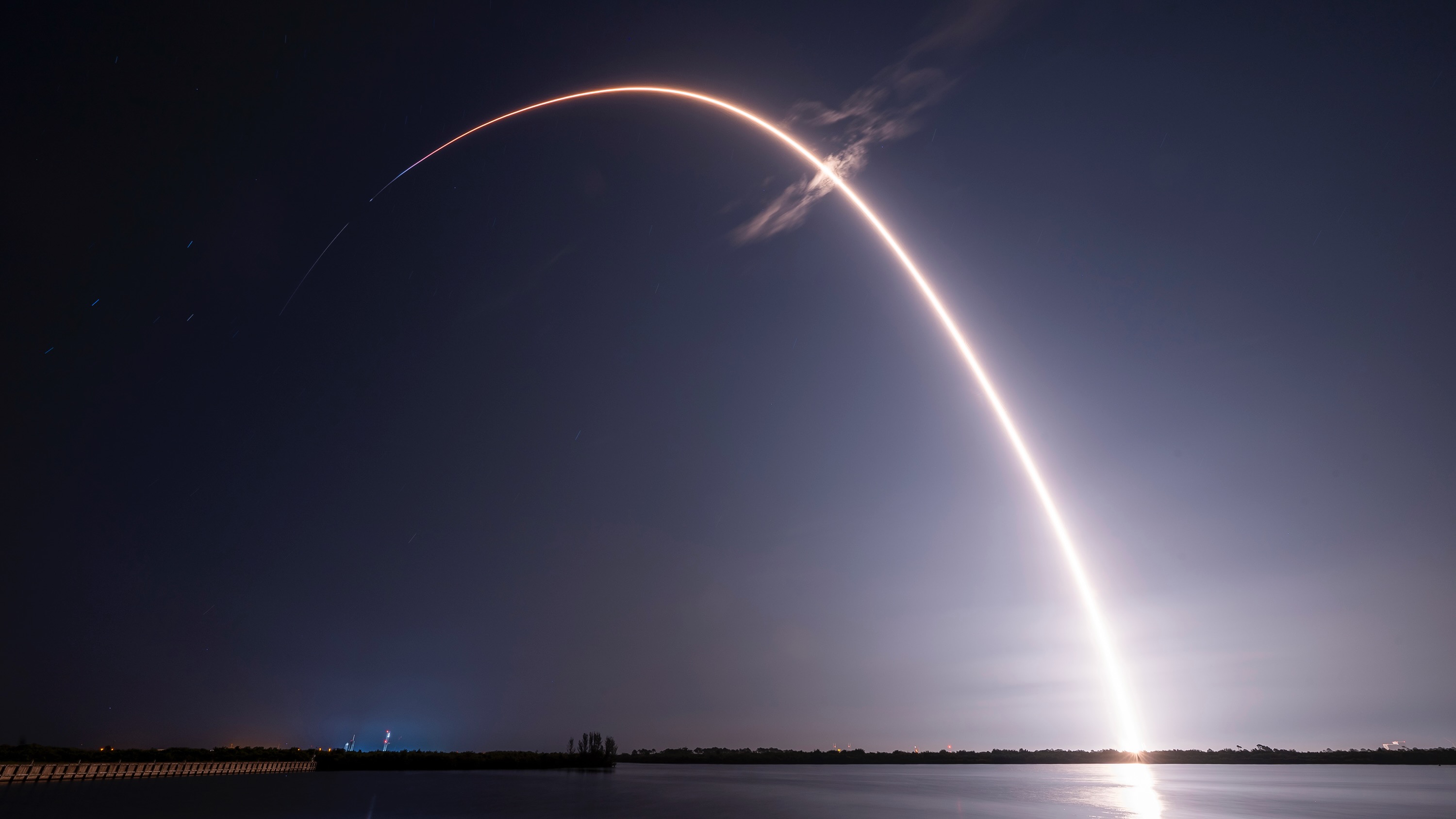
SpaceX launched three of AST SpaceMobile's next-generation BlueBird direct-to-cell satellites early on Wednesday, August 5, 2026, sending BlueBird 11, 12 and 13 to low Earth orbit aboard a Falcon 9 that lifted off from Cape Canaveral Space Force Station at 3:50 a.m. EDT.
Falcon 9 booster racks up 30th flight
The two-stage Falcon 9 flew during a 96-minute window that opened at 3:42 a.m. EDT, with the first-stage booster completing its 30th launch and landing on the drone ship "A Shortfall of Gravitas" in the Atlantic. The upper stage deployed the three BlueBird satellites into LEO over an 11-minute span starting 53.5 minutes after liftoff. The same booster previously flew the BlueBird 8-10 mission in June.
Next-gen BlueBirds double the LEO fleet
Wednesday's launch brings the total number of BlueBird spacecraft on orbit to 13 and nearly doubles the operator's next-generation fleet, which had comprised BlueBirds 6, 8, 9 and 10 (BlueBird 7 was lost in April after its Blue Origin New Glenn rocket suffered an anomaly). Next-gen BlueBirds unfurl phased-array antennas covering roughly 2,400 square feet — over three times the reach of the Block 1 spacecraft.
Beta broadband to unmodified smartphones by year-end
AST SpaceMobile is racing to stand up commercial direct-to-cell service that connects standard unmodified smartphones. "This orbital launch, combined with expanded manufacturing capacity and the recent successful launch and deployment of BlueBird satellites 8, 9, and 10, position us for beta services later this year," said AST SpaceMobile President Scott Wisniewski. The company recently demonstrated peak download speeds of 98.9 Mbps to standard smartphones on its Block 1 BlueBirds.
Constellation build-out continues
The mission follows AST's June BlueBird 8-10 launch, and comes as SpaceX chalks up another high-cadence week alongside its NROL-95 Falcon 9 launch for the NRO. Direct-to-cell competition is intensifying with SpaceX's own Starlink DTC service and Rocket Lab's SDA and Space Force programs.
Reporting based on coverage from Space.com, Spaceflight Now, AST SpaceMobile Newsroom and Yahoo News.