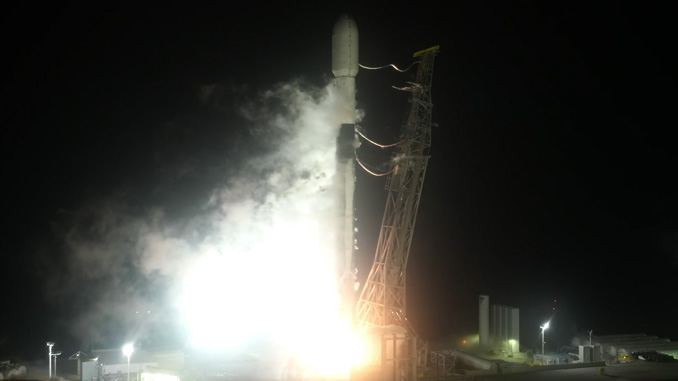
SpaceX is quietly reorganising its launch cadence around a Florida-based Starship debut. A Falcon 9 lifted off from Vandenberg Space Force Base early on September 2, 2026 with 27 Starlink V2 Mini satellites - the company's 79th Starlink mission of the year and its 104th orbital flight. Behind that routine mission is a bigger move: SpaceX is now running its Starlink launches primarily from the West Coast to free Cape Canaveral for Starship.
Vandenberg becomes the Starlink hub
Booster B1063 completed its 35th flight on the September 2 mission, landing on the droneship Of Course I Still Love You in the Pacific. The company followed up with its 80th Starlink mission of 2026 on September 5. Reusing the West Coast pad more aggressively lets SpaceX push the annual Starlink cadence closer to the 100-launch mark without contending with Starship pad time in Florida.
Starship Flight 14 targets September 15
A Federal Communications Commission filing submitted by SpaceX on September 1 lists September 15 as the target for Starship Flight 14, which would be the vehicle's first attempt at a full orbital trajectory. Cape Canaveral's Launch Complex 39A is being reconfigured to host the East Coast Starship debut, complementing the ongoing operations at Starbase in Texas.


Constellation crosses 11,000 satellites
The West Coast pivot also comes as SpaceX crossed 11,000 satellites in low Earth orbit in mid-August. With Starlink revenue underwriting Starship's development, keeping the constellation on-cadence during Florida's Starship stand-up is critical. The V2 Mini generation continues to fill in coverage gaps ahead of the larger V3 satellites that Starship is designed to deploy in bulk.
Wider industry implications
The consolidation reshapes the launch market ahead of a busy autumn that also includes Isar Aerospace's Spectrum 2 attempt from Andoya and NASA's Roman Space Telescope launch. If Flight 14 succeeds, SpaceX would open dual-coast Starship operations while keeping the Starlink build-out at record cadence.
Reporting based on coverage from Spaceflight Now and SpaceX Federal Communications Commission filings.