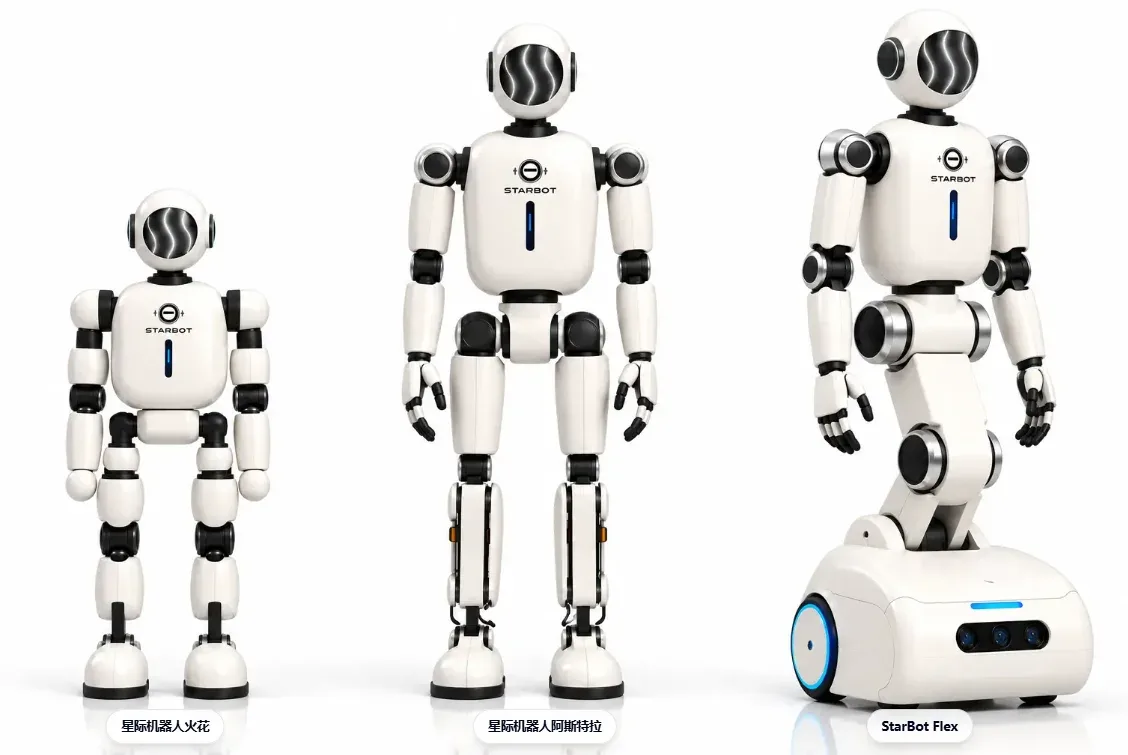
StarBot Robotics launched Spark on November 4, a 90-centimeter humanoid robot with 22 degrees of freedom that the Santa Barbara, California company is selling for $7,999. StarBot says Spark is North America's first US-manufactured developer humanoid robot in its size and price category, aimed at families, schools and developers rather than industrial buyers.
What is Spark actually built for?
StarBot is positioning Spark across three uses at once: child companionship, youth robotics education, and as an open-development platform for engineers who want to work with a physical humanoid without paying six-figure prices typical of research-grade robots. The company describes Spark as an open platform, meaning developers can program and modify its behavior rather than being locked into a closed software stack.
The size is deliberate. At 90 centimeters, Spark is small enough to operate in homes and classrooms, distinguishing it from the full-size, roughly human-height humanoids that companies like Figure, Agility and Unitree are building for warehouse and factory work.
Why does the price and manufacturing location matter?
Most consumer-facing or education-oriented robots in this size class are produced in China, where component supply chains for actuators and sensors are deepest. StarBot's claim to build Spark entirely in the US, at a sub-$8,000 price point, runs against that pattern. Founder and CEO Yong Wang has framed the company's mission as building 'robots that ordinary people can afford,' a positioning distinct from both the industrial humanoid race and from pricier consumer robotics efforts.
StarBot has a track record to point to: its earlier product, Nova, a restaurant service robot priced at $4,999 plus a $499 monthly subscription, has reportedly served more than 20,000 people since its early 2026 launch. Spark extends that lower-cost model into the humanoid category rather than a wheeled service robot.
How does Spark fit into the broader humanoid market?
The humanoid robot industry has been dominated by headlines about six- and seven-figure industrial units from companies racing to prove warehouse and factory viability. Spark targets a different, largely unaddressed segment: an accessible price point for education and hobbyist use, similar to how 3D printers and drones each went through a phase of expensive industrial versions before cheaper consumer and classroom models expanded the user base.
StarBot emerged from the University of California, Santa Barbara's startup incubation ecosystem, giving it an academic pipeline that may help place Spark directly into robotics curricula. Whether a $7,999 humanoid can achieve meaningful sales volume will depend on how StarBot handles after-sale software support and whether Spark's open platform attracts an active developer community, the kind of ecosystem effect that has sustained cheaper robotics and maker-hardware categories in the past.