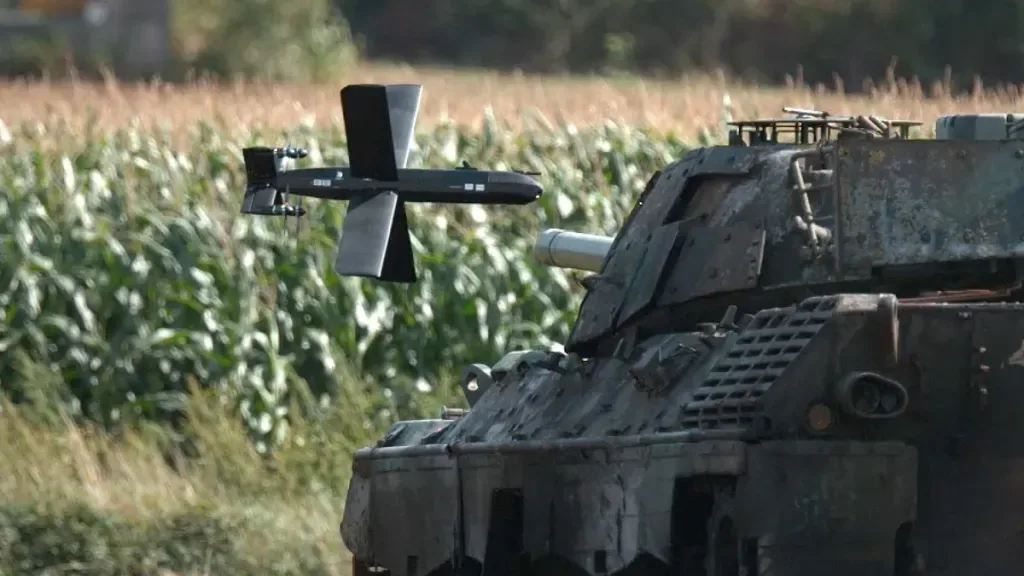
Two German-made attack drones, Stark's Virtus and Helsing's HX-2, passed live-fire trials during the week of November 9, 2026, at the Bundeswehr's weapons and ammunition test center in Meppen, clearing a step toward initial deliveries before the end of the year, according to Defense News.
Both systems are loitering munitions that let operators authorize a strike only after acquiring a target. The trials tested the final engagement phase — whether each drone could reliably hit designated targets and whether its warhead functioned on impact — rather than certifying the complete system.
Contracts worth up to €1.27 billion each
Germany approved contracts worth €268 million (about $294.4 million) each for Stark and Helsing on February 25, 2026. Those agreements include options that could expand each contract by as much as €1 billion, meaning total potential spend across both suppliers could approach €2.5 billion if all options are exercised.
Specific success rates and shot counts from the November trials were not disclosed. Germany's defense ministry has said further purchases will depend on the systems demonstrating technological maturity and on parliamentary budget approval, a standard check in German defense procurement that has slowed previous programs.
A fast-moving domestic drone industry
Stark and Helsing are among a wave of German and European startups, alongside firms like Quantum Systems and Tytan Technology, racing to supply loitering munitions as militaries across the continent rebuild stockpiles depleted by support for Ukraine. Unlike legacy defense primes, both companies have moved from contract signing to live-fire validation in under a year, a pace that mirrors Ukraine's own wartime drone-development cycles more than traditional NATO procurement timelines.
If deliveries proceed as planned by year-end, troop training would follow immediately, with full operational deployment targeted for 2027 alongside Germany's 45th Armored Brigade, which is stationed in Lithuania as part of NATO's eastern-flank posture. That timeline would make Virtus and HX-2 among the first indigenously developed loitering munitions fielded operationally by the Bundeswehr, a milestone Berlin has been pursuing since committing to rapid rearmament in 2025.