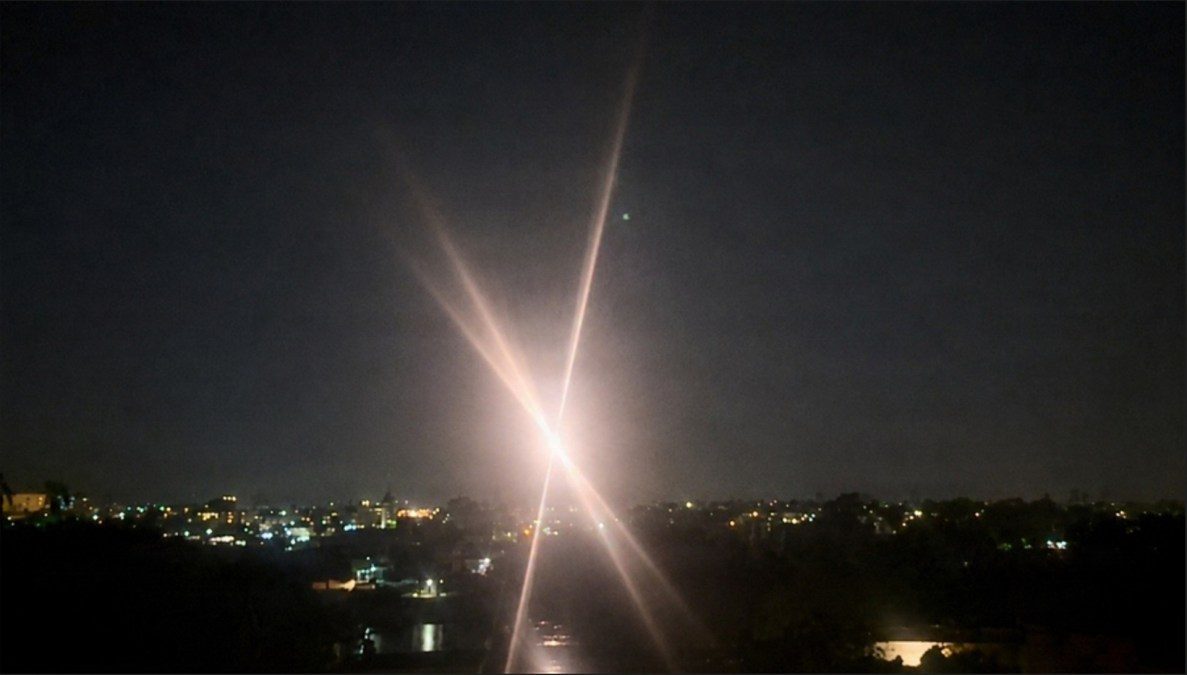
The Pentagon's Joint Interagency Task Force 401 has selected seven vendor teams to bring high-energy laser weapons to Dugway Proving Ground in Utah for a live-fire shoot-off against drones starting in mid-December, according to DefenseScoop. The Army-led task force says strong performers could receive purchase orders almost immediately after testing.
Which companies made the cut, and why does that matter?
The seven teams are Allen Control Systems with its Bullfrog HEL, Aurelius Systems with Archimedes, a BlueHalo/AeroVironment entry fielding LOCUST X1, Kord Technologies with FIREFLY, an IPG Photonics and Lockheed Martin partnership called Crossbow, Thor Dynamics with Laser Armor, and Yrikka with a drone-mounted system called TALOS. The task force picked these seven out of 13 technical white papers submitted for the program, a roughly 54 percent selection rate that signals the Pentagon is narrowing a crowded field rather than running an open bake-off.
The mix spans established defense primes and smaller specialty firms, reflecting how directed-energy weapons have become one of the few counter-drone categories where startups can realistically compete with Lockheed Martin or AeroVironment on a level technical footing, since the core challenge is beam quality and tracking software rather than decades of airframe experience.
What will the shoot-off actually test, and when?
Testing runs as live-fire engagements against representative unmanned aerial targets, assessing each system's ability to track and defeat drones both above and below the horizon, a distinction that matters because many drone threats now fly low to avoid radar. Army Brig. Gen. Matthew Ross said the task force wants to structure the event so that systems performing well can translate directly into a purchase order, cutting the gap between a successful test and a signed contract.
How does this connect to the Pentagon's broader counter-drone push?
The shoot-off follows a $500 million production contract AeroVironment received in September 2026 for its E-HEL laser line, expected to deliver dozens of LOCUST X3 systems, and comes as the Department of War has separately flagged gaps in counter-drone coverage after tracking more than 2,000 drone encounters around this year's World Cup. Lasers are attractive to the Pentagon because each shot costs a fraction of a missile interceptor, a cost math that matters against cheap, disposable drones bought by the thousand.
The December test follows a separate Arizona desert evaluation on November 15 involving about two dozen companies and kinetic interceptors, where results were mixed: some systems only clipped targets instead of destroying them. That track record is part of why the Pentagon is now running a parallel, laser-specific test with a faster path to procurement attached.
What happens if a system performs well at Dugway?
Unlike typical defense evaluations that take months to convert into contracts, JIATF 401 has set up this shoot-off specifically to shorten that gap. A strong showing in December could mean a vendor goes from prototype demonstration to a production order within weeks, a pace more associated with commercial procurement than traditional defense acquisition.