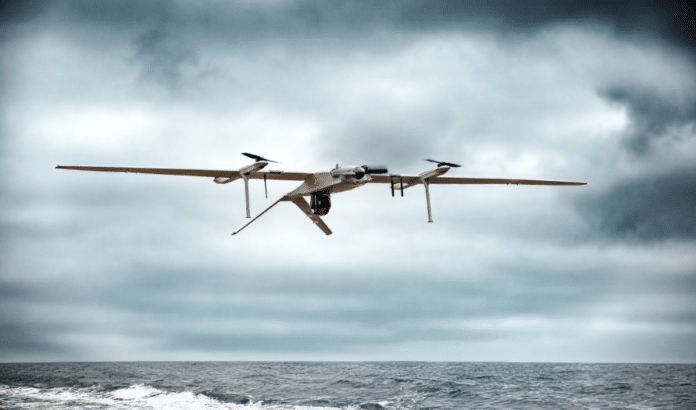
TEKEVER, the Portuguese autonomous-drone maker, has secured a second close of roughly €13 million ($14.2 million) from Denmark's state investment and export fund EIFO, adding to its $580 million (€520 million) Series D round. The tranche, announced November 6, 2026, values the company at €5.7 billion ($6.4 billion) and funds TEKEVER's first operational footprint in the Nordic region, anchored in Odense, Denmark, according to EU-Startups. The Series D first closed on September 23, 2026, led by UC Investments and Baillie Gifford.
Why a State Fund's Money Signals More Than Capital
EIFO is not a typical venture investor; it is Denmark's export and investment fund, and its participation functions as a down payment on defense-industrial cooperation rather than a pure financial bet. TEKEVER says the capital will deepen ties with Danish companies and research institutions in Odense, a city that has built a robotics and drone cluster around companies like Universal Robots. For a company whose main customer base is European militaries, a sovereign fund's backing also signals political alignment, something that matters when NATO governments are increasingly wary of defense suppliers with ties outside allied states.
TEKEVER's traction underpins the valuation: the company has logged more than 50,000 operational flight hours in Ukraine and holds long-term defense programs in Germany, the UK and Portugal. That operational record, built largely on AI-powered surveillance drones used in active conflict, is the kind of combat-tested data that few Western drone makers can claim, and it is what has let TEKEVER triple its valuation from roughly $1.3 billion at its Series C in May 2025 to $6.4 billion in September 2026.
Europe's Defense-Tech Funding Wave Keeps Compounding
TEKEVER's Nordic tranche is one piece of a broader surge: EU-Startups tracked roughly €1.59 billion flowing into adjacent European defense-tech deals around the same period, including Germany's Quantum Systems raising €1 billion, Portugal's Beyond Vision taking €28 million, Norway's Six Robotics closing €12 million and Denmark's Acodyne raising €2.5 million. TEKEVER's round dwarfs all of them, reflecting how capital in European defense tech is concentrating around a small number of companies with proven battlefield deployment rather than spreading evenly across the sector.
Compared with US rivals such as Anduril or Shield AI, TEKEVER's edge is geographic: its drones are already flying NATO-aligned missions in Europe, giving it home-field advantage as EU governments push to buy domestically produced defense technology under new procurement rules. The open question is whether TEKEVER can convert its Ukraine flight-hour lead and now its Nordic foothold into multi-year government contracts before better-funded European and American competitors catch up on deployment experience.