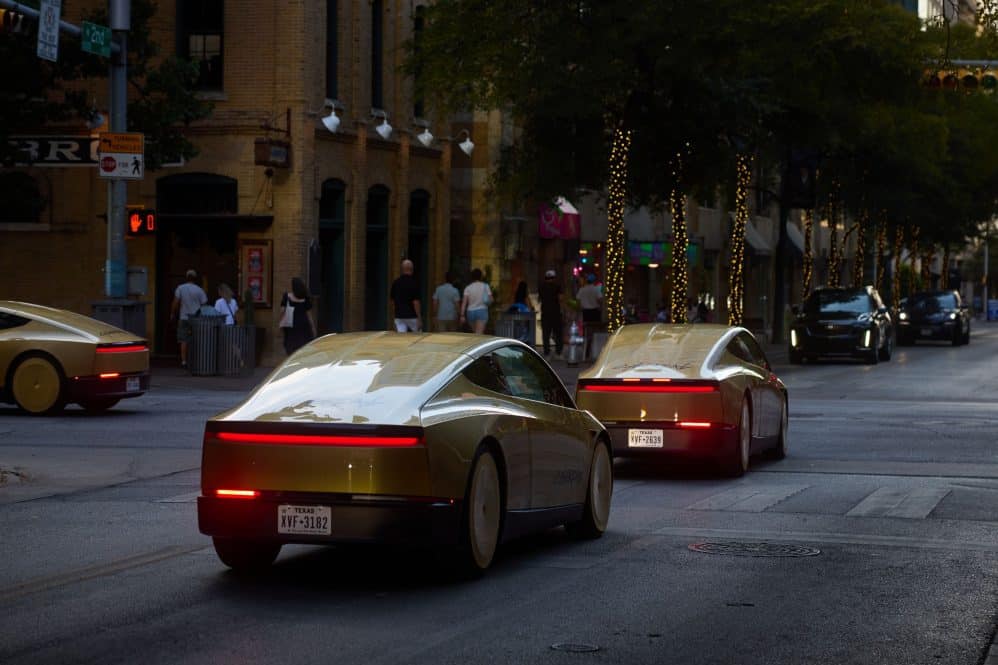
Tesla has begun testing its purpose-built Cybercab robotaxi on public roads across Metro Detroit, deploying roughly two dozen vehicles out of a company collision-repair facility in Southfield, Michigan, according to a Detroit News report published November 3, 2026. The move puts Tesla's driverless-taxi ambitions through a cold-weather market for the first time.
What exactly is Tesla testing in Detroit?
Vehicles have been spotted on Interstate 696, M-10, Telegraph Road and Eight Mile Road since testing began. Unlike the finished production Cybercab, which Tesla designed without a steering wheel or pedals, the Detroit test units carry temporary steering wheels and human test drivers who can take over if needed.
That configuration mirrors how autonomous vehicle developers typically validate a new market: human-supervised runs first, followed by progressively more autonomous operation once the company collects enough local driving data to trust the system on its own.
Why does testing in Detroit matter for robotaxis?
Tesla's existing Robotaxi markets, Austin, Dallas, Houston, Tampa, Miami and, as of this week, Fort Worth, sit in warm-weather states where snow and ice are rare. As of early November, Tesla's own tracking showed more than 2.1 million autonomous miles logged in Austin, over 608,000 in Dallas and more than 225,000 in Houston, but none of those totals come from a market with real winter weather.
Michigan's seasonal snow, slush and reduced-visibility conditions stress the camera-based perception system Tesla relies on in ways its Sun Belt deployments never have. An auto-industry analyst cited in the Detroit News report described four-season testing as essential groundwork for any company that wants driverless vehicles to operate nationally rather than in a handful of climate-friendly cities.
How does this compare to Waymo's presence there?
Waymo got to Detroit first, beginning testing in the region in 2025 and, as of October 2026, running fully autonomous tests without human specialists aboard its Zeekr Ojai electric vehicles. Tesla's arrival sets up a direct comparison between two companies' approaches to winter-weather autonomy in the same metro area, using different sensor strategies: Waymo relies on lidar alongside cameras, while Tesla's system is camera-only.
Neither company has announced a timeline for offering public rides in Detroit. Both remain in the data-gathering phase that typically precedes a commercial launch in a new city.
What's next for Tesla's robotaxi expansion?
Tesla's Robotaxi service has been expanding roughly city by city through 2026, with Fort Worth becoming its newest Texas market just days before the Detroit tests surfaced. The company has also said it plans to enter San Antonio. Detroit testing suggests Tesla wants to push beyond its current Sun Belt footprint well before its autonomy stack has been proven in the weather conditions most of the country experiences for part of the year.
For now, the roughly two dozen Michigan vehicles remain in human-supervised testing, with no public service date attached. That makes Detroit a bellwether for whether a system developed and validated almost entirely in warm climates can handle snow, ice and the shorter daylight hours of a Midwestern winter.