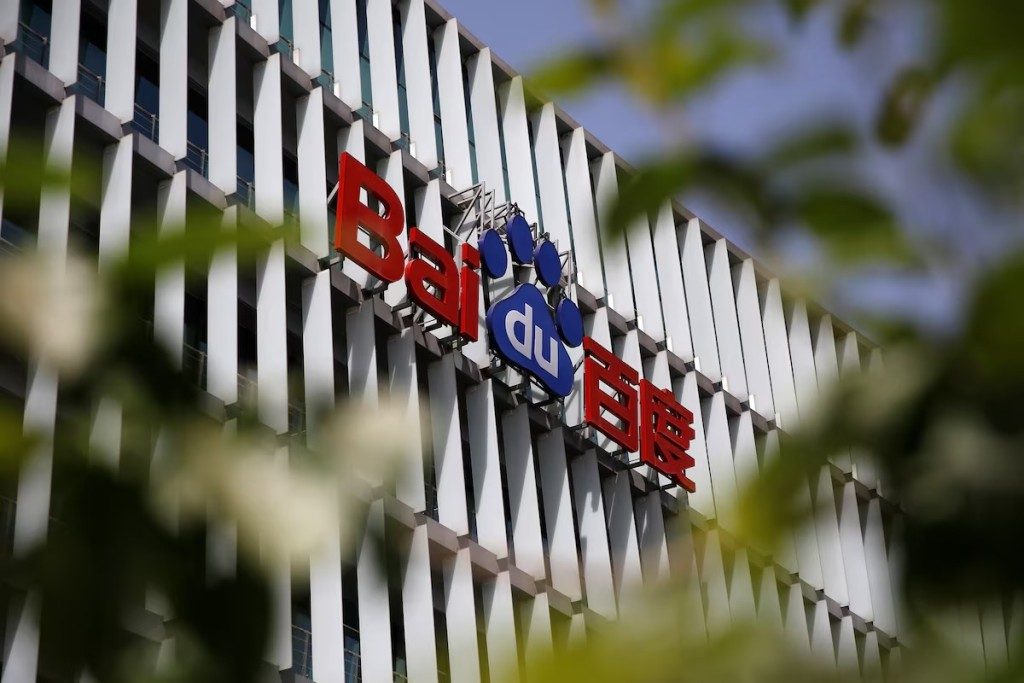
Baidu launched Apollo World on Tuesday, an AI system built to simulate real-world road environments and generate the driving data needed to train autonomous vehicles. The company says the system can produce up to 100,000 kilometers of simulated driving per day, output it equates to roughly three years of real-world testing by a human-supervised test vehicle. Apollo World is already being used to train Baidu's Apollo Go robotaxi fleet as the company prepares to operate the service in international markets, according to The Standard.
The system generates real-time, multimodal data streams, including simulated camera and lidar feeds, so that self-driving software can sense and navigate generated environments directly rather than relying solely on recorded road footage. That matters because the single biggest cost in scaling a robotaxi fleet is no longer the vehicle hardware. It is the volume of edge-case driving data needed to make a model reliable across unfamiliar cities, weather and traffic cultures.
Why simulated miles are becoming the real currency
Every robotaxi operator faces the same bottleneck: real-world test miles are slow, expensive and geographically limited. A fleet can only accumulate rare but critical scenarios, a jaywalker at dusk, an unprotected left turn in heavy rain, at the pace its cars actually encounter them on the road. Synthetic environments let a company manufacture those scenarios on demand and at scale.
This is why Apollo World is less a product launch than a statement of strategy. Baidu is betting that whoever controls the best simulation engine, not necessarily the most deployed vehicles, controls the pace of expansion. If a new market can be modeled before a single car touches its streets, the cost and time of entering that market drops sharply. That directly serves Baidu's ambition to run Apollo Go beyond China, where regulatory and safety validation is typically the slowest part of entry.
The competitive field is narrowing around AI, not hardware
Apollo Go already competes domestically with WeRide, Pony.ai and Momenta, all of which are also pursuing overseas listings and international pilots. Internationally, Waymo and Tesla are running their own simulation-heavy training pipelines, and Tesla has leaned on synthetic and fleet-collected video to train its driving models at scale for years.
What differentiates the current moment is the sheer size of the addressable market analysts expect. Morgan Stanley has estimated China's robotaxi fleet alone could reach one million vehicles by 2035, and Goldman Sachs Research projects the global robotaxi market will reach approximately $415 billion by 2035, with the global commercial fleet growing from roughly 7,000 vehicles in 2025 to around 6 million by that year.
That scale forecast is precisely why simulation capacity is becoming a competitive line item companies now disclose publicly. Training a model for Beijing traffic patterns does not automatically make it safe for Riyadh or Singapore roads, and Baidu's willingness to quantify Apollo World's output, 100,000 simulated kilometers daily, signals it wants that capability judged as a measurable asset rather than a vague AI claim. The trade-off is that simulated miles still need real-world validation before regulators sign off, so Apollo World reduces cost and speed but does not eliminate the physical testing phase entirely. Whether that shortcut translates into faster regulatory approval abroad will be the real test of the platform's value.