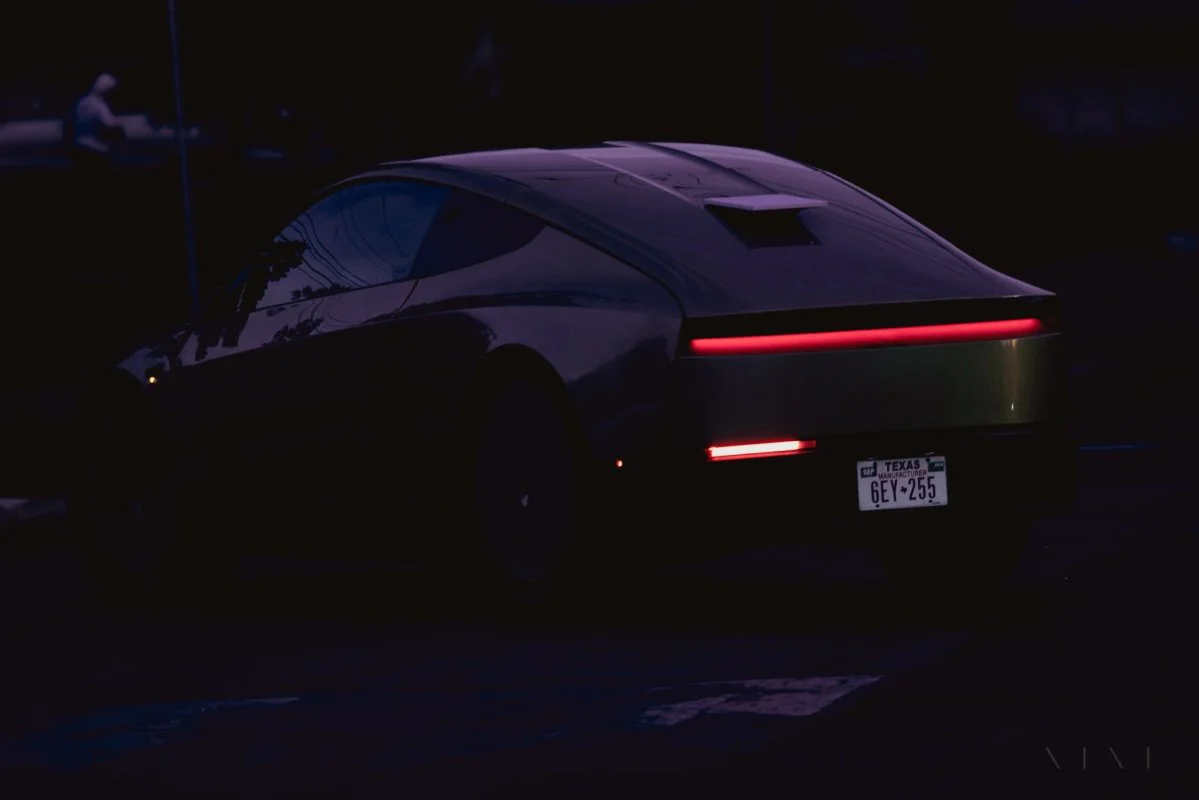

Texas's new commercial autonomous-vehicle law, Senate Bill 2807, became enforceable on May 28, 2026, formally authorising driverless passenger and freight services on state roads — and Tesla wasted no time using it. The company self-certified its Cybercab and Model Y robotaxi software at SAE Level 4 under the new framework, the first automaker to do so since the law took effect. State filings made public the same day show Tesla now has 42 autonomous vehicles registered in Texas.
What SB 2807 actually does
SB 2807 requires every commercial operator of a self-driving passenger or freight service to file with the Texas Department of Motor Vehicles, attest to a Level 4 or higher capability under SAE J3016, carry $5 million of liability cover and supply law-enforcement and first-responder contact procedures. Critically, the statute is a self-certification model: the TxDMV does not test the vehicles, but operators must answer to the agency and to state courts if their attestation turns out to be wrong.
Tesla's filing and the Cybercab
Tesla's filing covers both its existing Model Y robotaxi fleet in Austin and the production Cybercab, which footage from Giga Texas shows driving itself the roughly two-mile route from the assembly line to the West End-of-Line facility without a human in the seat. CEO Elon Musk and AI VP Ashok Elluswamy have signalled the Cybercab will join the active Robotaxi service in Austin and Houston in the coming weeks, with broader expansion gated on the planned Full Self-Driving v15 architecture rewrite.
Fleet size still tiny next to Waymo
The regulatory green light is significant, but Tesla's operational footprint remains small. State filings show 42 registered Texas vehicles versus Waymo's much larger fleet across Phoenix, San Francisco, Los Angeles, Austin and Dallas. A third-party tracker counts as few as 20 Tesla vehicles actively carrying passengers without safety drivers, and Austin riders have complained of wait times above 15 minutes more than half the time.
The wider regulatory picture
Texas joins California and Arizona in offering an explicit commercial robotaxi framework, and uniquely permits steering-wheel-less designs — a provision tailor-made for Cybercab. Federal NHTSA rules continue to require exemptions for vehicles without traditional controls, leaving the legal status of Cybercab on interstate highways a separate fight. The Texas law also tightens reporting obligations on incidents and remote-assistance use, addressing concerns raised in a recent Senate probe of robotaxi operators.
What to watch next
Two questions will define the next quarter: how quickly Tesla scales the registered fleet beyond 42 vehicles, and whether the TxDMV uses its new investigative authority on any incidents. A test case under the self-certification model would set the tone for how aggressively Level 4 deployments expand in 2026.
Reporting based on coverage from CNBC, TeslaNorth, Tom's Hardware and the Texas DMV.