Tesla has asked Germany's Federal Cartel Office for permission to acquire assets of EMAG, a machine-tool maker based in Salach near Stuttgart. The filing appeared on the regulator's public case list on November 27, 2026, confirming weeks of speculation that began after Tesla registered a new company, Tesla Machining Technologies Management SE, at EMAG's own headquarters address earlier this month. Roughly 220 EMAG employees are expected to move to Tesla if the deal clears review, according to Stuttgarter Zeitung.
EMAG has built precision machine tools since 1867, traditionally serving automakers with equipment for engine, transmission and drivetrain parts. In recent years the company pivoted toward making the specialized machining systems that produce flexsplines, wave generators and planetary gears — the core components inside the strain-wave gearboxes that let a robot's joints move with human-like precision. That pivot came as EMAG's traditional automotive customer base contracted; the firm has posted losses and had been actively courting outside investors before Tesla's interest surfaced.
Why does Tesla need to buy a gearmaker instead of just ordering parts?
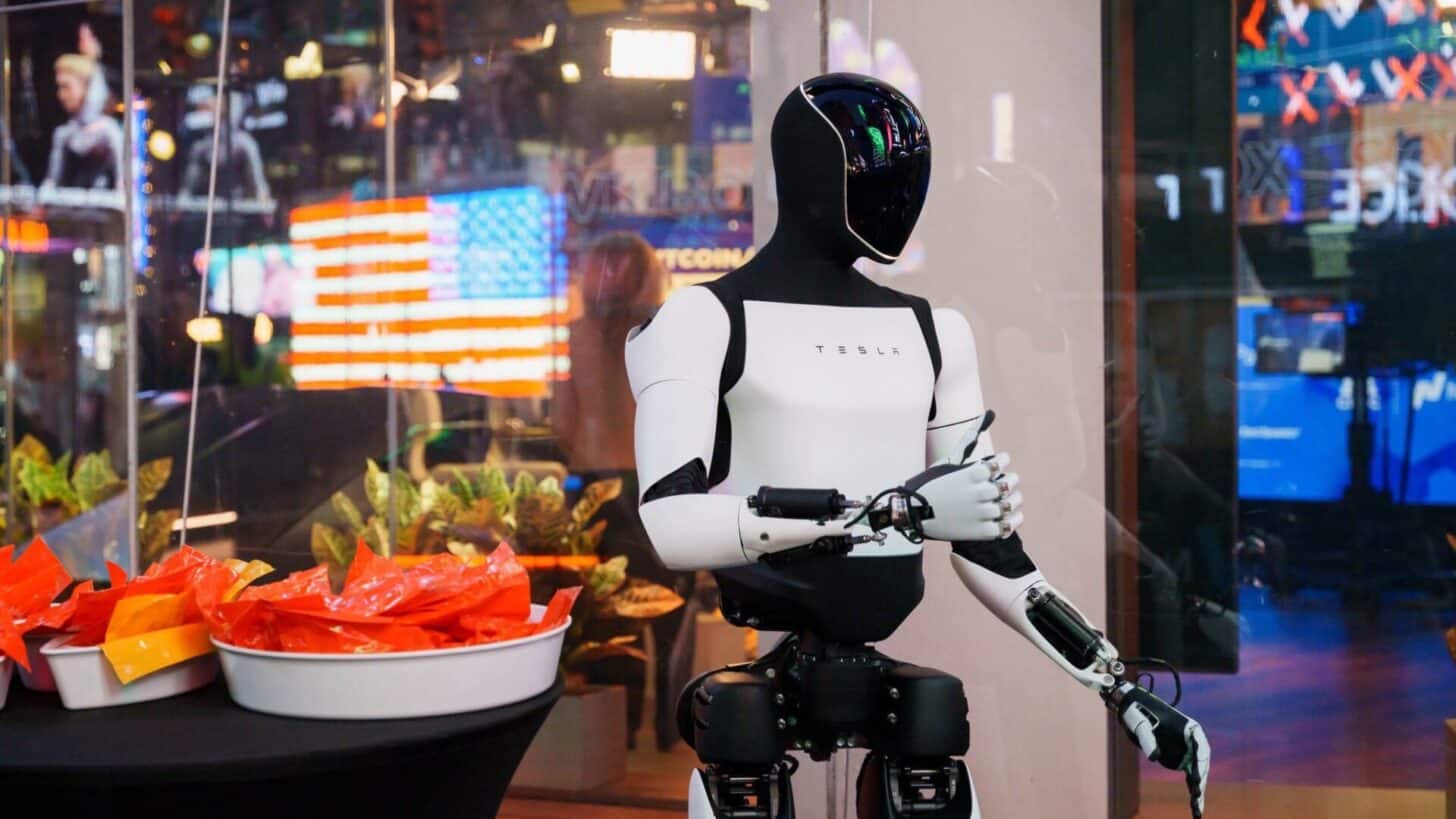
Tesla has said publicly that gear reliability has been one of the harder problems in scaling Optimus. On its third-quarter earnings call, the company acknowledged bottlenecks tied to custom gear components failing under repeated stress — exactly the kind of flexspline and planetary-gear hardware EMAG's machines are built to produce. Buying the equipment maker outright, rather than staying a customer, gives Tesla direct control over tooling design, production tolerances and the pace of iteration, instead of waiting on a third-party supplier's roadmap.
How big a deal is this for Tesla's robot ambitions?
Tesla has said it wants to reach a production rate of 20,000 Optimus units a week within about a year, with assembly lines already running in Fremont inside space once used for Model S and Model X production, and a larger dedicated factory under construction in Texas. Hitting that rate requires thousands of precision actuators per week, each needing multiple gear components machined to tight tolerances. An in-house supply of the machines that make those gears removes a dependency that could otherwise throttle the entire production ramp.
What happens next?
The Bundeskartellamt now reviews the filing under German competition law, a process that typically takes a few weeks for straightforward asset deals but can be extended if regulators request more information. Neither Tesla nor EMAG has issued an official statement confirming deal terms or price. If approved, the new entity — managed by Tesla Germany's head of sales and the HR chief from Tesla's Grünheide car plant — would fold EMAG's Salach operation directly into Tesla's robotics supply chain, marking Tesla's first acquisition specifically aimed at humanoid robot manufacturing rather than vehicles or batteries.
Is this part of a bigger pattern?
Yes. As humanoid robot programs at Tesla, Figure, Agility and several Chinese manufacturers move from prototypes to volume production, precision actuator and gear supply has become a recognized chokepoint across the industry. Vertical integration — buying or building the specialized tooling rather than sourcing it — is becoming a common response, mirroring how automakers historically acquired stamping and casting suppliers to control bottlenecks in vehicle production.